


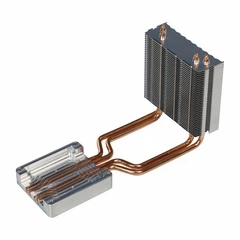
What is the Weight of an Average Aluminum Finned Heat Sink?
As a supplier of Aluminum Finned Heat Sinks, I often encounter inquiries about the weight of these essential components. Understanding the weight of an average aluminum finned heat sink is crucial for various applications, from electronics to industrial machinery. In this blog post, I'll delve into the factors that influence the weight of these heat sinks and provide insights into typical weight ranges.
Factors Affecting the Weight of Aluminum Finned Heat Sinks
The weight of an aluminum finned heat sink is determined by several key factors, each playing a significant role in the overall mass of the component.
Size and Dimensions
One of the most obvious factors influencing the weight of a heat sink is its size and dimensions. Larger heat sinks with more extensive surface areas and greater volumes naturally weigh more than smaller ones. The length, width, and height of the heat sink, as well as the thickness of the base and fins, all contribute to its overall weight. For example, a heat sink designed for a high-power CPU may be larger and heavier than one used for a low-power electronic device.
Fin Density and Thickness
The density and thickness of the fins on a heat sink also impact its weight. Fins are designed to increase the surface area of the heat sink, allowing for more efficient heat transfer. Heat sinks with a higher fin density, meaning more fins per unit area, generally weigh more than those with a lower fin density. Additionally, thicker fins add to the overall weight of the heat sink. However, it's important to note that increasing fin density and thickness can also improve the heat sink's performance, so there is often a trade-off between weight and efficiency.
Material Quality
The quality of the aluminum used in the heat sink can affect its weight. Higher-quality aluminum alloys may have different densities and properties, which can result in variations in weight. Additionally, the manufacturing process can impact the density of the aluminum, further influencing the weight of the heat sink. For example, heat sinks made from extruded aluminum may have a different weight than those made from cast aluminum.
Mounting Hardware
The weight of the mounting hardware used to attach the heat sink to the device also contributes to the overall weight. This includes screws, clips, and other fasteners. While the weight of the mounting hardware may seem insignificant compared to the heat sink itself, it can add up, especially for larger heat sinks or those used in high-vibration environments.
Typical Weight Ranges for Aluminum Finned Heat Sinks
The weight of an average aluminum finned heat sink can vary widely depending on the factors mentioned above. However, I can provide some general weight ranges based on common applications.
Small Electronic Devices
For small electronic devices such as smartphones, tablets, and portable media players, aluminum finned heat sinks are typically lightweight. These heat sinks may weigh anywhere from a few grams to a few dozen grams, depending on the size and complexity of the device.
Computer Components
Heat sinks used in computer components, such as CPUs and GPUs, are generally larger and heavier than those used in small electronic devices. A typical CPU heat sink may weigh between 100 grams and 500 grams, while a high-performance GPU heat sink can weigh up to 1 kilogram or more.
Industrial Applications
In industrial applications, aluminum finned heat sinks can be much larger and heavier. These heat sinks are often used to cool large electrical components, such as power supplies, motors, and transformers. Depending on the size and power requirements of the application, industrial heat sinks can weigh anywhere from a few kilograms to several hundred kilograms.
Importance of Weight in Heat Sink Selection
While weight is an important consideration when selecting an aluminum finned heat sink, it's not the only factor to take into account. Other factors, such as thermal performance, cost, and compatibility with the device, are also crucial.
Thermal Performance
The primary function of a heat sink is to dissipate heat from a device, so thermal performance is of utmost importance. A heavier heat sink may not necessarily provide better thermal performance than a lighter one. In fact, in some cases, a lighter heat sink with a more efficient design may be able to dissipate heat more effectively. When selecting a heat sink, it's important to consider the thermal requirements of the device and choose a heat sink that can meet those requirements.
Cost
The weight of a heat sink can also impact its cost. Heavier heat sinks generally require more material and may be more expensive to manufacture. Additionally, shipping costs may be higher for heavier heat sinks. When selecting a heat sink, it's important to balance the cost with the performance and other requirements of the application.
Compatibility
The weight of the heat sink must also be compatible with the device it's being used with. A heat sink that is too heavy may put excessive stress on the device, leading to damage or failure. Additionally, the mounting hardware must be able to support the weight of the heat sink securely. When selecting a heat sink, it's important to ensure that it is compatible with the device in terms of size, weight, and mounting requirements.
Our Aluminum Finned Heat Sink Offerings
As a supplier of Aluminum Finned Heat Sinks, we offer a wide range of products to meet the diverse needs of our customers. Our heat sinks are available in various sizes, shapes, and fin densities, allowing us to provide customized solutions for different applications.
We also offer a variety of Air-Cooled Laser Module Heatsink, Controllable Power Water Cooling Plate, and Combination Water Cooling Radiator options to enhance the thermal performance of our heat sinks. These products are designed to provide efficient heat transfer and are suitable for a wide range of applications, including electronics, telecommunications, and industrial equipment.
Contact Us for Your Heat Sink Needs
If you're in the market for high-quality aluminum finned heat sinks, we'd love to hear from you. Our team of experts can help you select the right heat sink for your application based on your specific requirements, including weight, thermal performance, and cost. We offer competitive pricing, fast turnaround times, and excellent customer service.

Whether you're a small electronics manufacturer or a large industrial company, we have the expertise and resources to meet your heat sink needs. Contact us today to discuss your project and get a quote.
References
- Incropera, F. P., DeWitt, D. P., Bergman, T. L., & Lavine, A. S. (2007). Fundamentals of Heat and Mass Transfer. John Wiley & Sons.
- Cengel, Y. A., & Ghajar, A. J. (2014). Heat Transfer: A Practical Approach. McGraw-Hill Education.
- ASHRAE Handbook: Fundamentals. (2017). American Society of Heating, Refrigerating and Air-Conditioning Engineers.