


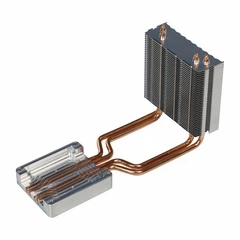
Other Radiators
Your Professional Radiators Manufacturer!
Yuanyang Thermal Energy Technology Co., LTD. founded in 2014. We are one of the high and new technology enterprises, which focus on research, development, production and sales of heat sinks, heat pipes and water-cooling plates. Focusing on the research and development, production and technical services of high-power heat dissipation solutions, we are committed to becoming the leader of thermal management in the field of new energy.


Why Choose Us
Quality Assurance
We adheres strictly to industry quality system standards and specifications, utilizing state-of-the-art testing equipment and advanced technologies to ensure the stability and reliability of product quality, thereby upholding its excellent reputation.
OEM/ODM Services
Our team of professional engineers provides efficient and customized solutions tailored to the specific needs of customers. We offer a diverse range of product options and provide comprehensive technical support to ensure that customers can select the most suitable products.
Professional Certification
We has obtained prestigious international certifications such as ISO 9001 and ISO 14001. Additionally, it continues to innovate in the field of new energy, holding over 20 patented technologies.
Professional Service
We offers extensive service support, including factory audits, cargo inspections, technical consultations, new product development, and robust after-sales services.

We provide custom radiator manufacturing solutions to meet your project needs. Customizable options:
● Material
● Surface treatment
● Size and shape
● Interface and mounting method
Heat Pipe/copper Pipe Heat Sink
A copper heat pipe heatsink is a cooling device used in electronic devices to dissipate heat generated by the components. Heat pipes are made of copper because their high thermal conductivity allows for efficient heat transfer. A heat pipe heatsink is a sealed copper pipe with a small amount of working fluid inside.
Aluminum Radiator
Aluminum is an excellent material for creating radiators because it conducts heat well and is exceptionally strong. These two properties together allow for radiators with incredibly thin tubes and small footprints.
Our Company Has More Products to Offer, Please Browse the Product Categories on the Website, If You Have Any Needs, Please Contact Us.
Radiator Specification
|
Plate material |
Aluminum or Copper |
|
Tube material |
Copper |
|
Shapes |
Based on your requirements. |
|
Production Process |
Aluminum plate cutting—CNC Grooves making—Embedding Tubes (Friction stir welding, Vacuum brazing)—Epoxy adhesive filling—CNC machining—Cleaning—Inspecting—Packing |
|
Technical |
Extrusion, skived fin, stamping, cold forging, bonded fin, die cast, liquid cold plates, folded fin |
|
Finish |
Anodizing, Mill finish, Electroplating, Polishing, Sandblasted, Powder coating, Silver plating, Brushed, Painted, PVDF etc. |
|
Deep process |
CNC,drilling,milling,cutting,stamping,welding,bending,assembling,Custom Aluminum Fabrication |
Radiator Production Process
Pattern making: The first step in the production process involves creating patterns of the radiator design.
Molding: Once the patterns are made, the next step is to create the molds. This is done by packing sand or another casting material around the pattern, creating a cavity that is the exact shape of the radiator.
Melting: The material is melted in a furnace or a cupola, which can reach temperatures up to 2,800 degrees Fahrenheit.
Pouring: Once the molten iron is ready, it is poured into the molds. The molds are filled carefully to ensure that the metal flows evenly and creates a uniform casting.
Cooling and removal: The castings are left to cool for several hours, after which they are removed from the molds. The castings are then cleaned of any excess sand or other debris.
Machining and assembly: The castings are machined to remove any rough edges or imperfections. The various sections of the radiator are then assembled and painted or finished as needed.
Testing: The radiators are tested to ensure that they are watertight and functioning properly.
Radiator performance is mainly measured by "thermal resistance." Thermal resistance is a value that indicates the resistance to heat transfer, meaning "how many degrees the temperature rises when one watt of heat is applied to an object. The unit of thermal resistance is "K/W" or "°C/W".
Thermal resistance depends on the surface area of the radiator and the material used. The lower the value, the better the performance will be. radiators are designed in a comb or bellows shape because a larger surface area reduces thermal resistance most efficiently.
Another value that indicates the performance of a radiator is the pressure drop. Pressure drop is a measure of the resistance of air or cooling water passing through a radiator; the lower the value, The better the performance will be.

Packaging and Shipping
|
Packaging |
Corrugated Boxes, Foam Pads/Cushions, Wooden Boxes |
|
Transportation methods |
Road transport, rail transport, sea transport, air transportrt |
Our Service

Pre-Sales
Product Consultation
Answering customer inquiries and providing detailed product information.
Technical Support
Offering professional technical advice and solutions based on customer needs.
Sample Provision
Providing product samples for testing and evaluation.
Customization Services
Customizing product specifications and designs according to customer requirements.
Quotation Services
Offering detailed pricing and delivery time information.

Mid-Sales
Technical Support
Providing guidance on product installation and use.
Product Training
Offering training on product operation and maintenance.
Troubleshooting
Assisting with resolving any issues during product use.
Regular Maintenance
Providing maintenance advice to ensure long-term performance.
Customer Consultation
Answering questions about product performance and applications.

After-Sales
Warranty Service
Offering repairs and replacements within the warranty period.
Repair Support
Handling product malfunctions and providing professional repairs.
Customer Feedback
Collecting and addressing customer opinions and suggestions.
Spare Parts Supply
Providing necessary spare parts to ensure normal operation.
Technical Consultation
Continuously offering technical support and solutions.
Our Certificate


FAQ
Other Radiators - Dongguan Yuanyang Thermal Technology Co., Ltd.
Efficient Skived Heat Dissipation Technology, Optimal Thermal Efficiency