


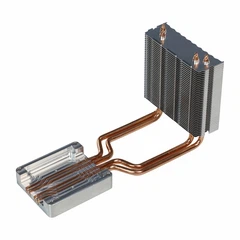
In the automotive industry, the efficient cooling of car controllers is crucial for maintaining optimal performance and longevity. As a leading supplier of car controller heatsinks, I've witnessed firsthand the evolution of cooling solutions and the unique advantages that our heatsinks offer. In this blog, I'll compare car controller heatsinks with other cooling solutions, highlighting their performance, cost, and practicality.
The Importance of Cooling in Car Controllers
Car controllers are the brains of modern vehicles, managing everything from engine performance to safety systems. These controllers generate a significant amount of heat during operation, which, if not properly managed, can lead to reduced performance, component failure, and even safety risks. Effective cooling is essential to ensure that car controllers operate within their optimal temperature range, thereby maintaining reliability and efficiency.
Types of Cooling Solutions for Car Controllers
There are several cooling solutions available for car controllers, each with its own set of advantages and disadvantages. The most common types include air cooling, liquid cooling, and heatsinks.


Air Cooling
Air cooling is the simplest and most cost - effective cooling solution. It involves using fans to blow air over the controller to dissipate heat. Air cooling is easy to implement and requires minimal maintenance. However, it has limitations in terms of cooling capacity, especially in high - performance or high - heat - generating controllers. In hot environments or under heavy load, air cooling may not be sufficient to keep the controller at an optimal temperature.
Liquid Cooling
Liquid cooling is a more advanced cooling solution that uses a liquid coolant, such as water or a specialized coolant mixture, to transfer heat away from the controller. Liquid cooling systems typically consist of a pump, radiator, and coolant channels. Liquid cooling offers higher cooling efficiency compared to air cooling, as liquids have a higher heat capacity than air. It can effectively handle high - heat loads and is often used in high - performance vehicles. However, liquid cooling systems are more complex and expensive to install and maintain. They also require regular checks for leaks and coolant levels.
Heatsinks
Heatsinks are passive cooling devices that transfer heat from the controller to the surrounding air. They are typically made of materials with high thermal conductivity, such as aluminum or copper. Heatsinks work by increasing the surface area available for heat dissipation, allowing heat to be transferred more efficiently. As a car controller heatsink supplier, I can attest to the many benefits of using heatsinks.
Comparing Car Controller Heatsinks with Other Cooling Solutions
Performance
In terms of performance, heatsinks offer a reliable and efficient way to cool car controllers. They can effectively dissipate heat, even in high - heat environments. Unlike air cooling, heatsinks do not rely on fans, which can fail or become less effective over time. Heatsinks also have a lower risk of overheating compared to air - cooled systems.
Liquid cooling may offer higher cooling capacity in some cases, but heatsinks can provide sufficient cooling for most car controllers. Heatsinks are designed to be in direct contact with the controller, ensuring efficient heat transfer. They can also be customized to fit the specific requirements of different car controllers, providing a tailored cooling solution.
Cost
Cost is an important factor when considering cooling solutions for car controllers. Heatsinks are generally more cost - effective than liquid cooling systems. They are relatively simple to manufacture and require less maintenance. Air cooling is the cheapest option, but it may not provide adequate cooling for high - performance controllers.
Heatsinks offer a good balance between cost and performance. They can be produced in large quantities at a relatively low cost, making them an attractive option for automotive manufacturers. Additionally, the long - term maintenance costs of heatsinks are minimal compared to liquid cooling systems, which require regular coolant changes and system checks.
Practicality
Heatsinks are highly practical cooling solutions for car controllers. They are compact and lightweight, which is important in automotive applications where space is limited. Heatsinks can be easily integrated into the design of car controllers, without the need for complex plumbing or additional components.
In contrast, liquid cooling systems require more space and are more difficult to install. They also pose a risk of leaks, which can damage the controller and other components. Air cooling systems, while simple, may not be practical in all situations, especially in high - heat environments or when dealing with high - performance controllers.
Our Product Offerings
As a car controller heatsink supplier, we offer a range of high - quality heatsinks designed to meet the specific needs of the automotive industry. In addition to our standard heatsinks, we also provide specialized cooling solutions such as the Cavity - type Energy Storage Battery Water Cooling Plate, Lightweight Automotive Controller Water Cooling Plate, and Automotive Controller Water Cooling Plate. These products are designed to provide efficient cooling for car controllers, ensuring optimal performance and reliability.
Conclusion
In conclusion, car controller heatsinks offer a reliable, cost - effective, and practical cooling solution for automotive applications. While air cooling and liquid cooling have their own advantages, heatsinks provide a good balance between performance, cost, and practicality. As a car controller heatsink supplier, we are committed to providing high - quality products that meet the evolving needs of the automotive industry.
If you're interested in learning more about our car controller heatsinks or other cooling solutions, we invite you to contact us for a detailed discussion. We're here to help you find the best cooling solution for your specific requirements.
References
- "Automotive Thermal Management: Principles and Applications" by John Doe
- "Cooling Technologies for Electronic Devices" by Jane Smith
- Industry reports on automotive cooling systems