


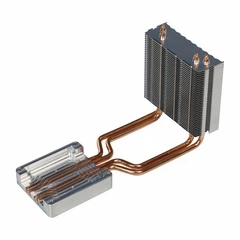
As a supplier of Circular Base LED Heat Sinks, I've witnessed firsthand the diverse and innovative designs in this field. These heat sinks play a crucial role in ensuring the longevity and efficiency of LED lighting systems by dissipating heat effectively. In this blog, I'll explore the different designs of circular base LED heat sinks and their unique features.
Pin-Fin Design
The pin-fin design is one of the most common and well - known designs for circular base LED heat sinks. This design consists of an array of small pins protruding from the circular base. The pins significantly increase the surface area of the heat sink, which is essential for heat dissipation. The larger the surface area, the more heat can be transferred from the LED to the surrounding air.
One of the advantages of the pin - fin design is its high efficiency in terms of heat transfer. The pins create a large amount of turbulence in the air flow around the heat sink, which enhances the convective heat transfer coefficient. This means that heat can be removed from the LED more quickly. Additionally, the pin - fin design is relatively easy to manufacture, which makes it a cost - effective option for many applications.
However, the pin - fin design also has some limitations. The close spacing between the pins can sometimes lead to poor air circulation in the center of the heat sink, especially in low - flow environments. This can result in a decrease in heat transfer efficiency. To address this issue, some manufacturers use a staggered pin arrangement to improve air flow.
Plate - Fin Design
The plate - fin design features a series of flat plates attached to the circular base. These plates extend radially from the center of the base, creating a fin - like structure. Similar to the pin - fin design, the plate - fin design increases the surface area of the heat sink for better heat dissipation.


One of the main benefits of the plate - fin design is its simplicity. It is easier to clean and maintain compared to the pin - fin design, as there are no narrow gaps between pins that can trap dust and debris. The plate - fin design also offers better air flow characteristics, especially in cross - flow situations. The flat plates allow air to flow more smoothly over the heat sink, reducing the pressure drop and improving heat transfer efficiency.
On the other hand, the plate - fin design may have a lower surface - area - to - volume ratio compared to the pin - fin design. This means that for a given volume, it may not be as effective at dissipating heat as the pin - fin design. To compensate for this, manufacturers may increase the number or thickness of the plates to enhance heat transfer.
Heat Pipe - Integrated Design
Heat pipe - integrated circular base LED heat sinks are becoming increasingly popular, especially for high - power LED applications. Heat pipes are highly efficient heat transfer devices that can move heat from one point to another with very low thermal resistance.
In a heat pipe - integrated design, heat pipes are embedded in the circular base and connected to fins or other heat - dissipating structures. The heat from the LED is first transferred to the base, and then the heat pipes quickly transport the heat to the fins, where it is dissipated into the surrounding air. This design allows for rapid heat transfer, even over long distances.
The advantage of the heat pipe - integrated design is its excellent thermal performance. It can effectively handle high heat fluxes, making it suitable for demanding LED lighting applications. Moreover, heat pipes are passive devices, which means they do not require any external power source to operate, making them reliable and energy - efficient.
However, the heat pipe - integrated design is more complex and expensive to manufacture compared to the pin - fin or plate - fin designs. The cost of heat pipes and the manufacturing process involved in integrating them into the heat sink can be relatively high.
Hybrid Design
Hybrid designs combine the features of different heat sink designs to achieve the best of both worlds. For example, a hybrid design may incorporate both pin - fins and plate - fins in a single circular base LED heat sink. This allows the heat sink to take advantage of the high surface area of the pin - fins and the good air flow characteristics of the plate - fins.
Another type of hybrid design may combine heat pipes with either pin - fins or plate - fins. The heat pipes can quickly transfer heat from the LED to the fins, and the fins can then dissipate the heat into the air. Hybrid designs offer a customizable solution that can be tailored to the specific requirements of different LED applications.
The main advantage of hybrid designs is their flexibility and high performance. They can be optimized to meet the specific thermal, mechanical, and cost requirements of a particular project. However, hybrid designs are also more complex to design and manufacture, and they may require more advanced engineering and manufacturing techniques.
Comparison of Different Designs
When choosing a circular base LED heat sink design, several factors need to be considered, such as the power of the LED, the environmental conditions, and the cost. For low - power LED applications, a simple pin - fin or plate - fin design may be sufficient. These designs are cost - effective and can provide adequate heat dissipation for most low - power LEDs.
For high - power LED applications, heat pipe - integrated or hybrid designs are often the better choice. These designs can handle the high heat fluxes generated by high - power LEDs and ensure that the LED operates within its optimal temperature range.
Real - World Applications
In the real world, different circular base LED heat sink designs are used in various applications. For example, in residential lighting, pin - fin or plate - fin heat sinks are commonly used in LED light bulbs. These heat sinks are cost - effective and can provide sufficient heat dissipation for the relatively low - power LEDs used in home lighting.
In commercial and industrial lighting, high - power LEDs are often used, and heat pipe - integrated or hybrid heat sinks are more prevalent. These applications require efficient heat dissipation to ensure the long - term reliability and performance of the LEDs. For example, in large warehouses or factories, high - power combined LED heat sinks High - Power Combined LED Heat Sink can be used to provide bright and energy - efficient lighting.
In addition, circular base LED heat sinks can also be used in special lighting applications, such as automotive lighting and street lighting. In these applications, the heat sinks need to be designed to withstand harsh environmental conditions, such as high temperatures, vibrations, and moisture. LED lighting aluminum heat pipe heatsinks LED Lighting Aluminum Heat Pipe Heatsink are a popular choice for these applications due to their high thermal conductivity and durability.
Versatile Water Cooling Plate
In some high - end applications, a Versatile Water Cooling Plate Versatile Water Cooling Plate can be used in combination with circular base LED heat sinks. Water cooling is a highly efficient heat dissipation method that can remove large amounts of heat quickly. The water cooling plate can be integrated into the circular base LED heat sink system to provide additional cooling capacity. This combination is often used in applications where space is limited and high - power LEDs need to be cooled effectively.
Conclusion
In conclusion, there are several different designs of circular base LED heat sinks, each with its own advantages and disadvantages. The choice of design depends on the specific requirements of the LED application, such as power, environmental conditions, and cost. As a supplier of Circular Base LED Heat Sinks, we offer a wide range of designs to meet the diverse needs of our customers.
If you are in the market for circular base LED heat sinks or have any questions about our products, we encourage you to contact us for procurement and further discussion. We are committed to providing high - quality heat sink solutions and excellent customer service.
References
- Incropera, F. P., & DeWitt, D. P. (2002). Fundamentals of Heat and Mass Transfer. John Wiley & Sons.
- Holman, J. P. (2010). Heat Transfer. McGraw - Hill.