


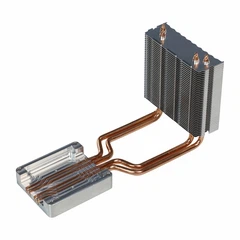
Yo, fellow cooling enthusiasts! If you're in the market for a top - notch all aluminum stacked radiator, you've come to the right place. I'm a supplier of these rads, and today, we're gonna dig deep into how the coolant type can impact an all aluminum stacked radiator.
First off, let's talk about what makes an all aluminum stacked radiator so cool (pun intended). Aluminum is a lightweight and highly conductive metal. This means it can transfer heat away from your engine or whatever it's cooling super efficiently. The stacked design further enhances this heat - transfer capability by increasing the surface area available for heat exchange. Now, onto the coolant.
Water - Based Coolants
Water - based coolants are, hands - down, the most common type out there. Water has excellent heat - carrying properties. It can absorb a significant amount of heat before its temperature rises, making it a great choice for cooling systems.
For an all aluminum stacked radiator, water - based coolants are generally a good fit. Since aluminum is highly reactive, water - based coolants are usually formulated with additives to prevent corrosion. These additives create a protective layer on the aluminum surface, keeping it safe from the water's potentially corrosive effects.
However, there are some cons. Water has a relatively low boiling point compared to some other coolants. In high - performance applications where the radiator is under a lot of stress, water can boil, leading to a loss of cooling efficiency. This is where the addition of antifreeze comes in. Antifreeze raises the boiling point of water and also lowers the freezing point, which is crucial in cold climates.
If you're using a water - based coolant in your all aluminum stacked radiator, make sure you're using the right mix. A common ratio is 50/50 water to antifreeze. This provides a good balance between boiling - point elevation, freezing - point depression, and corrosion protection. Check out our Combination Aluminum Water Cooling Radiator which is designed to work well with water - based coolants.
Glycol - Based Coolants
Glycol - based coolants, like ethylene glycol and propylene glycol, are another popular option. These coolants have a higher boiling point than water, which makes them ideal for high - temperature applications.
In an all aluminum stacked radiator, glycol - based coolants offer better heat - transfer stability. They can handle the intense heat generated by high - performance engines without boiling as easily as water - based coolants. This means you can push your radiator harder without worrying about a sudden loss of cooling.
But, glycol - based coolants aren't perfect. They're more viscous than water, which can reduce the flow rate through the radiator. This slower flow can potentially decrease the overall heat - transfer efficiency. Also, glycol is toxic, so proper handling is a must.
If you're in a situation where your all aluminum stacked radiator is going to be exposed to extreme heat, a glycol - based coolant might be the way to go. Check out our Air - Cooled Laser Module Heatsink which can also benefit from the high - temperature resistance of glycol - based coolants.
Organic Acid Technology (OAT) Coolants
OAT coolants are a newer type of coolant on the market. They're formulated with organic acids that provide long - term corrosion protection.
For an all aluminum stacked radiator, OAT coolants are a great option because they have a very low impact on aluminum. The organic acids form a stable protective layer on the aluminum surface, preventing corrosion over a long period. This means less maintenance and a longer lifespan for your radiator.
One of the downsides of OAT coolants is that they're more expensive than traditional water - based or glycol - based coolants. Also, they may not be compatible with all cooling systems, so you need to make sure your radiator and the rest of your cooling system are designed to work with OAT coolants.
If you're looking for a coolant that will keep your all aluminum stacked radiator in top shape for years to come, OAT coolants are worth considering. And don't forget to check out our Combination Water Cooling Radiator which can pair nicely with OAT coolants.
Impact on Heat Transfer
The type of coolant you choose can have a huge impact on the heat - transfer performance of your all aluminum stacked radiator. As we've seen, different coolants have different heat - carrying capacities, boiling points, and viscosities.
A coolant with a high heat - carrying capacity, like water, can absorb more heat from the engine and transfer it to the radiator more efficiently. However, if the coolant boils, it loses its ability to transfer heat effectively. On the other hand, a coolant with a high boiling point, like glycol, can maintain its heat - transfer capabilities even under high - temperature conditions.
Viscosity also plays a role. A thick coolant, like some glycol - based coolants, can slow down the flow through the radiator. This can reduce the amount of heat that's transferred from the coolant to the radiator fins. So, you need to find a balance between heat - carrying capacity, boiling point, and viscosity when choosing a coolant for your all aluminum stacked radiator.
Impact on Corrosion
Corrosion is a major concern when it comes to all aluminum stacked radiators. Aluminum is a reactive metal, and if it's exposed to the wrong coolant, it can start to corrode.
Water - based coolants, as mentioned earlier, need to have the right additives to prevent corrosion. If the additives wear off or if the coolant isn't changed regularly, the aluminum in the radiator can start to corrode. This can lead to leaks, reduced heat - transfer efficiency, and ultimately, radiator failure.
Glycol - based coolants also need to be formulated with corrosion inhibitors. However, some glycol - based coolants may not be as effective at protecting aluminum as others. OAT coolants are generally very good at preventing corrosion, but again, compatibility is key.
Impact on Maintenance
The coolant type can also affect the maintenance requirements of your all aluminum stacked radiator. Water - based coolants usually need to be changed more frequently, typically every 2 - 3 years or 30,000 - 60,000 miles. This is because the corrosion inhibitors in the coolant break down over time.
Glycol - based coolants can last longer, sometimes up to 5 years or 100,000 miles. OAT coolants can have an even longer lifespan, often up to 5 - 7 years. However, regardless of the coolant type, it's important to regularly check the coolant level and quality to ensure your radiator is working properly.
Conclusion
So, as you can see, the type of coolant you choose for your all aluminum stacked radiator can have a significant impact on its performance, lifespan, and maintenance requirements. Whether you go for a water - based, glycol - based, or OAT coolant, make sure you understand the pros and cons and choose the one that's best suited for your specific application.
If you're in the market for an all aluminum stacked radiator or have any questions about coolants and radiators, don't hesitate to reach out. We're here to help you make the right choice and keep your cooling system running smoothly.


References
- Cooling System Handbook: A Guide to Automotive and Industrial Cooling Systems
- Aluminum Corrosion and Protection in Cooling Systems - Research Paper
- Coolant Technology and Its Impact on Heat Exchanger Performance - Journal Article