


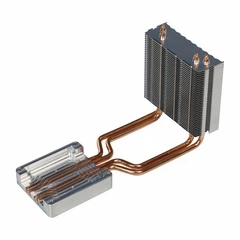
As a supplier of car controller heatsinks, I've witnessed firsthand the rapid evolution of automotive technology and its far - reaching environmental implications. Car controller heatsinks play a pivotal role in modern vehicles, ensuring the efficient operation of electronic control units (ECUs) by dissipating heat. However, their production, use, and disposal have significant environmental impacts that are often overlooked.


Production Phase
The production of car controller heatsinks involves several energy - intensive processes. Most heatsinks are made from metals such as aluminum or copper, which require large amounts of energy for extraction and refining. Aluminum, for instance, is extracted from bauxite ore through a complex process called the Bayer process, followed by smelting. This smelting process is extremely energy - hungry, often relying on fossil fuels. The combustion of fossil fuels releases large quantities of greenhouse gases, including carbon dioxide (CO₂), into the atmosphere, contributing to global warming.
Moreover, the manufacturing of heatsinks also involves machining operations such as cutting, drilling, and milling. These processes consume additional energy and generate waste materials. For example, during the machining of aluminum heatsinks, a significant amount of aluminum chips are produced. If not properly recycled, these chips end up in landfills, leading to resource depletion.
To mitigate these environmental impacts, some manufacturers, including our company, are exploring more sustainable production methods. We are increasingly using recycled aluminum in our Lightweight Automotive Controller Water Cooling Plate production. Recycling aluminum requires only about 5% of the energy needed to produce new aluminum from bauxite ore, significantly reducing energy consumption and greenhouse gas emissions. Additionally, we have implemented advanced machining techniques that minimize waste generation, such as using precision cutting tools and optimizing machining paths.
Use Phase
During the use phase, car controller heatsinks contribute to the overall energy efficiency of vehicles. By effectively dissipating heat from ECUs, they ensure that these units operate at optimal temperatures, which in turn improves the performance and reliability of the vehicle's electronic systems. This can lead to better fuel efficiency, especially in traditional internal combustion engine vehicles. When ECUs function properly, they can more accurately control engine parameters such as fuel injection and ignition timing, resulting in reduced fuel consumption and lower emissions of pollutants such as carbon monoxide (CO), nitrogen oxides (NOₓ), and particulate matter (PM).
In electric vehicles (EVs), the role of car controller heatsinks is even more critical. EVs rely heavily on sophisticated electronic control systems to manage battery charging and discharging, motor control, and other functions. Overheating of these control systems can lead to reduced battery life, decreased motor efficiency, and even safety risks. By maintaining the appropriate temperature of ECUs, heatsinks help to maximize the range and performance of EVs, which is essential for reducing the environmental impact of transportation.
However, it's important to note that the cooling systems associated with heatsinks, such as fans or liquid - cooling systems, also consume energy. In some cases, the energy required to power these cooling systems can offset the energy savings achieved through improved ECU performance. To address this issue, we are developing more energy - efficient cooling solutions, such as low - power fans and advanced liquid - cooling designs that minimize energy consumption while still providing effective heat dissipation.
Disposal Phase
At the end of their useful life, car controller heatsinks face the challenge of proper disposal. If not recycled, these heatsinks can end up in landfills, where they take up space and can potentially leach harmful substances into the soil and groundwater. Metals such as aluminum and copper can react with environmental agents over time, releasing heavy metals that can contaminate the surrounding environment.
Recycling is the most environmentally friendly option for disposing of car controller heatsinks. Recycling not only conserves natural resources but also reduces the energy and environmental impacts associated with the production of new heatsinks. However, the recycling process for heatsinks can be complex, as they often contain a combination of different materials, including metals, plastics, and electronic components.
Our company is committed to promoting the recycling of car controller heatsinks. We work closely with recycling partners to ensure that our products are properly disassembled and recycled at the end of their life. We also provide guidance to our customers on how to recycle our heatsinks in an environmentally responsible manner.
Comparison with Other Automotive Components
When comparing the environmental impacts of car controller heatsinks with other automotive components, it's clear that they have both unique and overlapping characteristics. For example, compared to Automobile Car Drainage Raditor, which is mainly used for engine cooling, car controller heatsinks are more focused on electronic system cooling. While both components are made of metals and require energy - intensive production processes, the use - phase impacts are different. Engine radiators directly affect the engine's cooling efficiency, which in turn affects fuel consumption and emissions. Car controller heatsinks, on the other hand, impact the performance of electronic control systems, which can indirectly influence vehicle efficiency.
In contrast, Aluminum Heat Pipe Communication Module Heatsink is often used in communication systems within vehicles. Although they share some similarities in terms of heat dissipation function and material usage, the application scenarios and environmental impacts during production and use can vary. For instance, communication module heatsinks may need to meet different size and performance requirements, which can affect the manufacturing process and energy consumption.
Future Trends and Opportunities
The automotive industry is constantly evolving, and there are several trends that will shape the future environmental impact of car controller heatsinks. One of the most significant trends is the increasing adoption of autonomous vehicles. Autonomous vehicles rely on a vast array of sensors, cameras, and computing systems, all of which generate a large amount of heat. As a result, the demand for high - performance car controller heatsinks will continue to grow.
To meet this demand while minimizing environmental impacts, we are researching and developing new materials and technologies. For example, we are exploring the use of advanced composite materials that offer high thermal conductivity while being lighter and more sustainable than traditional metals. These materials can reduce the weight of vehicles, which in turn improves fuel efficiency and reduces emissions.
Another trend is the integration of heatsinks with other vehicle systems. For example, some researchers are exploring the possibility of using the heat generated by ECUs to pre - heat the engine or the vehicle's interior, which can further improve energy efficiency.
Conclusion
In conclusion, car controller heatsinks have a complex and far - reaching environmental impact throughout their life cycle. From the energy - intensive production processes to the energy consumption during use and the challenges of proper disposal, every stage presents opportunities for environmental improvement. As a supplier, we are committed to developing more sustainable products and solutions. We believe that by working together with our customers, recycling partners, and the broader automotive industry, we can minimize the environmental footprint of car controller heatsinks and contribute to a more sustainable future.
If you are interested in our car controller heatsinks or have any questions about our sustainable solutions, we invite you to contact us for procurement and further discussions. We look forward to collaborating with you to drive the automotive industry towards a greener future.
References
- "Automotive Electronics: A Systems Approach" by John Y. H. Fuh and Yu - Ming Hsu
- "Thermal Management in Electronic Systems" by Avram Bar - Cohen and Ali Boroushaki
- "Environmental Impact Assessment of Automotive Components" by International Journal of Life Cycle Assessment