


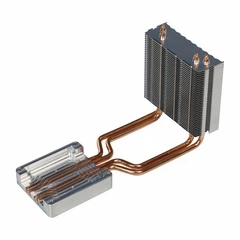
Hey there! As an Aluminum Finned Heat Sink supplier, I've seen firsthand how different environmental factors can impact the performance of these essential cooling components. One factor that often doesn't get as much attention as it should is humidity. So, let's dive into what humidity can do to aluminum finned heat sinks.
How Humidity Affects Heat Transfer
First off, let's talk about heat transfer. Aluminum finned heat sinks work by increasing the surface area available for heat to be dissipated into the surrounding air. When there's high humidity, the air is saturated with water vapor. This water vapor can interfere with the heat transfer process.
Water has a higher specific heat capacity than air. That means it takes more energy to heat up water compared to air. So, when there's moisture in the air around the heat sink, it can act as an insulator to some extent. The heat from the heat sink has to not only heat up the air but also the water vapor in it. This can slow down the rate at which heat is transferred away from the heat sink, reducing its overall efficiency.
For example, in a dry environment, the heat can quickly move from the aluminum fins into the air and be carried away. But in a humid environment, the water vapor can absorb some of that heat and hold onto it, making it harder for the heat sink to do its job effectively.
Corrosion Risks
Another major impact of humidity on aluminum finned heat sinks is corrosion. Aluminum is a reactive metal, and when it's exposed to moisture in the air, it can start to corrode. Corrosion is a chemical reaction that occurs when the aluminum reacts with oxygen and water to form aluminum oxide.
In a high - humidity environment, the rate of corrosion can increase significantly. The water vapor in the air can condense on the surface of the heat sink, creating a thin layer of water. This water acts as an electrolyte, facilitating the corrosion process. As the aluminum corrodes, it forms a layer of oxide on the surface of the fins. This oxide layer is less thermally conductive than pure aluminum.
As a result, the heat transfer efficiency of the heat sink is further reduced. The corroded fins can't transfer heat as well as they could when they were in their original, uncorroded state. Over time, the corrosion can also weaken the structure of the fins, making them more prone to damage.
Impact on Airflow
Humidity can also affect the airflow around the aluminum finned heat sink. When the air is humid, it's denser than dry air. This increased density can make it more difficult for the air to move through the fins of the heat sink.
In a normal cooling setup, fans are used to blow air through the fins to enhance heat transfer. But in a humid environment, the denser air requires more energy to move. The fans may have to work harder to maintain the same airflow rate. If the fans can't keep up, the airflow through the fins will decrease, which in turn reduces the heat transfer efficiency.
Mitigating the Effects of Humidity
So, what can we do to mitigate the effects of humidity on aluminum finned heat sinks? One option is to use a protective coating on the heat sink. There are various coatings available that can provide a barrier between the aluminum and the moisture in the air. These coatings can help prevent corrosion and improve the heat sink's resistance to humidity.
Another approach is to control the environment in which the heat sink is operating. For example, in industrial settings, dehumidifiers can be used to reduce the humidity levels in the air around the heat sink. This can help maintain the heat sink's performance and extend its lifespan.
Our Products and Solutions
At our company, we offer high - quality Aluminum Finned Heat Sinks that are designed to withstand a variety of environmental conditions, including high humidity. Our products, like the High - Power Efficient Stacked Heat Sink, are engineered with advanced materials and manufacturing techniques to minimize the impact of humidity on performance.


We also have the Controllable Power Water Cooling Plate, which can be a great alternative in high - humidity environments. Water cooling can be more effective at removing heat compared to air cooling, and it can also be less affected by humidity.
If you're interested in our Aluminum Finned Heat Sinks or any of our other products, we're here to help. Whether you're looking for a solution for a small - scale project or a large - scale industrial application, we can provide you with the right heat sink for your needs.
Conclusion
In conclusion, humidity can have a significant impact on aluminum finned heat sinks. It can reduce heat transfer efficiency, cause corrosion, and affect airflow. However, with the right strategies and high - quality products, these effects can be minimized.
If you're in the market for a reliable Aluminum Finned Heat Sink, don't hesitate to reach out. We're happy to have a chat about your requirements and provide you with the best cooling solutions.
References
- Incropera, F. P., & DeWitt, D. P. (2002). Fundamentals of Heat and Mass Transfer. John Wiley & Sons.
- ASM Handbook Committee. (2004). ASM Handbook Volume 13B: Corrosion: Materials. ASM International.