


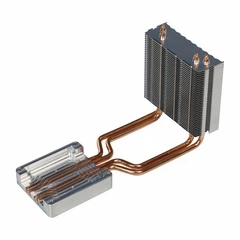
Hey there! As a supplier of cavity water cooling plates, I've been getting a lot of questions lately about how the material density of these plates affects their performance. So, I thought I'd take a deep dive into this topic and share some insights with you all.
First off, let's talk about what cavity water cooling plates are. These are essential components in many cooling systems, used in everything from cars to home appliances. They work by circulating water through a cavity within the plate, absorbing heat from the source and transferring it away. The efficiency of this heat transfer process is crucial, and that's where the material density comes into play.
How Material Density Affects Heat Transfer
The density of the material used in a cavity water cooling plate can have a significant impact on its heat transfer capabilities. Generally, materials with higher density have more atoms per unit volume. This means that there are more opportunities for heat to be transferred through conduction. When heat is applied to one side of the plate, the atoms in the material vibrate, and these vibrations are passed on to neighboring atoms. With a higher density material, there are more neighboring atoms to receive and transfer these vibrations, leading to a more efficient heat transfer.
For example, metals like copper and aluminum are commonly used in cavity water cooling plates. Copper has a relatively high density compared to many other metals, which makes it an excellent conductor of heat. Aluminum, on the other hand, has a lower density than copper but is still a good choice due to its light weight and cost - effectiveness. When we're choosing the material for a cooling plate, we need to balance the benefits of high - density materials for heat transfer with other factors like weight and cost.
Impact on Structural Integrity
Material density also plays a role in the structural integrity of the cavity water cooling plate. Higher density materials tend to be stronger and more resistant to deformation. This is important because the cooling plate needs to withstand the pressure of the circulating water and any external forces it might encounter during its use.
Let's say you're using a cavity water cooling plate in an Automobile Car Drainage Raditor. The plate will be exposed to vibrations from the engine and the movement of the vehicle. A high - density material will be better able to maintain its shape and function under these conditions, reducing the risk of leaks or other failures.
However, it's not always necessary to go for the highest density material. In some applications, like in a Lightweight Automotive Controller Water Cooling Plate, weight is a critical factor. Using a lower density material can help to reduce the overall weight of the component without sacrificing too much in terms of performance.
Effects on Fluid Flow
The material density can also influence the fluid flow within the cavity of the cooling plate. A denser material may have a smoother internal surface, which can reduce friction and allow the water to flow more freely. This is important because efficient fluid flow is essential for effective heat transfer. If the water flow is restricted, the cooling plate won't be able to absorb and transfer heat as effectively.
On the other hand, a very high - density material might also have a higher thermal mass. This means that it takes longer for the material to heat up and cool down. In some cases, this can be a disadvantage, especially in applications where rapid temperature changes are required.
Cost Considerations
Cost is always a major factor when choosing the material for a cavity water cooling plate. High - density materials are often more expensive. For example, copper, with its high density and excellent heat transfer properties, is more costly than aluminum. As a supplier, we need to work with our customers to find the right balance between performance and cost.
If you're looking for a cost - effective solution without sacrificing too much on performance, aluminum can be a great choice. It has a good combination of heat transfer capabilities, light weight, and affordability. And there are many applications where aluminum cavity water cooling plates work just as well as those made from more expensive materials.
Practical Applications
In the field of communication modules, Aluminum Heat Pipe Communication Module Heatsink are widely used. These heatsinks often incorporate cavity water cooling plates made of aluminum. The relatively low density of aluminum makes the module lightweight, which is important for easy installation and transportation. At the same time, aluminum's heat transfer properties are sufficient to keep the communication components cool.
In the automotive industry, lightweight automotive controller water cooling plates are crucial for improving fuel efficiency. By using lower - density materials, we can reduce the weight of the vehicle, which in turn reduces the amount of energy needed to move it. And yet, these plates still need to be able to effectively cool the automotive controllers to ensure their proper functioning.


Conclusion
In conclusion, the material density of a cavity water cooling plate has a profound effect on its performance. It impacts heat transfer, structural integrity, fluid flow, and cost. As a supplier, we need to carefully consider all these factors when choosing the material for a cooling plate. We work closely with our customers to understand their specific requirements and find the best solution for their applications.
If you're in the market for cavity water cooling plates and want to discuss your needs, we'd love to hear from you. Whether you're looking for a high - performance solution for a demanding application or a cost - effective option for a more budget - conscious project, we have the expertise and experience to help you make the right choice. Let's start a conversation and see how we can work together to meet your cooling needs.
References
- Incropera, F. P., & DeWitt, D. P. (2002). Fundamentals of Heat and Mass Transfer. John Wiley & Sons.
- Cengel, Y. A. (2003). Heat Transfer: A Practical Approach. McGraw - Hill.