


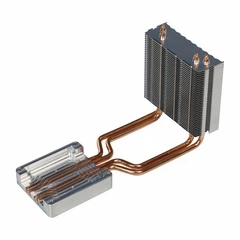
In the automotive industry, efficient heat management is crucial for the optimal performance and longevity of car controllers. As a leading supplier of car controller heatsinks, I've witnessed firsthand the growing demand for budget - friendly yet high - performing solutions. This blog aims to explore the availability of such heatsinks and shed light on the options that strike the perfect balance between cost and performance.


The Importance of Car Controller Heatsinks
Car controllers, such as engine control units (ECUs), transmission control units (TCUs), and battery management systems (BMS), generate a significant amount of heat during operation. Excessive heat can lead to reduced performance, increased wear and tear, and even system failures. Heatsinks play a vital role in dissipating this heat, ensuring that the controllers operate within their optimal temperature range.
A well - designed heatsink can improve the overall efficiency of the car controller, enhance its reliability, and extend its service life. Moreover, in the era of electric vehicles (EVs) and hybrid electric vehicles (HEVs), where the complexity and power density of controllers are increasing, effective heat management becomes even more critical.
Factors Affecting the Performance and Cost of Heatsinks
Several factors influence the performance and cost of car controller heatsinks. These include the material, design, and manufacturing process.
Material
The choice of material is a primary determinant of a heatsink's performance. Common materials used in heatsinks include aluminum, copper, and graphite. Aluminum is a popular choice due to its high thermal conductivity, low cost, and lightweight nature. Copper has even higher thermal conductivity than aluminum but is more expensive and heavier. Graphite offers excellent in - plane thermal conductivity and is relatively lightweight, but it can be costly.
Design
The design of the heatsink also plays a crucial role in its performance. Heatsinks can have various shapes and structures, such as finned, pin - fin, or plate - type designs. Finned heatsinks increase the surface area available for heat dissipation, which improves the cooling efficiency. However, the complexity of the design can also increase the manufacturing cost.
Manufacturing Process
The manufacturing process used to produce the heatsink can significantly impact its cost. Processes such as extrusion, machining, and die - casting are commonly used. Extrusion is a cost - effective method for producing simple - shaped heatsinks, while machining can be used to create more complex designs but is generally more expensive. Die - casting allows for the production of intricate shapes with high precision but requires expensive tooling.
Budget - Friendly and High - Performing Heatsink Options
Despite the various factors that can drive up the cost of heatsinks, there are several budget - friendly options that offer excellent performance.
Aluminum Finned Heatsinks
Aluminum finned heatsinks are one of the most cost - effective solutions for car controller cooling. The extrusion process used to manufacture these heatsinks is relatively inexpensive, and the finned design provides a large surface area for heat dissipation. These heatsinks are lightweight, which is beneficial for automotive applications where weight reduction is a priority. For example, our company offers a range of aluminum finned heatsinks that are specifically designed for car controllers, providing efficient cooling at an affordable price.
Plate - Type Heatsinks
Plate - type heatsinks are another budget - friendly option. They are simple in design and can be easily manufactured using processes such as stamping or machining. While they may not have the same level of cooling efficiency as finned heatsinks, they can still provide adequate cooling for less demanding applications. Plate - type heatsinks are often used in combination with other cooling methods, such as fans or liquid cooling, to enhance their performance.
Liquid Cooling Plates
Liquid cooling plates are becoming increasingly popular in automotive applications due to their high cooling efficiency. They work by circulating a coolant through channels in the plate, which absorbs and dissipates the heat generated by the car controller. While liquid cooling systems can be more expensive than air - cooled heatsinks, there are budget - friendly options available. For instance, our Lightweight Automotive Controller Water Cooling Plate offers a cost - effective solution for high - performance car controllers. It is made of lightweight aluminum and has a simple yet efficient design that provides excellent cooling performance.
Another option is our Automotive Controller Water Cooling Plate. This plate is designed to meet the cooling requirements of a wide range of car controllers and is available at a competitive price.
Specialized Heatsinks for Energy Storage Batteries
In addition to car controllers, energy storage batteries in EVs and HEVs also require effective heat management. Our Cavity - type Energy Storage Battery Water Cooling Plate is a budget - friendly solution for cooling energy storage batteries. It features a cavity - type design that allows for efficient coolant flow and heat transfer, ensuring that the batteries operate within their optimal temperature range.
Conclusion
In conclusion, there are indeed budget - friendly car controller heatsinks that perform well. By considering factors such as material, design, and manufacturing process, it is possible to find a heatsink that meets both the performance requirements and the budget constraints of automotive applications.
As a supplier of car controller heatsinks, we are committed to providing high - quality, cost - effective solutions to our customers. Our range of heatsinks, including aluminum finned heatsinks, plate - type heatsinks, and liquid cooling plates, are designed to meet the diverse needs of the automotive industry.
If you are in the market for car controller heatsinks or have any questions about our products, we encourage you to contact us for a detailed discussion. We look forward to the opportunity to work with you and provide the best heat management solutions for your automotive applications.
References
- Incropera, F. P., DeWitt, D. P., Bergman, T. L., & Lavine, A. S. (2007). Fundamentals of Heat and Mass Transfer. John Wiley & Sons.
- Bar - Cohen, A., & Kraus, A. D. (2003). Thermal Analysis and Control of Electronic Equipment. John Wiley & Sons.