


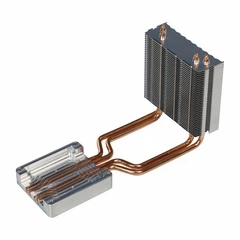
In the realm of LED street lighting, the efficient dissipation of heat is crucial for ensuring the longevity and optimal performance of the lighting fixtures. Circular base LED heat sinks have emerged as a popular choice due to their unique design and potential for effective heat transfer. As a supplier of Circular Base LED Heat Sinks, I have witnessed firsthand the growing demand for these products in the market. However, like any technology, using circular base LED heat sinks in LED street lights comes with its own set of challenges. In this blog post, I will explore some of the key challenges associated with using circular base LED heat sinks in LED street lights and discuss potential solutions.
Thermal Management Challenges
One of the primary challenges of using circular base LED heat sinks in LED street lights is thermal management. LED street lights generate a significant amount of heat during operation, and if this heat is not dissipated effectively, it can lead to a decrease in the performance and lifespan of the LEDs. Circular base LED heat sinks are designed to transfer heat away from the LEDs and dissipate it into the surrounding environment. However, achieving efficient heat transfer can be challenging due to several factors.
Firstly, the circular base design of the heat sink can limit the surface area available for heat dissipation. Compared to other heat sink designs, such as rectangular or finned heat sinks, circular base heat sinks may have a smaller surface area, which can reduce their ability to dissipate heat effectively. This can result in higher operating temperatures for the LEDs, leading to reduced efficiency and a shorter lifespan.
Secondly, the placement of the LEDs on the circular base can also affect the thermal performance of the heat sink. If the LEDs are not evenly distributed on the base, it can create hotspots, where the heat is concentrated in certain areas. These hotspots can further increase the operating temperature of the LEDs and reduce their performance. To overcome this challenge, it is important to carefully design the layout of the LEDs on the circular base to ensure even heat distribution.
Another thermal management challenge is the choice of materials for the circular base LED heat sink. The material used for the heat sink plays a crucial role in its thermal conductivity and ability to dissipate heat. Aluminum is a commonly used material for LED heat sinks due to its high thermal conductivity, low cost, and ease of manufacturing. However, aluminum has a relatively low heat capacity, which means it can quickly reach its maximum temperature and become less effective at dissipating heat. To address this issue, some manufacturers are using materials with higher heat capacities, such as copper or graphite, in combination with aluminum to improve the thermal performance of the heat sink.
Mechanical Design Challenges
In addition to thermal management challenges, using circular base LED heat sinks in LED street lights also presents mechanical design challenges. LED street lights are typically installed in outdoor environments, where they are exposed to various weather conditions, vibrations, and mechanical stresses. The circular base design of the heat sink can make it more susceptible to these environmental factors, which can affect its structural integrity and performance.
One of the main mechanical design challenges is ensuring the stability of the circular base LED heat sink. The circular base design can make the heat sink more prone to tipping or wobbling, especially when installed in high-wind areas or on uneven surfaces. To address this issue, it is important to design the heat sink with a stable base and provide adequate support and mounting options. This can include using a skirt or flange around the base of the heat sink to increase its stability and prevent it from tipping over.
Another mechanical design challenge is the connection between the circular base LED heat sink and the LED module. The LED module is typically attached to the heat sink using screws or other fasteners, and it is important to ensure a secure and reliable connection to prevent the LED module from becoming loose or detached. This can be challenging due to the circular shape of the base, which can make it difficult to align the holes for the fasteners. To overcome this challenge, some manufacturers are using specialized mounting systems or adhesives to ensure a secure connection between the LED module and the heat sink.
Cost and Manufacturing Challenges
Cost is always a significant factor in the design and implementation of any lighting system, and using circular base LED heat sinks in LED street lights is no exception. Circular base LED heat sinks can be more expensive to manufacture than other heat sink designs due to their complex shape and the need for specialized manufacturing processes. This can make them less attractive to cost-conscious customers, especially in large-scale lighting projects.
To reduce the cost of circular base LED heat sinks, manufacturers are constantly looking for ways to optimize their designs and manufacturing processes. This can include using more efficient materials, reducing the amount of material used, and improving the manufacturing techniques to increase productivity. For example, some manufacturers are using die-casting or extrusion processes to produce circular base LED heat sinks, which can be more cost-effective than traditional machining methods.
Another cost-related challenge is the availability of raw materials. The demand for LED lighting is growing rapidly, and this has led to an increasing demand for the raw materials used in the manufacturing of LED heat sinks, such as aluminum and copper. Fluctuations in the price of these raw materials can have a significant impact on the cost of circular base LED heat sinks. To mitigate this risk, manufacturers need to establish long-term supply contracts with reliable suppliers and explore alternative materials that can provide similar thermal performance at a lower cost.
Compatibility and Integration Challenges
Finally, using circular base LED heat sinks in LED street lights also presents compatibility and integration challenges. LED street lights are typically part of a larger lighting system that includes other components, such as drivers, controllers, and sensors. The circular base design of the heat sink can make it more difficult to integrate these components into the lighting system, especially if they have different shapes or sizes.
To address this challenge, it is important to ensure that the circular base LED heat sink is designed to be compatible with the other components in the lighting system. This can include providing standardized mounting options and interfaces, as well as ensuring that the heat sink does not interfere with the operation of the other components. Additionally, manufacturers need to work closely with their customers to understand their specific requirements and provide customized solutions that meet their needs.

Conclusion
In conclusion, using circular base LED heat sinks in LED street lights offers several advantages, such as unique design and potential for effective heat transfer. However, it also comes with its own set of challenges, including thermal management, mechanical design, cost and manufacturing, and compatibility and integration. As a supplier of Circular Base LED Heat Sinks, I understand the importance of addressing these challenges to ensure the successful implementation of LED street lighting systems.
To overcome these challenges, manufacturers need to invest in research and development to improve the design and performance of circular base LED heat sinks. This can include using advanced materials, optimizing the manufacturing processes, and developing innovative solutions for thermal management and mechanical design. Additionally, manufacturers need to work closely with their customers to understand their specific requirements and provide customized solutions that meet their needs.
If you are interested in learning more about our Circular Base LED Heat Sinks or discussing your specific requirements, please feel free to contact us for a procurement discussion. We are committed to providing high-quality products and services that meet the needs of our customers.
References
- [1] "Thermal Management in LED Lighting Systems," Lighting Research Center, Rensselaer Polytechnic Institute.
- [2] "LED Lighting: Principles, Drivers, and Thermal Management," by Fred Schubert and Jong Kyu Kim.
- [3] "High-Power LED Thermal Management: Design, Analysis, and Testing," by Yung-Cheng Lee.