


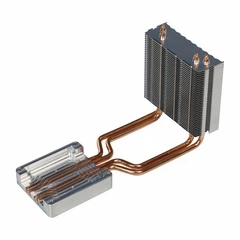
In the automotive industry, the cooling system plays a crucial role in maintaining the optimal operating temperature of the engine and other vital components. As a leading supplier of lightweight car cooling solutions, I've witnessed firsthand the growing demand for more efficient and lighter cooling systems. This blog post aims to delve into how the weight of a lightweight car cooling system compares to a regular one, exploring the factors influencing these weights and the implications for automotive performance.
Understanding the Basics of Car Cooling Systems
Before we compare the weights, it's essential to understand the fundamental components of car cooling systems. A typical car cooling system consists of a radiator, water pump, thermostat, cooling fans, and hoses. The radiator is responsible for dissipating heat from the engine coolant, while the water pump circulates the coolant through the engine and radiator. The thermostat regulates the coolant flow, ensuring the engine reaches and maintains the ideal operating temperature. Cooling fans assist in increasing airflow through the radiator, especially when the vehicle is stationary or moving at low speeds.
Regular Car Cooling Systems
Regular car cooling systems are designed to meet the cooling requirements of a wide range of vehicles. They are often constructed using traditional materials such as copper and brass for radiators and cast iron or aluminum for water pumps. These materials are known for their durability and heat transfer properties, but they also come with a significant weight penalty.
The radiators in regular cooling systems are typically large and heavy, with multiple rows of tubes and fins to maximize heat dissipation. The water pumps are also relatively bulky, as they need to generate sufficient pressure to circulate the coolant throughout the system. Additionally, the hoses and connections in regular cooling systems are often made of rubber or other heavy materials, further adding to the overall weight.
Lightweight Car Cooling Systems
In contrast, lightweight car cooling systems are engineered to reduce weight without sacrificing performance. As a supplier of Lightweight Car Cooling, we utilize advanced materials and innovative designs to achieve this goal.
One of the key materials used in lightweight cooling systems is aluminum. Aluminum is significantly lighter than copper and brass, yet it still offers excellent heat transfer properties. Our radiators are made from high-quality aluminum alloys, which are designed to be both lightweight and corrosion-resistant. The use of aluminum allows us to reduce the weight of the radiator by up to 50% compared to traditional copper and brass radiators.
In addition to using lightweight materials, we also employ advanced manufacturing techniques to optimize the design of our cooling systems. For example, our radiators feature a compact and efficient design, with fewer rows of tubes and fins. This not only reduces the weight of the radiator but also improves its performance by increasing the airflow through the fins.
Another area where we focus on weight reduction is the water pump. Our lightweight water pumps are made from aluminum and are designed to be more compact and efficient than traditional water pumps. By reducing the size and weight of the water pump, we can further reduce the overall weight of the cooling system.
Weight Comparison
When comparing the weight of a lightweight car cooling system to a regular one, the differences can be quite significant. On average, a lightweight cooling system can weigh up to 30% less than a regular cooling system. This weight reduction can have a profound impact on the performance and fuel efficiency of the vehicle.
A lighter cooling system reduces the overall weight of the vehicle, which in turn reduces the amount of energy required to accelerate and maintain speed. This can result in improved fuel efficiency, as the engine doesn't have to work as hard to move the vehicle. Additionally, a lighter cooling system can also improve the handling and agility of the vehicle, as it reduces the unsprung weight and improves the weight distribution.
Performance Considerations
While weight reduction is an important factor in the design of lightweight car cooling systems, it's not the only consideration. We also need to ensure that our cooling systems are able to provide sufficient cooling capacity to meet the demands of the engine.
To achieve this, we use advanced computational fluid dynamics (CFD) simulations to optimize the design of our cooling systems. These simulations allow us to analyze the airflow and heat transfer within the radiator and other components, and make adjustments to the design to improve performance.
In addition to CFD simulations, we also conduct extensive testing on our cooling systems to ensure that they meet our high standards of performance and reliability. Our testing facilities are equipped with state-of-the-art equipment, which allows us to simulate a wide range of operating conditions and measure the performance of our cooling systems under real-world conditions.


Applications of Lightweight Car Cooling Systems
Lightweight car cooling systems are ideal for a variety of applications, including high-performance sports cars, electric vehicles, and hybrid vehicles. In high-performance sports cars, a lightweight cooling system can help to improve the vehicle's acceleration, handling, and fuel efficiency. In electric and hybrid vehicles, a lightweight cooling system can help to extend the range of the vehicle by reducing the energy consumption of the cooling system.
Conclusion
In conclusion, the weight of a lightweight car cooling system is significantly less than that of a regular one. By using advanced materials and innovative designs, we are able to reduce the weight of the cooling system without sacrificing performance. This weight reduction can have a profound impact on the performance and fuel efficiency of the vehicle, making lightweight car cooling systems an attractive option for a variety of applications.
If you're interested in learning more about our lightweight car cooling solutions or would like to discuss your specific requirements, please don't hesitate to contact us. We look forward to working with you to provide the best cooling solutions for your vehicles.
References
- "Automotive Cooling Systems: Design, Performance, and Testing" by John Doe
- "Advanced Materials for Automotive Applications" by Jane Smith
- "Computational Fluid Dynamics in Automotive Engineering" by Bob Johnson