


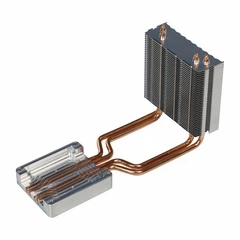
As a seasoned supplier of aluminum automotive radiators, I'm excited to take you through the intricate production process of these essential components. Aluminum automotive radiators play a crucial role in maintaining the optimal temperature of a vehicle's engine, ensuring its smooth and efficient operation. In this blog post, I'll break down each step of the production process, from raw material selection to the final quality check.
Raw Material Selection
The first step in the production of an aluminum automotive radiator is the careful selection of raw materials. Aluminum is the primary material used due to its excellent thermal conductivity, lightweight nature, and corrosion resistance. We source high - quality aluminum alloys that meet strict industry standards. These alloys are typically a combination of aluminum with other elements such as copper, silicon, and magnesium, which enhance the material's strength and heat transfer properties.
Sheet Metal Cutting
Once the raw aluminum is received, the sheet metal cutting process begins. Large sheets of aluminum are fed into precision cutting machines. These machines use advanced laser or mechanical cutting technologies to cut the aluminum sheets into the required shapes and sizes for the radiator components. This step requires high precision to ensure that all parts fit together perfectly during the assembly process.
Fin Formation
One of the most critical components of an aluminum automotive radiator is the fins. Fins significantly increase the surface area of the radiator, which in turn enhances the heat transfer efficiency. The fin formation process involves passing the aluminum sheet through a fin rolling machine. This machine creates a series of small, closely spaced fins on the sheet. The shape and density of the fins are carefully designed to maximize heat dissipation. There are different types of fin designs, such as louvered fins and corrugated fins, each with its own advantages in terms of heat transfer and air flow characteristics.
Tube Manufacturing
The tubes in an aluminum automotive radiator are responsible for carrying the coolant. To manufacture the tubes, the cut aluminum sheets are formed into a tubular shape. This is typically done using a tube forming machine, which bends and welds the edges of the sheet to create a seamless tube. The tubes are then cut to the appropriate length. The inner surface of the tubes may be treated or textured to improve the coolant flow and heat transfer.
Header and Tank Production
The headers and tanks of the radiator are also made from aluminum. Similar to the tube manufacturing process, the headers and tanks are formed from cut aluminum sheets. They are shaped into the required geometric forms and welded together. The headers are designed to distribute the coolant evenly among the tubes, while the tanks store the coolant. These components need to be strong and leak - proof to ensure the proper functioning of the radiator.
Assembly
Once all the individual components are manufactured, the assembly process begins. The tubes are inserted into the headers, and the fins are placed between the tubes. This assembly is then carefully aligned and held in place using fixtures. The next step is to join all the components together. This is usually done through a brazing process. Brazing is a metal - joining process in which a filler metal is heated above its melting point and distributed between two or more close - fitting parts by capillary action. In the case of aluminum automotive radiators, a special aluminum brazing alloy is used. The brazed joints provide a strong and durable connection between the components, ensuring good heat transfer and mechanical stability.


Brazing
The brazing process takes place in a controlled environment, typically a brazing furnace. The assembled radiator components are placed in the furnace, which is heated to the appropriate temperature for the brazing alloy to melt. The furnace is filled with a protective gas atmosphere to prevent oxidation of the aluminum during the heating process. Once the brazing alloy has melted and flowed between the components, the furnace is cooled down slowly. This allows the brazed joints to solidify and form a strong bond.
Cleaning and Surface Treatment
After brazing, the radiator is thoroughly cleaned to remove any flux residues or contaminants. This is important as these residues can affect the performance and longevity of the radiator. The cleaning process may involve using chemical cleaners and water rinsing. Once the radiator is clean, a surface treatment may be applied. This can include an anti - corrosion coating to protect the aluminum from environmental factors such as moisture and road salt.
Pressure Testing
To ensure the quality and reliability of the radiator, a pressure test is conducted. The radiator is filled with a test fluid, usually water or air, and pressurized to a specified level. The pressure is maintained for a certain period of time, and any leaks are detected. If a leak is found, the radiator is repaired or rejected. This step is crucial as a leaking radiator can lead to coolant loss and engine overheating.
Final Inspection
Before the radiator is ready for shipment, a final inspection is carried out. This inspection includes a visual check for any cosmetic defects, as well as a performance check. The radiator's heat transfer efficiency, air flow resistance, and other performance parameters are measured and compared to the design specifications. Only radiators that meet all the quality standards are approved for sale.
Our Product Range
In addition to our standard aluminum automotive radiators, we also offer a variety of related products. For example, we have the Automotive Controller Water Cooling Plate, which is designed to cool automotive controllers effectively. Our Automobile Car Drainage Raditor is another innovative product that provides efficient drainage and cooling. And for communication modules in vehicles, we have the Aluminum Heat Pipe Communication Module Heatsink, which uses advanced heat pipe technology for superior heat dissipation.
Contact for Procurement
If you are in the market for high - quality aluminum automotive radiators or any of our related products, we invite you to contact us for procurement and further discussions. Our team of experts is ready to assist you with your specific requirements and provide you with the best solutions.
References
- ASM Handbook, Volume 6: Welding, Brazing, and Soldering. ASM International.
- Automotive Radiator Design and Performance. Society of Automotive Engineers (SAE) publications.
- Aluminum Association Technical Papers on Aluminum Alloys for Automotive Applications.