


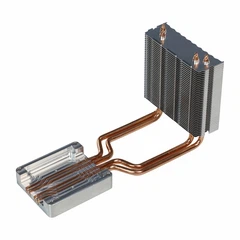
Hey there! As a supplier of Lightweight Car Cooling systems, I often get asked about how different components work, especially the temperature sensor in a lightweight car cooling system. So, I thought I'd take a deep dive into this topic and share some insights with you.
First off, let's understand why a temperature sensor is so crucial in a car cooling system. The engine in a car generates a huge amount of heat when it's running. If this heat isn't managed properly, it can lead to all sorts of problems, like engine overheating, which can cause serious damage and reduce the lifespan of the engine. That's where the cooling system comes in. And the temperature sensor is like the brain of this system. It constantly monitors the temperature of the coolant in the engine and sends this information to the car's engine control unit (ECU).
Now, let's get into the nitty - gritty of how a temperature sensor actually works. There are mainly two types of temperature sensors used in car cooling systems: thermistors and thermocouples.
Thermistors are pretty common. They're made of semiconductor materials. The basic principle behind a thermistor is that its electrical resistance changes with temperature. There are two types of thermistors: negative temperature coefficient (NTC) and positive temperature coefficient (PTC). In a car cooling system, NTC thermistors are more commonly used.
An NTC thermistor has a characteristic where its resistance decreases as the temperature increases. When the engine is cold, the coolant temperature is low, and the resistance of the NTC thermistor is high. As the engine warms up and the coolant temperature rises, the resistance of the thermistor drops. The ECU is connected to the thermistor in a circuit. It measures the voltage across the thermistor, and based on the known relationship between resistance and temperature for that particular thermistor, it can calculate the temperature of the coolant.
Let's say the engine has just started, and the coolant is at a low temperature. The high resistance of the NTC thermistor causes a certain voltage drop in the circuit. The ECU reads this voltage and knows that the engine is cold. It might then adjust things like the fuel - air mixture to make it richer, which helps the engine start and run smoothly in cold conditions. As the engine runs and the coolant temperature goes up, the resistance of the thermistor decreases, and the voltage across it changes. The ECU detects this change and can then make appropriate adjustments to the engine's operation, such as adjusting the fan speed of the cooling system.
Thermocouples, on the other hand, work on the principle of the Seebeck effect. The Seebeck effect states that when two different metals are joined at two junctions and there is a temperature difference between these two junctions, a voltage is generated. In a car cooling system, one junction of the thermocouple is placed in contact with the coolant, and the other junction is kept at a reference temperature.
As the temperature of the coolant changes, the temperature difference between the two junctions of the thermocouple changes. This causes a change in the generated voltage. The ECU measures this voltage and uses a pre - calibrated relationship to determine the temperature of the coolant. Thermocouples are known for their durability and ability to measure a wide range of temperatures. They're often used in more extreme conditions where a thermistor might not be as reliable.
Once the temperature sensor has measured the coolant temperature and sent the information to the ECU, the ECU takes action. If the coolant temperature is getting too high, the ECU might activate the electric cooling fan. The fan blows air through the radiator, which helps to dissipate the heat from the coolant. Some cars also have a water pump that circulates the coolant through the engine and the radiator. The ECU can adjust the speed of the water pump based on the coolant temperature.


Now, as a Lightweight Car Cooling supplier, we understand the importance of having a reliable temperature sensor. That's why we offer high - quality sensors that are designed to work accurately in different driving conditions. We also have a range of other products related to car cooling systems. For example, we have the Cavity - type Energy Storage Battery Water Cooling Plate. This plate is used to cool the energy storage battery in a car, which is becoming more and more important as electric and hybrid cars are on the rise.
Another great product we offer is the Automobile Car Drainage Raditor. This radiator helps to efficiently drain and cool the coolant, ensuring that the engine stays at the right temperature. And then there's the Automotive Controller Water Cooling Plate, which is used to cool the automotive controller, a critical component in modern cars.
If you're in the market for high - quality lightweight car cooling products, including reliable temperature sensors, we'd love to hear from you. Whether you're an automaker looking to source parts for your production line or a car enthusiast looking to upgrade your car's cooling system, we can provide you with the solutions you need. Get in touch with us to start a conversation about your requirements and how we can help you keep your engine cool and running smoothly.
In conclusion, the temperature sensor in a lightweight car cooling system plays a vital role in ensuring the proper functioning of the engine. By accurately measuring the coolant temperature and sending this information to the ECU, it allows the car to make the necessary adjustments to manage heat effectively. And as a supplier, we're committed to providing top - notch products that contribute to the overall performance and reliability of car cooling systems.
References
- Automotive Engineering Handbook, various editions
- "Fundamentals of Automotive Technology" textbooks