


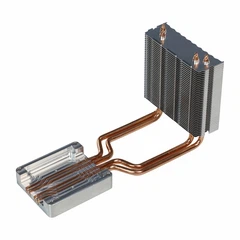
Hey there! As a supplier of cavity water cooling plates, I've been deeply involved in understanding how surface treatment can have a huge impact on their performance. Let's dig into this topic and see what's going on.
First off, what exactly is a cavity water cooling plate? Well, it's a key component used in various applications, like in cars, home appliances, and energy storage systems. It works by circulating water through its cavities to absorb and dissipate heat, keeping things cool and running smoothly.
Now, let's talk about surface treatment. There are several common surface treatment methods, and each can bring different changes to the performance of the cavity water cooling plate.
One of the most basic treatments is anodizing. Anodizing creates a thin oxide layer on the surface of the cooling plate. This layer has some great benefits. For one, it improves the corrosion resistance of the plate. In many environments, especially those with high humidity or exposure to certain chemicals, the cooling plate can be at risk of corrosion. Corrosion can not only damage the appearance of the plate but also reduce its heat - transfer efficiency over time. With an anodized surface, the plate can better withstand these harsh conditions.
Moreover, anodizing can also enhance the heat - transfer performance to some extent. The oxide layer has a relatively high thermal conductivity compared to the untreated metal surface in some cases. This means that heat can be transferred more effectively from the heat - generating components to the water inside the cavities. For example, in a Cavity - type Energy Storage Battery Water Cooling Plate, anodizing can help maintain a stable temperature for the battery, which is crucial for its performance and lifespan.
Another popular surface treatment is coating. There are different types of coatings available, such as thermal - conductive coatings. These coatings are designed to have high thermal conductivity. When applied to the surface of the cavity water cooling plate, they can significantly improve the heat - transfer rate. The coating fills in the microscopic irregularities on the surface, creating a more uniform surface for heat transfer. This is especially useful in applications where high - efficiency heat dissipation is required, like in a Lightweight Automotive Controller Water Cooling Plate. The automotive controller generates a lot of heat during operation, and a well - coated cooling plate can ensure that the controller stays within its optimal temperature range.
Coatings can also provide additional protection against wear and tear. In some industrial or automotive applications, the cooling plate may be subject to mechanical stress, such as vibration or friction. A durable coating can act as a buffer, preventing the surface from being scratched or damaged. This helps to maintain the integrity of the cooling plate and its performance over a long period.
Then there's the option of surface texturing. Surface texturing involves creating specific patterns or roughness on the surface of the cooling plate. This can have a profound effect on the heat - transfer process. When the surface is textured, it increases the surface area available for heat transfer. More surface area means more contact between the heat - generating surface and the water in the cavities, allowing for more efficient heat exchange.
For example, a micro - textured surface can create turbulence in the water flow inside the cavities. Turbulent flow is better at carrying heat away compared to laminar flow because it mixes the water more effectively. This is particularly beneficial in a Automobile Car Drainage Raditor, where efficient heat dissipation is essential for the proper functioning of the car's engine.
On the other hand, improper surface treatment can have negative impacts on the performance of the cavity water cooling plate. If the anodizing process is not done correctly, the oxide layer may be too thin or uneven, which won't provide sufficient corrosion protection. A poorly applied coating may peel off over time, losing its heat - transfer and protective properties. And if the surface texturing is too aggressive, it could actually disrupt the water flow in the cavities, reducing the heat - transfer efficiency instead of improving it.
In addition to the direct effects on heat transfer and protection, surface treatment can also affect the cost and manufacturability of the cavity water cooling plate. Some surface treatments are more expensive than others. For example, high - quality thermal - conductive coatings can be costly. However, considering the long - term benefits in terms of performance and durability, the investment may be worthwhile.


Manufacturability is also an important factor. Some surface treatment processes may be more complex and time - consuming, which can increase the production time and cost. As a supplier, we need to balance these factors to offer our customers the best combination of performance, cost, and quality.
So, if you're in the market for cavity water cooling plates, it's crucial to consider the surface treatment. The right surface treatment can make a huge difference in the performance and lifespan of the cooling plate. Whether you're looking for a cooling plate for an energy storage system, an automotive controller, or a car radiator, we've got you covered. We have a wide range of cavity water cooling plates with different surface treatments to meet your specific needs.
If you're interested in learning more about our products or want to discuss your requirements, don't hesitate to reach out. We're always happy to have a chat and help you find the perfect solution for your heat - dissipation needs.
References
- "Heat Transfer in Electronic Equipment" by some well - known heat - transfer experts
- Industry reports on the performance of different surface - treated cooling components