


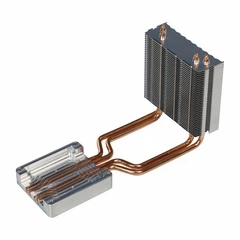
As a seasoned supplier in the automotive cooling system industry, I've witnessed firsthand the evolution and divergence between liquid - cooled and air - cooled automotive cooling systems. These two types of cooling systems play a crucial role in maintaining the optimal temperature of a vehicle's engine, ensuring its smooth operation and longevity. In this blog, I'll delve into the differences between them, exploring their mechanisms, advantages, disadvantages, and applications.
Mechanisms of Liquid - Cooled and Air - Cooled Systems
Liquid - Cooled Systems
Liquid - cooled systems are the more prevalent choice in modern vehicles. The basic principle behind a liquid - cooled system is to circulate a coolant (usually a mixture of water and antifreeze) through the engine block and cylinder head. As the coolant absorbs heat from the engine, it is then pumped to a radiator located at the front of the vehicle. The radiator consists of a series of thin tubes and fins, which increase the surface area for heat dissipation. A fan, either mechanical or electric, blows air through the radiator, cooling the hot coolant. The cooled coolant is then recirculated back to the engine to repeat the process.
One of the key components in a liquid - cooled system is the water pump, which is responsible for circulating the coolant. Additionally, a thermostat regulates the flow of coolant based on the engine's temperature. When the engine is cold, the thermostat restricts the flow of coolant to allow the engine to reach its optimal operating temperature quickly. Once the engine reaches the appropriate temperature, the thermostat opens, allowing the coolant to flow freely through the radiator.
Air - Cooled Systems
Air - cooled systems, on the other hand, rely on air to dissipate heat directly from the engine. The engine is designed with fins on the outside of the cylinders and cylinder heads to increase the surface area for heat transfer. As the vehicle moves, air flows over these fins, carrying away the heat generated by the engine. In some cases, a fan is used to force air over the fins when the vehicle is stationary or moving at low speeds.
Air - cooled engines do not require a radiator, coolant, water pump, or thermostat, which simplifies the design and reduces the weight of the vehicle. However, they need to be carefully engineered to ensure efficient heat dissipation. The cooling fins must be properly shaped and spaced to maximize the contact area with the air.
Advantages of Liquid - Cooled Systems
Efficient Heat Dissipation
Liquid - cooled systems are generally more efficient at dissipating heat compared to air - cooled systems. The coolant can absorb a large amount of heat and transfer it to the radiator, where the large surface area and forced air flow ensure rapid cooling. This allows liquid - cooled engines to operate at lower and more consistent temperatures, which is beneficial for engine performance and durability.
Precise Temperature Control
With the use of a thermostat, liquid - cooled systems can maintain a precise engine temperature. This is important because different engine components have different optimal operating temperatures. By keeping the engine within a narrow temperature range, the liquid - cooled system helps to improve fuel efficiency, reduce emissions, and prevent engine damage.
Quiet Operation
The liquid in the cooling system acts as a buffer, reducing the noise generated by the engine. In addition, the fans in liquid - cooled systems are usually designed to operate quietly, resulting in a more comfortable driving experience.
Disadvantages of Liquid - Cooled Systems
Complexity and Cost
Liquid - cooled systems are more complex than air - cooled systems. They require a radiator, water pump, thermostat, coolant hoses, and a coolant reservoir, which increases the manufacturing cost and the likelihood of component failure. Maintenance of a liquid - cooled system is also more involved, as the coolant needs to be changed regularly, and leaks in the system can be difficult to detect and repair.
Weight
The additional components in a liquid - cooled system, such as the radiator, coolant, and hoses, add weight to the vehicle. This can have a negative impact on fuel efficiency and vehicle performance, especially in high - performance or lightweight vehicles.
Advantages of Air - Cooled Systems
Simplicity and Reliability
Air - cooled systems are simpler in design, with fewer components. This means there are fewer parts that can fail, resulting in a more reliable system. They are also less prone to leaks, as there is no coolant to circulate.
Lightweight
Without the need for a radiator, coolant, and associated components, air - cooled engines are lighter than liquid - cooled engines. This can improve the power - to - weight ratio of the vehicle, resulting in better acceleration and handling.
Low Maintenance
Air - cooled systems require less maintenance compared to liquid - cooled systems. There is no need to change the coolant, and the absence of a complex plumbing system reduces the risk of leaks and blockages.
Disadvantages of Air - Cooled Systems
Poor Heat Regulation
Air - cooled systems have a harder time maintaining a consistent engine temperature, especially in extreme weather conditions or under heavy loads. The cooling efficiency of an air - cooled system depends on the speed of the vehicle and the ambient air temperature. In hot weather or when the engine is working hard, the air - cooled engine may overheat.
Noise
Air - cooled engines tend to be noisier than liquid - cooled engines. The fans used to force air over the cooling fins can generate a significant amount of noise, which can be a drawback for some drivers.
Limited Applications
Air - cooled systems are not suitable for all types of vehicles. They are typically used in small, lightweight vehicles, motorcycles, and some older or specialized engines. In larger vehicles or engines with high power outputs, liquid - cooled systems are usually the preferred choice.
Applications of Liquid - Cooled and Air - Cooled Systems
Liquid - Cooled Systems
Liquid - cooled systems are widely used in most modern cars, trucks, and SUVs. They are also used in high - performance vehicles, such as sports cars and racing cars, where precise temperature control and efficient heat dissipation are essential for optimal performance. Additionally, liquid - cooled systems are used in hybrid and electric vehicles to cool the battery packs and electronic components. For example, our Automotive Controller Water Cooling Plate and Cavity - type Energy Storage Battery Water Cooling Plate are designed to meet the specific cooling requirements of these advanced vehicles.
Air - Cooled Systems
Air - cooled systems are commonly found in motorcycles, small airplanes, and some older or specialized vehicles. They are also used in some industrial applications, such as generators and lawn mowers. In these applications, the simplicity, lightweight, and low maintenance of air - cooled systems are highly valued. Our Automobile Car Drainage Raditor can be an option for certain air - cooled or liquid - cooled vehicle models, providing reliable heat dissipation solutions.
Conclusion
In conclusion, both liquid - cooled and air - cooled automotive cooling systems have their own unique advantages and disadvantages. The choice between the two depends on various factors, such as the type of vehicle, the intended use, and the specific requirements of the engine. Liquid - cooled systems offer better heat regulation, precise temperature control, and quiet operation, but they are more complex and costly. Air - cooled systems, on the other hand, are simpler, lighter, and require less maintenance, but they have limitations in heat dissipation and temperature control.
As a leading supplier in the automotive cooling system industry, we offer a wide range of high - quality cooling solutions, including liquid - cooled and air - cooled components. Whether you are looking for a reliable radiator, a water cooling plate, or a drainage radiator, we have the expertise and products to meet your needs. If you are interested in our products or would like to discuss your specific requirements, please feel free to contact us for procurement and negotiation.


References
- Heywood, J. B. (1988). Internal Combustion Engine Fundamentals. McGraw - Hill.
- Taylor, C. F. (1966). The Internal Combustion Engine in Theory and Practice. MIT Press.