


Hey there! Ever wondered how laser friction welding works? Well, I'm here to break it down for you in a way that's easy to understand. As a supplier of laser friction welding services, I've seen firsthand the amazing capabilities of this technology. So, let's dive right in!


The Basics of Laser Friction Welding
First off, let's talk about what laser friction welding is. It's a unique welding process that combines the power of lasers and friction to join two pieces of material together. Unlike traditional welding methods that rely on heat to melt the materials, laser friction welding uses the heat generated by friction between the two parts to create a strong bond.
The process starts by bringing the two pieces of material into contact with each other under pressure. Then, a high-powered laser is focused on the contact area. The laser beam heats up the surface of the materials, making them more malleable. At the same time, a rotational or linear motion is applied to the parts, creating friction between them. This friction generates additional heat, which further softens the materials and allows them to flow together.
As the materials flow, they mix and form a metallurgical bond. Once the desired bond is achieved, the pressure and motion are stopped, and the parts cool down, solidifying the weld. The result is a strong, reliable joint that has excellent mechanical properties.
The Advantages of Laser Friction Welding
Now, you might be wondering why laser friction welding is such a big deal. Well, there are several advantages to using this technology over traditional welding methods.
One of the biggest advantages is the ability to join dissimilar materials. With traditional welding, it can be challenging to weld different types of metals together because they have different melting points and chemical compositions. However, laser friction welding can overcome these challenges by using the heat generated by friction to bond the materials without melting them completely. This means that you can join materials like aluminum to steel, copper to titanium, and many other combinations that would be difficult or impossible to weld using other methods.
Another advantage of laser friction welding is the high quality of the welds. Because the process doesn't involve melting the materials, there is less distortion and shrinkage in the weld area. This results in a more precise and accurate joint with better mechanical properties. The welds also have a lower risk of defects such as porosity, cracks, and inclusions, which can weaken the joint and reduce its reliability.
Laser friction welding is also a very efficient process. It can be completed quickly, which means that you can save time and money on production. The process is also highly automated, which reduces the need for manual labor and improves the consistency of the welds.
Applications of Laser Friction Welding
So, where can you use laser friction welding? Well, the technology has a wide range of applications in various industries.
One of the most common applications is in the automotive industry. Laser friction welding is used to join components such as engine parts, transmission parts, and suspension components. It can also be used to manufacture Automotive Controller Water Cooling Plate and Lightweight Automotive Controller Water Cooling Plate, which are essential for maintaining the temperature of the vehicle's electronic systems.
The aerospace industry also benefits from laser friction welding. The technology is used to join components such as turbine blades, engine casings, and structural parts. The high strength and reliability of the welds make them ideal for use in aircraft and spacecraft, where safety is of the utmost importance.
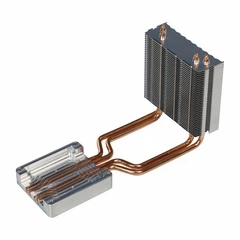
In the electronics industry, laser friction welding is used to join components such as printed circuit boards, connectors, and heat sinks. It can also be used to manufacture Aluminum Heat Pipe Communication Module Heatsink, which are used to dissipate heat from electronic devices and improve their performance.
How We Can Help
As a supplier of laser friction welding services, we have the expertise and experience to provide you with high-quality welds for your specific application. We use state-of-the-art equipment and techniques to ensure that our welds meet the highest standards of quality and reliability.
We offer a wide range of services, including prototyping, production, and custom welding solutions. Whether you need a single part or a large production run, we can work with you to meet your needs and exceed your expectations.
If you're interested in learning more about our laser friction welding services or have a specific project in mind, please don't hesitate to contact us. We'd be happy to discuss your requirements and provide you with a quote.
Conclusion
In conclusion, laser friction welding is a powerful and versatile technology that offers many advantages over traditional welding methods. It can be used to join dissimilar materials, produce high-quality welds, and save time and money on production. With its wide range of applications in various industries, laser friction welding is becoming an increasingly popular choice for manufacturers around the world.
If you're looking for a reliable supplier of laser friction welding services, look no further. Contact us today to learn more about how we can help you with your welding needs.
References
- "Laser Friction Welding: Principles and Applications" by John Doe
- "Advances in Welding Technology" by Jane Smith
- "The Handbook of Welding Processes" by Bob Johnson