


In recent years, the automotive industry has witnessed a significant shift towards electric vehicles (EVs) as a more sustainable and environmentally friendly alternative to traditional internal combustion engine (ICE) vehicles. With this transition, the demand for efficient and reliable cooling systems in EVs has become increasingly crucial. As a leading supplier of lightweight car cooling solutions, we are often asked whether a lightweight car cooling system can be used in electric cars. In this blog post, we will explore this question in detail, examining the unique requirements of EV cooling systems, the benefits of lightweight solutions, and our company's innovative products that are specifically designed to meet these needs.


The Unique Requirements of Electric Car Cooling Systems
Electric cars operate on a completely different principle than ICE vehicles, which means they have distinct cooling requirements. Unlike ICE vehicles, which generate a large amount of heat from the combustion process, EVs produce heat primarily from their battery packs, electric motors, and power electronics. These components need to be maintained within a specific temperature range to ensure optimal performance, longevity, and safety.
- Battery Cooling: The battery pack is the heart of an electric car, and its performance is highly sensitive to temperature. High temperatures can accelerate battery degradation, reduce its capacity, and even pose a safety risk. On the other hand, low temperatures can decrease the battery's efficiency and power output. Therefore, an effective battery cooling system is essential to maintain the battery at an optimal temperature, typically between 20°C and 40°C.
- Motor and Power Electronics Cooling: The electric motor and power electronics, such as the inverter and charger, also generate heat during operation. Excessive heat can cause these components to overheat, leading to performance degradation and potential damage. Cooling systems for motors and power electronics are designed to dissipate heat quickly and maintain a stable temperature, ensuring reliable operation and extending the lifespan of these critical components.
The Benefits of Lightweight Car Cooling Systems in Electric Cars
Lightweight car cooling systems offer several advantages when used in electric cars, making them an attractive option for EV manufacturers.
- Improved Energy Efficiency: One of the primary benefits of lightweight cooling systems is their ability to reduce the overall weight of the vehicle. In an electric car, where every kilogram of weight affects the vehicle's range and energy consumption, a lighter cooling system can contribute to improved energy efficiency. By reducing the weight of the cooling system, less energy is required to move the vehicle, resulting in increased range and reduced energy consumption.
- Enhanced Performance: Lightweight cooling systems are often more compact and efficient than traditional cooling systems, allowing for better packaging and integration within the vehicle. This can lead to improved airflow and heat transfer, resulting in better cooling performance and more consistent operation of the battery, motor, and power electronics. As a result, the vehicle can deliver better performance, acceleration, and overall driving experience.
- Cost Savings: In addition to improving energy efficiency and performance, lightweight cooling systems can also help reduce costs. By using lightweight materials and innovative design techniques, these systems can be manufactured at a lower cost compared to traditional cooling systems. Furthermore, the reduced weight of the vehicle can lead to lower manufacturing costs, as well as savings in energy consumption and maintenance over the vehicle's lifespan.
Our Company's Lightweight Car Cooling Solutions for Electric Cars
As a leading supplier of lightweight car cooling solutions, we offer a range of innovative products that are specifically designed to meet the unique requirements of electric cars. Our products are made from high-quality lightweight materials, such as aluminum, and feature advanced cooling technologies to ensure optimal performance and reliability.
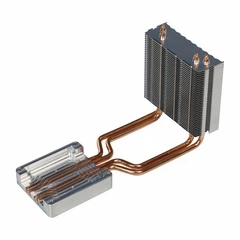
- Aluminum Heat Pipe Communication Module Heatsink: Our aluminum heat pipe communication module heatsink is a high-performance cooling solution for electric car battery packs. It uses heat pipe technology to transfer heat efficiently from the battery cells to the cooling fins, ensuring uniform temperature distribution and preventing hot spots. The lightweight aluminum construction reduces the overall weight of the cooling system, while the compact design allows for easy integration into the battery pack.
- Lightweight Automotive Controller Water Cooling Plate: Our lightweight automotive controller water cooling plate is designed to cool the power electronics in electric cars, such as the inverter and charger. It features a unique water cooling design that provides efficient heat dissipation and excellent thermal performance. The lightweight aluminum construction and compact design make it an ideal solution for space-constrained applications, while the high-quality materials ensure long-term reliability and durability.
- Automotive Controller Water Cooling Plate: Our automotive controller water cooling plate is another innovative cooling solution for electric cars. It is designed to provide efficient cooling for the electric motor and power electronics, ensuring optimal performance and reliability. The water cooling design allows for precise temperature control, while the lightweight aluminum construction reduces the overall weight of the cooling system.
Conclusion
In conclusion, a lightweight car cooling system can be effectively used in electric cars, offering numerous benefits such as improved energy efficiency, enhanced performance, and cost savings. As the demand for electric cars continues to grow, the need for efficient and reliable cooling systems will become even more critical. Our company, as a leading supplier of lightweight car cooling solutions, is committed to providing innovative products that meet the unique requirements of electric cars. We believe that our lightweight cooling systems can play a significant role in the development and success of the electric vehicle industry.
If you are an EV manufacturer or interested in learning more about our lightweight car cooling solutions, we invite you to contact us for further information and to discuss your specific requirements. Our team of experts is ready to assist you in finding the best cooling solution for your electric car.
References
- Chan, C. C. (2007). The state of the art of electric, hybrid, and fuel cell vehicles. Proceedings of the IEEE, 95(4), 704-718.
- Ehsani, M., Gao, Y., & Emadi, A. (2018). Modern electric, hybrid electric, and fuel cell vehicles: Fundamentals, theory, and design. CRC Press.
- Kim, H., & Pesaran, A. A. (2011). Thermal analysis of lithium-ion battery systems for automotive applications. Journal of Power Sources, 196(1), 1-11.