


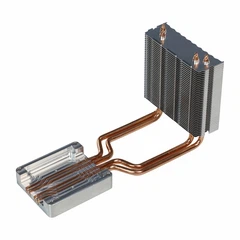
When it comes to the operation of an aluminum cooling pipe, understanding the noise level is crucial for various applications, from automotive to industrial settings. As a leading supplier of Aluminum Cooling Pipes, I've had the opportunity to delve deep into the factors that influence the noise produced during their operation.
Understanding the Basics of Aluminum Cooling Pipes
Aluminum cooling pipes are widely used due to their excellent thermal conductivity, lightweight nature, and corrosion resistance. These pipes play a vital role in dissipating heat from various components, ensuring their optimal performance and longevity. In automotive applications, for example, they are used to cool engines, batteries, and electronic controllers. In industrial settings, they help maintain the temperature of machinery and equipment.
Factors Affecting the Noise Level
The noise level of an aluminum cooling pipe during operation can be influenced by several factors. One of the primary factors is the flow rate of the coolant through the pipe. Higher flow rates can result in increased turbulence, which in turn can generate more noise. This turbulence can be caused by irregularities in the pipe's interior surface, bends, or restrictions in the flow path.
Another factor is the type of coolant being used. Different coolants have different viscosities and densities, which can affect the flow characteristics and noise generation. For example, a coolant with a higher viscosity may cause more resistance to flow, leading to increased noise.
The design of the cooling system also plays a significant role. A poorly designed system with improper pipe sizing, inadequate support, or inefficient heat exchangers can contribute to higher noise levels. Additionally, the presence of air bubbles in the coolant can cause cavitation, which is a major source of noise and can also damage the pipe over time.
Measuring the Noise Level
To accurately measure the noise level of an aluminum cooling pipe during operation, specialized equipment is required. Sound level meters are commonly used to measure the sound pressure level (SPL) in decibels (dB). These meters can provide a quantitative measure of the noise produced, allowing for comparisons between different cooling pipes and systems.
In addition to SPL measurements, frequency analysis can also be performed to identify the specific frequencies at which the noise is being generated. This information can be used to pinpoint the source of the noise and to develop strategies for reducing it.
Reducing the Noise Level
There are several strategies that can be employed to reduce the noise level of an aluminum cooling pipe during operation. One approach is to optimize the design of the cooling system. This can include using smooth interior pipes, minimizing bends and restrictions, and ensuring proper pipe sizing. Additionally, using high-quality support brackets and insulation can help reduce vibrations and noise transmission.
Another strategy is to select the appropriate coolant. Choosing a coolant with the right viscosity and density can help minimize turbulence and noise generation. Regular maintenance of the cooling system, including flushing the coolant and checking for leaks, can also help keep the noise level in check.
Applications and Noise Considerations
In automotive applications, noise reduction is particularly important for a comfortable driving experience. Aluminum cooling pipes are used in various automotive components, such as Cavity-type Energy Storage Battery Water Cooling Plate, Automotive Controller Water Cooling Plate, and Lightweight Automotive Controller Water Cooling Plate. In these applications, minimizing noise is essential to meet customer expectations and regulatory requirements.
In industrial settings, noise reduction is important for worker safety and productivity. High noise levels can cause hearing damage and distraction, leading to accidents and reduced efficiency. Therefore, selecting aluminum cooling pipes with low noise levels is crucial for maintaining a safe and productive work environment.


Our Expertise as a Supplier
As a supplier of Aluminum Cooling Pipes, we understand the importance of noise reduction in various applications. We have a team of experienced engineers and technicians who are dedicated to designing and manufacturing cooling pipes that meet the highest standards of performance and noise reduction.
We use advanced manufacturing techniques to ensure the smooth interior surface of our pipes, minimizing turbulence and noise generation. Our cooling pipes are also rigorously tested to ensure compliance with industry standards and customer requirements.
Conclusion
In conclusion, the noise level of an aluminum cooling pipe during operation is influenced by several factors, including flow rate, coolant type, system design, and the presence of air bubbles. Measuring the noise level accurately and implementing strategies to reduce it are essential for ensuring optimal performance and customer satisfaction.
If you are in the market for high-quality Aluminum Cooling Pipes with low noise levels, we invite you to contact us for a consultation. Our team of experts can help you select the right cooling pipe for your specific application and provide you with the support and guidance you need to ensure a successful installation.
References
- [1] Incropera, F. P., & DeWitt, D. P. (2002). Fundamentals of Heat and Mass Transfer. John Wiley & Sons.
- [2] Cengel, Y. A., & Ghajar, A. J. (2015). Heat and Mass Transfer: Fundamentals and Applications. McGraw-Hill Education.
- [3] ASHRAE Handbook - HVAC Systems and Equipment. (2016). American Society of Heating, Refrigerating and Air-Conditioning Engineers.