


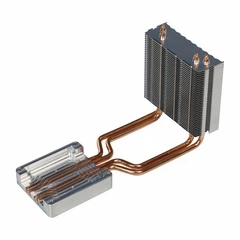
Hey there! As a supplier of Aluminum Finned Heat Sinks, I often get asked about the noise level generated by these heat sinks when paired with a fan. It's a crucial question, especially for those who are looking for a cooling solution that won't drive them crazy with a constant racket. So, let's dive right in and explore what goes into the noise level of an aluminum finned heat sink with a fan.
Understanding the Basics
First off, we need to understand how these heat sinks work. Aluminum finned heat sinks are designed to dissipate heat from electronic components. The fins increase the surface area, allowing for better heat transfer. When you add a fan to the mix, it helps to speed up the cooling process by blowing air over the fins. But this is also where the noise comes from.
The fan is the main culprit when it comes to noise generation. As it spins, the blades push air, creating turbulence and vibration. This turbulence and vibration are what we perceive as noise. The size of the fan, its speed, and the design of the blades all play a role in how much noise it produces.
Factors Affecting Noise Level
Fan Size
Generally speaking, larger fans tend to be quieter than smaller ones. Why? Well, larger fans can move the same amount of air at a lower speed compared to smaller fans. Since noise is directly related to fan speed, a slower - spinning large fan will produce less noise. For example, a 120mm fan running at a moderate speed will usually be quieter than a 80mm fan trying to move the same volume of air.
Fan Speed
Fan speed is a major factor in noise generation. The faster the fan spins, the more noise it makes. Most fans come with a speed rating, usually measured in revolutions per minute (RPM). Fans with a high RPM will generate more noise because the blades are moving through the air more quickly, creating more turbulence. Some fans are designed to be adjustable, allowing you to control the speed based on your needs. If you can get away with running the fan at a lower speed, you'll significantly reduce the noise level.
Blade Design
The design of the fan blades also matters. Fans with well - designed blades can move air more efficiently, which means they can achieve the same cooling performance at a lower speed. Some blades are curved or have special shapes that reduce turbulence and noise. For instance, fans with aerodynamically shaped blades can cut through the air more smoothly, resulting in less noise.
Measuring Noise Level
Noise level is typically measured in decibels (dB). A quiet room might have a noise level of around 30 dB, while a busy street could be around 70 dB. When it comes to heat sink fans, the noise level can range from as low as 20 dB for very quiet fans to over 50 dB for high - speed, high - performance fans.


It's important to note that the perceived noise can also be affected by the environment. For example, if you're using the heat sink in a small, enclosed space, the noise might seem louder than if it were in a large, open area.
Our Product Offerings
As a supplier, we offer a wide range of Aluminum Finned Heat Sinks with fans that are designed to balance cooling performance and noise level. We have different sizes and types of fans to suit various applications.
If you're looking for a high - power solution, check out our DCC Power Control High - Power Heatsink. It's designed to handle large amounts of heat while keeping the noise level in check.
For those who need a more versatile cooling option, our Combination Water Cooling Radiator is a great choice. It combines the benefits of water cooling and air cooling, and the fans are carefully selected to minimize noise.
And if you're in need of a controllable power solution, our Controllable Power Water Cooling Plate offers precise temperature control with relatively low noise output.
Tips for Reducing Noise
If you're already using an aluminum finned heat sink with a fan and want to reduce the noise, here are some tips:
- Lubricate the Fan Bearings: Over time, the bearings in the fan can become dry and start to make more noise. Adding a small amount of lubricant can often reduce the noise.
- Use Rubber Mounts: Rubber mounts can help to isolate the fan from the heat sink and the surrounding components. This reduces the vibration transfer, which in turn reduces the noise.
- Clean the Fan and Heat Sink: Dust and debris can build up on the fan blades and the fins of the heat sink. This can cause the fan to work harder and make more noise. Regular cleaning can help keep the fan running smoothly and quietly.
Conclusion
The noise level generated by an aluminum finned heat sink with a fan is influenced by several factors, including fan size, speed, and blade design. As a supplier, we understand the importance of providing cooling solutions that are both effective and quiet. Our product range offers a variety of options to meet different needs and noise requirements.
If you're in the market for an Aluminum Finned Heat Sink and want to learn more about our products or discuss your specific requirements, we'd love to hear from you. Contact us to start a procurement discussion and find the perfect cooling solution for your application.
References
- "Thermal Management Handbook" by Mark J. Pastor
- "Fan Noise Reduction Techniques" by the Institute of Noise Control Engineering