


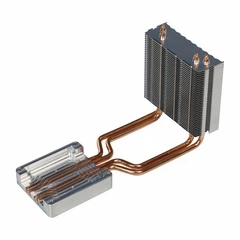
Hey there! As a supplier of heat pipe aluminum heat sinks, I often get asked about the maximum temperature these bad boys can withstand. It's a crucial question, especially for those in industries where efficient heat dissipation is the name of the game. So, let's dive right in and explore this topic.
First off, what exactly is a heat pipe aluminum heat sink? Well, it's a nifty piece of technology that combines the excellent heat - conducting properties of aluminum with the efficient heat transfer capabilities of heat pipes. Heat pipes are sealed tubes filled with a working fluid. When one end of the heat pipe is heated, the fluid inside evaporates, moves to the cooler end, condenses, and then returns to the hot end. This continuous cycle allows for rapid heat transfer.
Now, back to the main question: what's the max temperature a heat pipe aluminum heat sink can handle? The answer isn't as straightforward as you might think. It depends on several factors.


Factors Affecting the Maximum Temperature
1. Material Quality
The quality of the aluminum used in the heat sink plays a huge role. High - grade aluminum alloys have better thermal conductivity and can withstand higher temperatures without significant deformation. For example, some aerospace - grade aluminum alloys can handle temperatures well above 200°C. On the other hand, lower - quality aluminum might start to lose its structural integrity at around 150°C.
2. Heat Pipe Design
The design of the heat pipe also matters. The type of working fluid inside the heat pipe is a critical factor. Different fluids have different boiling points and heat transfer characteristics. For instance, water is a common working fluid in heat pipes, but it has a boiling point of 100°C at standard atmospheric pressure. If you need to handle higher temperatures, you might use fluids like ammonia or certain refrigerants that have higher boiling points.
3. Operating Environment
The environment in which the heat sink operates can also affect its maximum temperature tolerance. If the heat sink is in a well - ventilated area, it can dissipate heat more effectively, allowing it to handle higher temperatures. However, if it's in a confined space with poor airflow, the heat will build up, and the maximum temperature the heat sink can handle will be lower.
Typical Temperature Ranges
In general, most heat pipe aluminum heat sinks used in common electronic applications can handle temperatures in the range of 80°C to 150°C. These are the heat sinks you'll find in laptops, desktop computers, and some consumer electronics. They're designed to keep the components cool under normal operating conditions.
For industrial applications, such as power electronics or server rooms, the heat sinks are often engineered to handle higher temperatures. They can typically withstand temperatures between 150°C and 250°C. These heat sinks are built with more robust materials and advanced heat pipe designs to ensure reliable performance in high - heat environments.
In some extreme cases, like in aerospace or high - end research applications, heat pipe aluminum heat sinks can be designed to handle temperatures upwards of 300°C or even higher. But these are highly specialized and often custom - made heat sinks.
Our Products and Their Temperature Capabilities
At our company, we offer a wide range of heat pipe aluminum heat sinks to meet different customer needs. Our Aluminum Heat Pipe Communication Module Heatsink is designed for communication equipment. It's built with high - quality aluminum alloy and an optimized heat pipe design. It can comfortably handle temperatures up to 120°C, making it ideal for keeping communication modules cool and running smoothly.
Our Cavity - type Energy Storage Battery Water Cooling Plate is another great product. It's used in energy storage systems, where heat management is crucial. This heat sink can handle temperatures up to 180°C, ensuring the safety and efficiency of the battery system.
And if you're in the automotive industry, our Automobile Car Drainage Raditor is a top - notch choice. It can withstand temperatures up to 200°C, making it suitable for the demanding conditions under the hood of a car.
Why Choose Our Heat Sinks?
We pride ourselves on the quality and performance of our heat pipe aluminum heat sinks. Here are a few reasons why you should consider our products:
1. Customization
We understand that every customer has unique requirements. That's why we offer customization services. Whether you need a heat sink with a specific shape, size, or temperature tolerance, we can design and manufacture it for you.
2. Quality Assurance
We have a strict quality control process in place. Every heat sink goes through rigorous testing to ensure it meets our high standards. This means you can trust our products to perform reliably in your applications.
3. Competitive Pricing
We offer our high - quality heat sinks at competitive prices. We believe that you shouldn't have to break the bank to get a top - notch heat management solution.
Contact Us for Your Heat Sink Needs
If you're in the market for a heat pipe aluminum heat sink, don't hesitate to reach out to us. Whether you're a small electronics manufacturer or a large industrial company, we have the expertise and products to meet your needs. Our team of experts can help you choose the right heat sink based on your specific requirements, including the maximum temperature it needs to handle.
We're always happy to have a chat about your heat dissipation challenges and find the best solution for you. So, if you're ready to take your heat management to the next level, get in touch with us today!
References
- Incropera, F. P., DeWitt, D. P., Bergman, T. L., & Lavine, A. S. (2007). Fundamentals of Heat and Mass Transfer. John Wiley & Sons.
- Kakaç, S., & Pramuanjaroenkij, A. (2005). Heat Pipes: Theory, Design, and Applications. Butterworth - Heinemann.