


Hey there! As a supplier for the Tunnel brazing process, I've seen firsthand how joint design can have a huge impact on the whole deal. So, let's dig into what the influence of the joint design is on the tunnel brazing process.
The Basics of Tunnel Brazing
First off, for those who aren't too familiar, tunnel brazing is a process where parts are joined together using a filler metal that melts at a temperature below the melting point of the base metals. The parts are placed in a tunnel-like furnace, and as they move through, the filler metal melts and forms a strong bond between the components. It's a popular method in industries like automotive and electronics because it can handle large - scale production and create high - quality joints.
How Joint Design Affects Wetting and Spreading
One of the most important things in tunnel brazing is how well the filler metal wets and spreads over the joint surfaces. The joint design plays a crucial role here. If the joint has sharp corners or rough edges, the filler metal might not flow smoothly. For example, a joint with a lot of small, tight gaps can create capillary action that either helps or hinders the filler metal. If the gaps are too small, the filler metal might not be able to penetrate properly, leading to incomplete joints. On the other hand, if the gaps are too large, the filler metal might not be able to bridge the distance, resulting in weak connections.
Let's say we're working on an Automobile Car Drainage Raditor. The joint design between the tubes and the headers needs to be just right. A well - designed joint will allow the filler metal to spread evenly, creating a leak - proof and strong connection. If the joint design is off, we could end up with a radiator that leaks coolant, which is a big no - no in the automotive world.
Impact on Heat Transfer
Another aspect is heat transfer. During tunnel brazing, heat needs to be transferred evenly across the joint area to melt the filler metal. The joint design can either promote or impede this heat transfer. For instance, a joint with a large surface area in contact will generally transfer heat better than one with a small contact area.
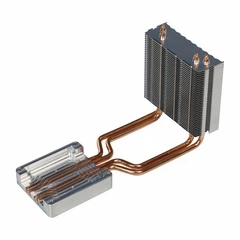
In the case of an Aluminum Heat Pipe Communication Module Heatsink, the joint design between the heat pipes and the fins is critical. If the joint doesn't allow for good heat transfer, the heatsink won't be able to dissipate heat effectively. This can lead to overheating of the communication module, which can cause malfunctions or even damage to the equipment.
Residual Stress and Distortion
Joint design also affects residual stress and distortion after brazing. When the filler metal solidifies, it can create internal stresses in the joint. If the joint design isn't balanced, these stresses can cause the parts to distort. For example, if one side of the joint cools faster than the other, it can lead to warping.
Take an Automotive Controller Water Cooling Plate as an example. The joint design between the different layers of the cooling plate needs to be carefully considered. If the joint design causes excessive residual stress, the cooling plate might not fit properly in the controller housing, or it could even crack over time, reducing its cooling efficiency.


Design Considerations for Different Materials
Different materials also require different joint designs in tunnel brazing. For example, aluminum has different properties compared to copper. Aluminum has a higher thermal conductivity, which means heat spreads faster. So, when designing joints for aluminum parts, we need to take this into account. The joint gaps might need to be adjusted to ensure proper filler metal flow.
Copper, on the other hand, has different wetting characteristics. The joint design for copper parts might need to be optimized to enhance the wetting of the filler metal. Understanding the material properties and how they interact with the joint design is essential for a successful tunnel brazing process.
Cost - Efficiency
Joint design can also have a big impact on cost - efficiency. A well - designed joint can reduce the amount of filler metal needed. If the joint is designed in such a way that the filler metal can be used more effectively, it can save a lot of money in the long run. For example, a joint that allows for a thin layer of filler metal to create a strong bond is more cost - effective than one that requires a thick layer.
Also, a good joint design can reduce the number of rejects. If the joints are designed to be more forgiving in terms of manufacturing tolerances, there will be fewer parts that don't meet the quality standards. This means less waste and lower production costs.
Quality and Reliability
Ultimately, the joint design has a direct impact on the quality and reliability of the brazed products. A properly designed joint will result in a strong, durable connection that can withstand the stresses and strains of normal use. Whether it's a radiator in a car or a heatsink in an electronic device, the reliability of the product depends on the quality of the brazed joints.
If the joint design is poor, the product might fail prematurely. This can lead to warranty claims, customer dissatisfaction, and damage to the brand reputation. So, getting the joint design right is not just about the technical aspects but also about the business side of things.
Wrapping Up
In conclusion, the joint design has a profound influence on the tunnel brazing process. It affects everything from the wetting and spreading of the filler metal to heat transfer, residual stress, cost - efficiency, and product quality. As a supplier of the tunnel brazing process, we always work closely with our customers to ensure that the joint designs are optimized for their specific applications.
If you're in the market for high - quality tunnel brazing services for products like Automobile Car Drainage Raditor, Aluminum Heat Pipe Communication Module Heatsink, or Automotive Controller Water Cooling Plate, don't hesitate to reach out for a procurement discussion. We're here to help you get the best results for your products.
References
- "Brazing Handbook" by The American Welding Society
- "Principles of Joining Technologies" by various industry experts