


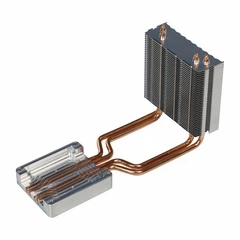
As a supplier of stainless steel cool coils, I've received numerous inquiries about the heat transfer rate of these essential components. Understanding the heat transfer rate is crucial for various applications, from industrial cooling systems to home appliances. In this blog, I'll delve into the factors that influence the heat transfer rate of stainless steel cool coils and how our products stand out in the market.
Understanding Heat Transfer
Before we dive into the specifics of stainless steel cool coils, let's briefly review the basics of heat transfer. There are three main mechanisms of heat transfer: conduction, convection, and radiation. In the context of cool coils, conduction and convection are the primary modes of heat transfer.
Conduction is the transfer of heat through a solid material, such as the stainless steel in our cool coils. The rate of conduction depends on the thermal conductivity of the material, the cross-sectional area through which heat is flowing, the temperature difference across the material, and the distance over which heat is transferred. Stainless steel has a relatively low thermal conductivity compared to some other metals, such as copper or aluminum. However, it offers excellent corrosion resistance, making it a popular choice for applications where durability is a concern.
Convection is the transfer of heat between a solid surface and a fluid (liquid or gas) in motion. In a cool coil, the fluid (usually air or water) flows over the surface of the coil, carrying away heat from the coil. The rate of convection depends on the properties of the fluid (such as its density, viscosity, and specific heat), the velocity of the fluid flow, the surface area of the coil, and the temperature difference between the coil and the fluid.
Factors Affecting the Heat Transfer Rate of Stainless Steel Cool Coils
Several factors can influence the heat transfer rate of stainless steel cool coils. Let's take a closer look at each of these factors:
Material Properties
As mentioned earlier, the thermal conductivity of stainless steel is an important factor in determining the heat transfer rate. Different grades of stainless steel have different thermal conductivities. For example, Stainless Steel 316 Coil has a thermal conductivity of approximately 16.2 W/(m·K) at room temperature, while Double-layer Stainless Steel 317 Coil may have slightly different thermal properties due to its composition and structure.


In addition to thermal conductivity, other material properties such as density, specific heat, and corrosion resistance can also affect the performance of the cool coil. For example, a higher density material may require more energy to heat or cool, while a material with a high specific heat can absorb more heat without a significant increase in temperature.
Coil Design
The design of the cool coil plays a crucial role in determining its heat transfer rate. Factors such as the coil geometry (e.g., the number of turns, the pitch between turns, and the diameter of the tubing), the fin design (if fins are used), and the overall size of the coil can all impact the heat transfer performance.
A well-designed coil with a large surface area can provide more contact between the coil and the fluid, increasing the rate of heat transfer. Fins are often added to the coil to increase the surface area and enhance convection. The shape, size, and spacing of the fins can also affect the heat transfer rate. For example, a fin with a larger surface area or a more efficient shape can transfer heat more effectively.
Fluid Flow
The flow rate and velocity of the fluid (air or water) over the coil are important factors in determining the heat transfer rate. A higher flow rate can increase the rate of convection by carrying away heat from the coil more quickly. However, there is a limit to how much the flow rate can be increased, as excessive flow rates can cause pressure drops and increase energy consumption.
The distribution of the fluid flow over the coil is also crucial. Uneven flow can lead to hot spots or areas of poor heat transfer, reducing the overall efficiency of the coil. Proper design and installation of the coil, as well as the use of flow control devices, can help ensure uniform fluid flow.
Temperature Difference
The temperature difference between the coil and the fluid is another key factor in determining the heat transfer rate. A larger temperature difference provides a greater driving force for heat transfer. However, in some applications, the temperature difference may be limited by the operating conditions or the requirements of the system.
Our Stainless Steel Cool Coils
At our company, we specialize in manufacturing high-quality stainless steel cool coils for a wide range of applications. Our coils are designed to provide efficient heat transfer while offering excellent corrosion resistance and durability.
We offer a variety of stainless steel grades, including Stainless Steel 316 Coil, Double-layer Stainless Steel 317 Coil, and Water Heater Stainless Steel 318 Coil. Each grade has its own unique properties and is suitable for different applications. Our engineering team can work with you to select the right grade of stainless steel and design the optimal coil for your specific needs.
We use advanced manufacturing techniques to ensure the precision and quality of our cool coils. Our coils are carefully fabricated to meet the highest standards of performance and reliability. We also offer custom design and manufacturing services, allowing us to create coils that are tailored to your exact specifications.
Contact Us for Your Stainless Steel Cool Coil Needs
If you're in the market for high-quality stainless steel cool coils, we'd love to hear from you. Our team of experts can provide you with detailed information about our products, answer your questions, and help you select the right coil for your application. Whether you're looking for a standard coil or a custom-designed solution, we have the experience and expertise to meet your needs.
Don't hesitate to reach out to us to discuss your requirements and start the process of selecting the perfect stainless steel cool coil for your project. We're committed to providing you with the best products and services at competitive prices.
References
- Incropera, F. P., & DeWitt, D. P. (2002). Fundamentals of Heat and Mass Transfer. Wiley.
- Holman, J. P. (2002). Heat Transfer. McGraw-Hill.
- Kakac, S., & Liu, H. (2002). Heat Exchangers: Selection, Rating, and Thermal Design. CRC Press.