


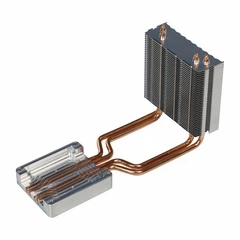
In the field of tunnel brazing, enhancing the mechanical property of brazed joints is of paramount importance. As a dedicated supplier of Tunnel brazing process, I have witnessed firsthand the significance of this aspect in various applications, such as Automobile Car Drainage Raditor, Automotive Controller Water Cooling Plate, and Cavity-type Energy Storage Battery Water Cooling Plate. In this blog, I will share some effective strategies to improve the mechanical property of tunnel brazed joints.


1. Material Selection
The choice of base materials and filler metals plays a crucial role in determining the mechanical properties of brazed joints. When selecting base materials, factors such as their chemical composition, melting point, and thermal expansion coefficient need to be carefully considered. For example, in the case of aluminum alloys used in automotive radiators and cooling plates, alloys with high strength and good corrosion resistance are preferred.
The filler metal should have a lower melting point than the base materials to ensure proper wetting and bonding. Additionally, the filler metal should have good compatibility with the base materials to form a strong and durable joint. For aluminum brazing, aluminum-silicon (Al-Si) filler metals are commonly used due to their excellent wetting ability and mechanical properties.
2. Surface Preparation
Proper surface preparation is essential for achieving high-quality brazed joints. Before brazing, the surfaces of the base materials need to be cleaned to remove any contaminants, such as oxides, oils, and dirt. Oxide layers on the surface of metals can prevent the filler metal from wetting and bonding effectively, leading to weak joints.
There are several methods for surface preparation, including mechanical cleaning, chemical cleaning, and pickling. Mechanical cleaning involves using abrasive materials, such as sandpaper or wire brushes, to remove the oxide layer and roughen the surface. Chemical cleaning uses solvents or acids to dissolve the contaminants on the surface. Pickling is a chemical process that removes the oxide layer by immersing the base materials in an acid solution.
3. Brazing Process Parameters
The brazing process parameters, such as temperature, time, and atmosphere, have a significant impact on the mechanical properties of brazed joints. The brazing temperature should be carefully controlled to ensure that the filler metal melts and flows properly without overheating the base materials. If the brazing temperature is too low, the filler metal may not melt completely, resulting in incomplete bonding. On the other hand, if the brazing temperature is too high, the base materials may be damaged, and the mechanical properties of the joint may be deteriorated.
The brazing time also needs to be optimized. A longer brazing time allows the filler metal to flow and wet the base materials more thoroughly, but it may also cause excessive grain growth and reduce the strength of the joint. Therefore, the brazing time should be determined based on the type of materials, the thickness of the base materials, and the size of the joint.
The brazing atmosphere is another important parameter. In tunnel brazing, a protective atmosphere is often used to prevent oxidation of the base materials and filler metal during the brazing process. Common protective atmospheres include nitrogen, argon, and a mixture of nitrogen and hydrogen. The choice of atmosphere depends on the type of materials being brazed and the specific requirements of the application.
4. Joint Design
The design of the joint can also affect the mechanical properties of brazed joints. The joint geometry, such as the joint clearance, lap length, and fillet size, needs to be carefully designed to ensure proper distribution of stress and load transfer. A proper joint clearance allows the filler metal to flow and fill the joint completely, while a sufficient lap length provides a larger bonding area and increases the strength of the joint.
In addition, the use of appropriate joint designs, such as stepped joints or scarf joints, can help to reduce stress concentration and improve the fatigue resistance of the brazed joint. These joint designs can distribute the stress more evenly across the joint, preventing the formation of cracks and failures.
5. Post-Brazing Heat Treatment
Post-brazing heat treatment can be used to further improve the mechanical properties of brazed joints. Heat treatment can relieve residual stresses in the joint, refine the grain structure, and enhance the strength and toughness of the joint.
There are several types of post-brazing heat treatments, including annealing, solution heat treatment, and aging. Annealing is a process that involves heating the brazed joint to a specific temperature and then cooling it slowly to relieve residual stresses. Solution heat treatment involves heating the joint to a high temperature to dissolve the alloying elements in the solid solution and then quenching it to retain the supersaturated solid solution. Aging is a process that involves heating the joint to a lower temperature for a certain period of time to allow the precipitation of fine particles, which can strengthen the joint.
6. Quality Control
Quality control is an important aspect of ensuring the mechanical properties of tunnel brazed joints. During the brazing process, various quality control measures can be implemented, such as visual inspection, non-destructive testing, and mechanical testing.
Visual inspection can be used to check the appearance of the brazed joint, such as the presence of voids, cracks, and incomplete bonding. Non-destructive testing methods, such as X-ray inspection, ultrasonic testing, and eddy current testing, can be used to detect internal defects in the joint. Mechanical testing, such as tensile testing, shear testing, and fatigue testing, can be used to evaluate the mechanical properties of the joint.
By implementing these quality control measures, any potential defects or problems in the brazed joints can be detected early, and appropriate corrective actions can be taken to ensure the quality and reliability of the joints.
Conclusion
Improving the mechanical property of tunnel brazed joints requires a comprehensive approach that includes proper material selection, surface preparation, control of brazing process parameters, appropriate joint design, post-brazing heat treatment, and quality control. As a supplier of Tunnel brazing process, we are committed to providing our customers with high-quality brazing solutions that meet their specific requirements.
If you are interested in our Tunnel brazing process and would like to discuss your specific needs for Automobile Car Drainage Raditor, Automotive Controller Water Cooling Plate, or Cavity-type Energy Storage Battery Water Cooling Plate, please feel free to contact us for procurement and further discussions.
References
-ASM Handbook Volume 6: Welding, Brazing, and Soldering. ASM International.
-Brazing Manual, 5th Edition. American Welding Society.
-Advanced Joining Technologies for Automotive Applications. CRC Press.