


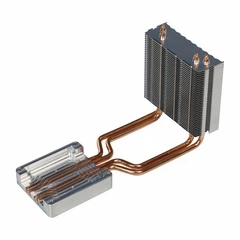
As a supplier of cavity water cooling plates, I've witnessed firsthand the growing demand for efficient thermal management solutions in various industries. One of the common questions I encounter is the difference between single-cavity and multi-cavity water cooling plates. In this blog post, I'll delve into the characteristics, advantages, and applications of both types to help you make an informed decision for your specific needs.
Single-Cavity Water Cooling Plates
A single-cavity water cooling plate consists of a single enclosed chamber through which coolant flows. This design is relatively simple and straightforward, making it a cost-effective option for many applications. The coolant enters the cavity at one end and exits at the other, absorbing heat from the surface of the plate as it passes through.
Advantages
- Simplicity: Single-cavity water cooling plates are easy to manufacture and install, which reduces production costs and installation time. The straightforward design also makes them less prone to leaks and other issues.
- Uniform Heat Distribution: The single cavity allows for a more uniform distribution of coolant, ensuring that heat is evenly dissipated across the surface of the plate. This is particularly important for applications where temperature uniformity is critical.
- Low Pressure Drop: Since the coolant flows through a single chamber, there is less resistance to flow, resulting in a lower pressure drop. This means that less energy is required to pump the coolant through the system, reducing operating costs.
Applications
Single-cavity water cooling plates are commonly used in applications where space is limited and cost is a major consideration. Some examples include:


- Consumer Electronics: Single-cavity water cooling plates are often used in laptops, desktops, and other electronic devices to dissipate heat generated by the CPU and other components.
- LED Lighting: LED lights generate a significant amount of heat, which can reduce their lifespan and performance. Single-cavity water cooling plates can be used to cool the LEDs, ensuring that they operate at optimal temperatures.
- Power Electronics: Power electronics, such as inverters and converters, generate a large amount of heat during operation. Single-cavity water cooling plates can be used to cool these components, improving their efficiency and reliability.
Multi-Cavity Water Cooling Plates
Multi-cavity water cooling plates, on the other hand, consist of multiple enclosed chambers that are connected by channels or passages. The coolant flows through these chambers in a specific pattern, allowing for more precise control of the heat transfer process.
Advantages
- Enhanced Heat Transfer: The multiple cavities in a multi-cavity water cooling plate provide a larger surface area for heat transfer, resulting in more efficient cooling. This is particularly beneficial for applications where high heat loads need to be dissipated.
- Customizable Flow Patterns: The design of the channels and passages in a multi-cavity water cooling plate can be customized to meet the specific requirements of the application. This allows for more precise control of the coolant flow and heat transfer, resulting in better performance.
- Redundancy: In the event of a blockage or failure in one of the cavities, the coolant can still flow through the other cavities, ensuring that the cooling system continues to operate. This provides an additional level of reliability and redundancy.
Applications
Multi-cavity water cooling plates are commonly used in applications where high heat loads need to be dissipated and precise temperature control is required. Some examples include:
- Industrial Equipment: Multi-cavity water cooling plates are often used in industrial equipment, such as lasers, power supplies, and motor drives, to cool the components and ensure their reliable operation.
- Automotive Electronics: The increasing complexity of automotive electronics, such as electric vehicle batteries and power electronics, requires efficient cooling solutions. Multi-cavity water cooling plates can be used to cool these components, improving their performance and reliability.
- Aerospace and Defense: In aerospace and defense applications, where weight and space are critical factors, multi-cavity water cooling plates can provide a compact and efficient cooling solution.
Comparison
To better understand the difference between single-cavity and multi-cavity water cooling plates, let's compare them in terms of several key factors:
Heat Transfer Efficiency
Multi-cavity water cooling plates generally offer higher heat transfer efficiency than single-cavity plates due to their larger surface area and customizable flow patterns. This makes them more suitable for applications where high heat loads need to be dissipated.
Cost
Single-cavity water cooling plates are typically less expensive to manufacture and install than multi-cavity plates. However, the cost of the cooling system as a whole will depend on the specific requirements of the application, such as the size, complexity, and performance requirements.
Space Requirements
Single-cavity water cooling plates are generally more compact and require less space than multi-cavity plates. This makes them a better choice for applications where space is limited.
Design Flexibility
Multi-cavity water cooling plates offer more design flexibility than single-cavity plates, as the channels and passages can be customized to meet the specific requirements of the application. This allows for more precise control of the coolant flow and heat transfer, resulting in better performance.
Conclusion
In conclusion, the choice between a single-cavity and a multi-cavity water cooling plate depends on the specific requirements of your application. If you have a low heat load and limited space, a single-cavity water cooling plate may be the best option. On the other hand, if you have a high heat load and require precise temperature control, a multi-cavity water cooling plate may be more suitable.
As a supplier of cavity water cooling plates, we offer a wide range of products to meet the diverse needs of our customers. Our Aluminum Heat Pipe Communication Module Heatsink, Automobile Car Drainage Raditor, and Lightweight Automotive Controller Water Cooling Plate are designed to provide efficient and reliable cooling solutions for various applications.
If you're interested in learning more about our products or have any questions, please don't hesitate to contact us. We'd be happy to discuss your specific requirements and help you find the best cooling solution for your needs.
References
- Incropera, F. P., & DeWitt, D. P. (2002). Fundamentals of Heat and Mass Transfer. Wiley.
- Bergman, T. L., Lavine, A. S., Incropera, F. P., & DeWitt, D. P. (2011). Introduction to Heat Transfer. Wiley.
- Kakac, S., & Pramuanjaroenkij, A. (2005). Heat Exchangers: Selection, Rating, and Thermal Design. CRC Press.