


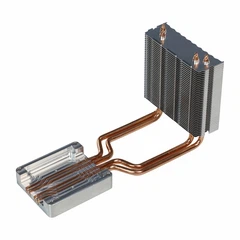
What is the air - flow requirement for an all aluminum stacked radiator?
As a supplier of All Aluminum Stacked Radiators, I've encountered numerous inquiries regarding the air - flow requirements for these high - performance cooling solutions. Understanding the air - flow needs of an all aluminum stacked radiator is crucial for ensuring its optimal performance, longevity, and efficiency. In this blog, I'll delve into the key factors that determine the air - flow requirements and provide some practical insights for achieving the best results.
The Basics of All Aluminum Stacked Radiators
All Aluminum Stacked Radiators are renowned for their excellent heat dissipation capabilities. The use of aluminum in their construction offers several advantages, including high thermal conductivity, lightweight design, and corrosion resistance. These radiators are typically composed of multiple stacked aluminum fins that increase the surface area available for heat transfer. The design allows for efficient cooling, making them suitable for a wide range of applications, from automotive engines to industrial machinery.
The All Aluminum Stacked Radiator is designed to transfer heat from a hot fluid, such as coolant in an engine, to the surrounding air. This heat transfer process relies on the movement of air across the radiator fins. The more effectively the air can flow through the radiator, the better the heat transfer and the more efficient the cooling.
Factors Affecting Air - Flow Requirements
Heat Load
The heat load is one of the primary factors that determine the air - flow requirements for an all aluminum stacked radiator. The heat load refers to the amount of heat that the radiator needs to dissipate. Higher heat loads require more air - flow to maintain an acceptable operating temperature. For example, in a high - performance automotive engine, the engine generates a significant amount of heat, especially during high - speed driving or heavy - load conditions. As a result, the radiator needs to have a sufficient air - flow to remove this excess heat and prevent the engine from overheating.
Fin Design
The design of the radiator fins also plays a crucial role in determining the air - flow requirements. Fins with a larger surface area can provide more area for heat transfer, but they can also create more resistance to air - flow. All Aluminum Stacked Radiators often feature different fin designs, such as straight fins, wavy fins, or pin fins. Each design has its own advantages and disadvantages in terms of heat transfer and air - flow resistance. For instance, wavy fins can enhance heat transfer by promoting turbulent air - flow, but they may also require more air - flow to overcome the increased resistance compared to straight fins.
Air Density
Air density is another important factor. Air density is affected by factors such as altitude, temperature, and humidity. At higher altitudes, the air density is lower, which means that there are fewer air molecules available to carry away heat. As a result, the radiator may require more air - flow at higher altitudes to achieve the same level of cooling as at lower altitudes. Similarly, hot and humid air has a lower density than cool and dry air, which can also impact the air - flow requirements.
Fan Performance
In many applications, fans are used to force air through the radiator. The performance of the fan, including its airflow rate, static pressure, and efficiency, directly affects the air - flow through the radiator. A more powerful fan can provide a higher air - flow rate, which is beneficial for radiators with high heat loads or high - resistance fin designs. However, the fan also needs to be properly matched to the radiator to ensure optimal performance. For example, if the fan is too small, it may not be able to provide enough air - flow, while if it is too large, it may consume more energy than necessary.
Calculating Air - Flow Requirements
Calculating the exact air - flow requirements for an all aluminum stacked radiator can be a complex process. It typically involves considering the heat load, the thermal properties of the radiator materials, the fin design, and the operating conditions. One common approach is to use the following formula:
[Q = m \times C_p\times\Delta T]
where (Q) is the heat load (in watts), (m) is the mass flow rate of the air (in kg/s), (C_p) is the specific heat capacity of air (approximately 1005 J/(kg·K)), and (\Delta T) is the temperature difference between the inlet and outlet air.
Once the heat load is known, the mass flow rate of the air can be calculated. Then, the volumetric air - flow rate (in cubic meters per second or cubic feet per minute) can be determined by dividing the mass flow rate by the air density.
However, in practice, many radiator manufacturers provide guidelines and performance curves based on their testing and experience. These resources can be very helpful in determining the appropriate air - flow requirements for a specific radiator model.
Importance of Adequate Air - Flow
Ensuring adequate air - flow through an all aluminum stacked radiator is essential for several reasons. Firstly, it helps to maintain the optimal operating temperature of the system. Overheating can cause damage to components, reduce the efficiency of the system, and even lead to system failure. For example, in an automotive engine, overheating can cause the engine to seize, resulting in costly repairs.
Secondly, proper air - flow can extend the lifespan of the radiator. When the radiator operates at its optimal temperature, the materials are less likely to experience thermal stress and fatigue, which can lead to cracks and leaks over time.


Finally, adequate air - flow can improve the overall energy efficiency of the system. By removing heat more effectively, the system can operate more efficiently, reducing energy consumption and operating costs.
Related Products and Their Air - Flow Considerations
In addition to the All Aluminum Stacked Radiator, our product line also includes other related cooling products, such as the Black Skived Toothed Heat Sink and the High - Power Efficient Stacked Heat Sink.
The Black Skived Toothed Heat Sink features a unique toothed design that enhances heat transfer. Similar to the all aluminum stacked radiator, it requires a sufficient air - flow to operate effectively. The toothed design can increase the surface area for heat transfer, but it also creates some resistance to air - flow. Therefore, when using this heat sink, it's important to ensure that the air - flow is strong enough to overcome the resistance and carry away the heat.
The High - Power Efficient Stacked Heat Sink is designed for high - power applications. These applications typically generate a large amount of heat, so the heat sink needs a high air - flow rate to dissipate the heat. The stacked design of the heat sink provides a large surface area for heat transfer, but it also requires careful consideration of the air - flow path to ensure that all parts of the heat sink receive adequate air - flow.
Conclusion and Call to Action
In conclusion, understanding the air - flow requirements for an all aluminum stacked radiator is essential for achieving optimal performance and reliability. Factors such as heat load, fin design, air density, and fan performance all play important roles in determining the appropriate air - flow. By ensuring adequate air - flow, you can maintain the optimal operating temperature of your system, extend the lifespan of the radiator, and improve energy efficiency.
If you're in the market for an all aluminum stacked radiator or any of our other cooling products, we'd love to hear from you. Our team of experts can help you select the right product for your specific application and provide guidance on ensuring proper air - flow. Whether you're an automotive enthusiast, an industrial equipment manufacturer, or involved in any other industry that requires efficient cooling solutions, we have the products and knowledge to meet your needs. Contact us today to start a discussion about your cooling requirements and explore how our products can benefit your project.
References
- Incropera, F. P., & DeWitt, D. P. (2002). Fundamentals of Heat and Mass Transfer. John Wiley & Sons.
- Howell, J. R., Menguc, M. P., & Siegel, R. (2010). Thermal Radiation Heat Transfer. CRC Press.
- ASHRAE Handbook - Fundamentals (2017). American Society of Heating, Refrigerating and Air - Conditioning Engineers.