


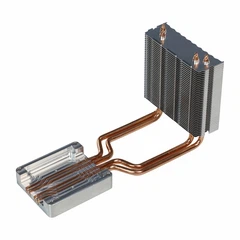
Hey there! As a supplier of Versatile Water Cooling Plates, I've seen firsthand how crucial it is to keep these cooling plates dust-free. Dust can be a real pain in the neck for water cooling plates, reducing their efficiency and potentially causing long-term damage. So, let's dive into some effective dust-proof measures that you can take to keep your Versatile Water Cooling Plates in top-notch condition.
1. Enclosure Design
One of the simplest yet most effective ways to keep dust away from your water cooling plates is by using a well-designed enclosure. A good enclosure acts as a barrier, preventing dust from directly settling on the cooling plates. When designing or choosing an enclosure, make sure it has a tight seal. Gaps and openings are like welcome mats for dust, so seal them up with gaskets or weatherstripping.
Another thing to consider is the ventilation design of the enclosure. You need to have proper ventilation to allow heat to escape, but it should be designed in a way that minimizes dust entry. For example, using filtered vents can be a great idea. These vents have a filter that traps dust particles as air passes through, keeping the inside of the enclosure relatively dust-free. You can find various types of filtered vents in the market, and choosing the right one depends on the size of your enclosure and the amount of air circulation required.
2. Regular Cleaning
Regular cleaning is a no-brainer when it comes to keeping your water cooling plates dust-free. But it's not just about a quick wipe-down. You need to have a proper cleaning routine. Start by turning off and unplugging the equipment that the water cooling plate is part of. This is a safety measure to avoid any electrical hazards.
Use a soft, dry brush to gently remove loose dust from the surface of the cooling plate. A paintbrush or a specialized electronics cleaning brush can work well. Be careful not to apply too much pressure as you don't want to damage the delicate components of the cooling plate. After brushing, you can use compressed air to blow away any remaining dust. Compressed air cans are readily available in most hardware stores. Hold the can upright and spray short bursts of air at an angle to dislodge the dust.
If the cooling plate is really dirty, you might need to use a mild cleaning solution. But make sure it's safe for use on the materials of the cooling plate. Some cooling plates are made of copper or aluminum, and certain cleaning solutions can corrode these metals. Always test the cleaning solution on a small, inconspicuous area first to make sure it doesn't cause any damage.
3. Air Filtration Systems
Installing an air filtration system can be a game-changer when it comes to dust prevention. There are different types of air filtration systems available, depending on your needs. For small-scale applications, you can use simple air filters that can be attached to the intake vents of the enclosure. These filters are usually made of a porous material that traps dust particles as air is drawn in.
For larger setups or environments with a high dust concentration, you might want to consider a more advanced air filtration system. These systems can be installed as part of the overall ventilation system of the facility. They can have multiple stages of filtration, including pre-filters to capture larger dust particles and fine filters to trap smaller ones. Some advanced air filtration systems also have features like electrostatic precipitation, which uses an electric charge to attract and capture dust particles.
4. Environmental Control
The environment where the water cooling plate is located plays a big role in dust accumulation. If you can control the environment, you can significantly reduce the amount of dust that reaches the cooling plate. For example, keeping the room where the equipment is located clean and tidy can make a big difference. Regularly vacuum the floors and wipe down surfaces to remove dust.
Humidity control is also important. In dry environments, dust tends to be more airborne and can easily settle on surfaces. By maintaining a proper humidity level, you can reduce the amount of dust in the air. You can use a humidifier or dehumidifier depending on the humidity conditions in your area.
5. Protective Coatings
Applying a protective coating to the water cooling plate can provide an extra layer of protection against dust. There are different types of protective coatings available, such as anti-static coatings and hydrophobic coatings. Anti-static coatings reduce the static charge on the surface of the cooling plate, which in turn reduces the attraction of dust particles. Hydrophobic coatings repel water and can also make it easier to clean the cooling plate as dust doesn't stick as easily.
Before applying a protective coating, make sure to clean the cooling plate thoroughly to ensure good adhesion. Follow the manufacturer's instructions carefully when applying the coating. Some coatings need to be sprayed on, while others can be brushed or dipped.
Related Products
If you're looking for other heat dissipation solutions, we also offer some great products. Check out our Pure Copper CPU/GPU Multi-Purpose Heat Sink, which is made of high-quality pure copper and is suitable for a variety of applications. Our High-power Air-cooled Laser Heatsink is perfect for high-power laser applications, providing efficient heat dissipation. And for LED applications, our Circular Base LED Heat Sink offers a great solution with its unique design.
Conclusion
Taking dust-proof measures for your Versatile Water Cooling Plates is essential to ensure their long-term performance and reliability. By following the tips mentioned above, such as enclosure design, regular cleaning, air filtration systems, environmental control, and using protective coatings, you can keep your cooling plates dust-free and functioning at their best.
If you're interested in our Versatile Water Cooling Plates or any of our other heat dissipation products, feel free to reach out to us for procurement and further discussions. We're always happy to help you find the right solution for your needs.


References
- "Heat Transfer in Electronic Equipment" by R. C. Jaeger
- "Industrial Ventilation: A Manual of Recommended Practice" by the American Conference of Governmental Industrial Hygienists