


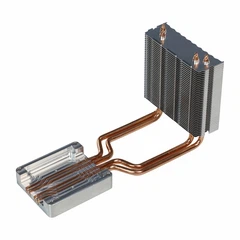
Hey there, fellow car enthusiasts and industry insiders! As a supplier of car controller heatsinks, I've had my fair share of experiences working with different materials. Copper is a popular choice when it comes to these heatsinks, and like anything in this world, it's got its pros and cons. Let's dive right in and take a good look at what makes copper both amazing and not so great for car controller heatsinks.
The Good Stuff - Pros of Copper Car Controller Heatsinks
1. Excellent Thermal Conductivity
One of the biggest selling points of copper is its incredible thermal conductivity. Copper has a thermal conductivity of around 385 - 401 W/(m·K). To put it simply, this means that it can transfer heat away from the car controller really, really fast. When your car's controller is working hard, it generates a ton of heat. If this heat isn't dissipated properly, it can lead to overheating, which can damage the controller and make your car act up. With a copper heatsink, you can be confident that the heat will be whisked away efficiently, keeping the controller at a safe operating temperature.
2. Durability
Copper is a tough material. It's resistant to corrosion and wear and tear, especially when compared to some other materials used in heatsinks. In the harsh environment under your car's hood, where there are fluctuating temperatures, moisture, and all sorts of chemicals, a copper heatsink can hold up well over time. This durability means that you won't have to replace the heatsink as often, which is great for both car manufacturers and car owners in the long run.
3. Malleability
Copper is very malleable, which means it can be easily shaped into different forms. This is a huge advantage when it comes to designing car controller heatsinks. We can create heatsinks with complex geometries that maximize the surface area available for heat dissipation. The more surface area there is, the more effectively the heat can be transferred to the surrounding air or a cooling system. This flexibility in design allows us to come up with custom solutions that fit the specific needs of different car controllers.
4. Good for High-Power Applications
Many modern car controllers are becoming more and more powerful, especially in electric and hybrid vehicles. These high-power controllers generate a significant amount of heat, and copper heatsinks are up to the task. Their excellent thermal conductivity allows them to handle the large amounts of heat produced by these controllers, ensuring that they continue to function properly under heavy loads.
The Not-So-Good Stuff - Cons of Copper Car Controller Heatsinks
1. Cost
Let's face it, copper ain't cheap. It's one of the more expensive materials used in heatsink manufacturing. This cost is then passed on to the car manufacturers or ultimately, the consumers. For budget-conscious car manufacturers or car owners, the higher price tag of copper heatsinks can be a major deterrent. In some cases, they might opt for alternative materials that are more cost-effective, even if they don't offer the same level of performance as copper.
2. Weight
Copper is a relatively heavy material. In the automotive industry, weight is a big deal. The heavier the car, the more fuel it consumes, and the lower its overall efficiency. A copper heatsink can add a significant amount of weight to the car's controller assembly, which can have a negative impact on the car's performance. For car manufacturers looking to build lightweight and fuel-efficient vehicles, this extra weight can be a major drawback.
3. Oxidation
While copper is resistant to corrosion, it can oxidize over time. When copper oxidizes, it forms a layer of copper oxide on its surface. This layer can reduce the thermal conductivity of the copper, which means that the heatsink won't be as effective at dissipating heat as it used to be. To prevent oxidation, special coatings or treatments are often applied to copper heatsinks, which adds to the manufacturing cost.


4. Compatibility with Other Materials
In some car controller assemblies, copper might not be the most compatible material. For example, when copper comes into contact with certain other metals, it can cause galvanic corrosion. This can lead to damage to the heatsink and other components in the controller assembly. Car manufacturers need to be careful when designing the controller assembly to ensure that there are no compatibility issues between the copper heatsink and other materials.
Other Options in the Market
Even though copper has its limitations, we understand that car manufacturers have different needs and budgets. That's why we also offer other types of heatsinks, such as the Cavity-type Energy Storage Battery Water Cooling Plate, the Automotive Controller Water Cooling Plate, and the Lightweight Automotive Controller Water Cooling Plate. These options provide different benefits, such as being more lightweight or cost-effective, depending on your specific requirements.
Wrapping It Up and Reaching Out
In conclusion, copper car controller heatsinks have some great advantages, like their excellent thermal conductivity, durability, and malleability. However, they also come with a few drawbacks, such as their high cost, weight, and potential oxidation issues. When choosing a heatsink for your car controller, it's important to consider all these factors and find the solution that best fits your needs and budget.
If you're in the market for car controller heatsinks, whether it's copper or one of our other options, we're here to help. We've got the expertise and the products to meet your requirements. Reach out to us for a quote, and let's start a conversation about how we can provide the perfect heatsink solution for your cars.
References
- "Thermal Conductivity of Metals." Engineering ToolBox.
- "Properties of Copper." Copper.org.