


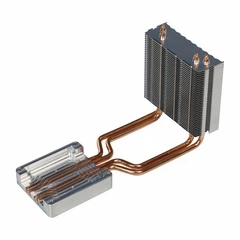
Active car controller heatsinks play a pivotal role in maintaining the optimal performance and longevity of car controllers. As a leading supplier of car controller heatsinks, I am excited to delve into the intricate workings of these essential components.
The Basics of Heat Dissipation in Car Controllers
Car controllers are at the heart of modern automotive systems, managing a wide range of functions from engine control to advanced driver - assistance systems (ADAS). During their operation, these controllers generate a significant amount of heat due to the electrical resistance in their circuits and the high - speed processing of data. If this heat is not dissipated effectively, it can lead to a rise in temperature, which in turn can cause a decrease in performance, component failure, and even safety risks.
The primary goal of an active car controller heatsink is to transfer the heat generated by the controller to the surrounding environment as quickly and efficiently as possible. This is achieved through the principles of conduction, convection, and sometimes radiation.
Conduction: The First Step in Heat Transfer
Conduction is the transfer of heat through a solid material. In a car controller heatsink, the heatsink is in direct contact with the heat - generating components of the controller. The material of the heatsink is typically a high - thermal - conductivity metal, such as aluminum or copper. Aluminum is a popular choice due to its relatively low cost, light weight, and good thermal conductivity.
When the heat is generated by the controller, it first conducts from the surface of the controller to the base of the heatsink. The base of the heatsink acts as a collector, absorbing the heat and spreading it over a larger area. The design of the base is crucial; a flat and smooth base ensures maximum contact with the controller, minimizing the thermal resistance between the two.
The heat then conducts through the fins of the heatsink. Fins are thin, extended structures that increase the surface area of the heatsink. The larger the surface area, the more heat can be transferred to the surrounding air. The fins' shape, size, and density are carefully engineered to optimize heat conduction. For example, some heatsinks use a pin - fin design, where multiple small pins are arranged on the base. Others may use a straight - fin design, which offers a more straightforward path for heat conduction.
Convection: Moving Heat Away from the Heatsink
Convection is the transfer of heat through the movement of a fluid, in this case, air. Once the heat has been conducted to the fins of the heatsink, it needs to be carried away by the surrounding air. There are two types of convection that are commonly used in car controller heatsinks: natural convection and forced convection.
Natural Convection
Natural convection occurs when the heated air around the heatsink rises due to its lower density compared to the cooler air. As the hot air rises, cooler air is drawn in to replace it, creating a natural airflow pattern. This process is simple and requires no additional power source. However, the rate of heat transfer through natural convection is relatively slow, and it may not be sufficient for high - power car controllers.
Forced Convection
Forced convection, on the other hand, uses a fan or a pump to increase the airflow over the heatsink. A fan blows air directly onto the fins of the heatsink, increasing the rate at which heat is transferred from the fins to the air. The use of forced convection can significantly improve the cooling efficiency of the heatsink, allowing it to handle higher heat loads.
The fan used in a car controller heatsink is carefully selected based on factors such as airflow rate, static pressure, noise level, and power consumption. High - performance fans can provide a large volume of airflow, but they may also consume more power and produce more noise. Therefore, a balance needs to be struck to meet the specific requirements of the car controller.


Advanced Cooling Technologies
In addition to conduction and convection, some car controller heatsinks incorporate advanced cooling technologies to further enhance their performance. One such technology is the use of heat pipes. A Aluminum Heat Pipe Communication Module Heatsink uses a heat pipe, which is a sealed tube filled with a working fluid. The heat pipe operates on the principle of phase change. When the heat is absorbed at one end of the heat pipe, the working fluid evaporates. The vapor then travels to the cooler end of the heat pipe, where it condenses and releases the heat. The condensed fluid then returns to the hot end by capillary action or gravity. Heat pipes can transfer heat over long distances with very low thermal resistance, making them ideal for applications where space is limited or where high - efficiency heat transfer is required.
Another advanced cooling technology is liquid cooling. A Cavity - type Energy Storage Battery Water Cooling Plate or an Automotive Controller Water Cooling Plate uses a liquid coolant, such as water or a water - glycol mixture, to transfer heat from the controller. The liquid coolant is circulated through channels in the cooling plate, absorbing the heat from the controller. The heated coolant is then pumped to a radiator, where it releases the heat to the surrounding air. Liquid cooling can provide more efficient heat transfer compared to air cooling, especially for high - power applications.
Design Considerations for Car Controller Heatsinks
When designing a car controller heatsink, several factors need to be considered. Firstly, the heat load of the controller needs to be accurately determined. This involves calculating the power consumption of the controller and estimating the amount of heat generated. The size and shape of the heatsink need to be designed to match the available space in the car and the layout of the controller.
The material selection is also crucial. As mentioned earlier, aluminum and copper are popular choices due to their high thermal conductivity. However, other factors such as cost, weight, and corrosion resistance also need to be considered. The surface finish of the heatsink can also affect its performance. A smooth surface can reduce the air resistance and improve the airflow over the fins, while a rough surface can increase the surface area and enhance the heat transfer.
Quality Assurance and Testing
As a supplier of car controller heatsinks, quality assurance is of utmost importance. We conduct a series of tests to ensure that our heatsinks meet the highest standards of performance and reliability. These tests include thermal performance testing, where the heatsink is tested under different heat loads and airflow conditions to measure its cooling efficiency. We also perform mechanical testing, such as vibration testing and shock testing, to ensure that the heatsink can withstand the harsh operating conditions in a car.
Conclusion and Call to Action
In conclusion, active car controller heatsinks are essential components for maintaining the optimal performance and reliability of car controllers. Through the principles of conduction, convection, and the use of advanced cooling technologies, these heatsinks are able to effectively dissipate the heat generated by the controllers.
As a trusted supplier of car controller heatsinks, we are committed to providing high - quality products that meet the diverse needs of our customers. Whether you are an automotive manufacturer, a system integrator, or a distributor, we have the expertise and the resources to offer you the best solutions for your car controller cooling requirements.
If you are interested in learning more about our car controller heatsinks or would like to discuss your specific needs, please feel free to contact us for a detailed consultation. We look forward to the opportunity to work with you and contribute to the success of your automotive projects.
References
- Incropera, F. P., & DeWitt, D. P. (2002). Fundamentals of Heat and Mass Transfer. John Wiley & Sons.
- Cengel, Y. A. (2007). Heat Transfer: A Practical Approach. McGraw - Hill.