


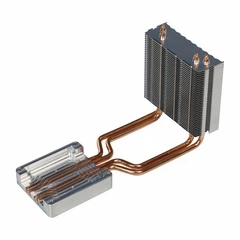
The presence of air bubbles in the coolant can have several significant impacts on an all aluminum stacked radiator. As a supplier of All Aluminum Stacked Radiators, I've witnessed firsthand how these seemingly innocuous air bubbles can lead to various issues that affect the radiator's performance and longevity.
1. Heat Transfer Efficiency
One of the primary functions of a radiator is to transfer heat from the coolant to the surrounding air. The coolant circulates through the radiator, absorbing heat from the engine and then releasing it as it passes through the radiator's fins and tubes. However, air bubbles in the coolant act as insulators. Unlike the coolant, which has relatively high thermal conductivity, air has extremely low thermal conductivity.
When air bubbles are present in the coolant channels of an all aluminum stacked radiator, they create pockets of air that impede the direct contact between the coolant and the radiator's internal surfaces. This reduces the effective area available for heat transfer. For example, if an air bubble is stuck in a narrow coolant passage, the coolant flow around it is disrupted, and the heat transfer at that point is severely compromised.


Over time, this reduction in heat transfer efficiency can cause the engine to run hotter than normal. The engine may experience overheating, which can lead to a range of problems such as reduced engine performance, increased wear and tear on engine components, and even engine failure in severe cases. As a radiator supplier, we understand the importance of maintaining optimal heat transfer efficiency, and the presence of air bubbles in the coolant is a major concern in achieving this goal.
2. Corrosion and Erosion
All aluminum stacked radiators are made of aluminum, which is a relatively reactive metal. While aluminum forms a protective oxide layer on its surface, the presence of air bubbles in the coolant can disrupt this layer and accelerate corrosion.
Air bubbles can cause localized changes in the coolant's chemistry. When air is present, oxygen can react with the coolant and form corrosive substances. These substances can attack the aluminum surfaces of the radiator, leading to pitting and corrosion. Additionally, the movement of air bubbles within the coolant can cause erosion. As the bubbles move through the narrow channels of the radiator, they can create small pressure differentials and turbulent flow patterns. This turbulent flow can erode the aluminum surfaces over time, especially at the points where the coolant flow is most restricted.
Corrosion and erosion can weaken the structure of the radiator. Small holes or cracks may develop in the radiator's tubes or fins, leading to coolant leaks. A coolant leak not only reduces the radiator's ability to cool the engine but can also cause damage to other engine components if the coolant comes into contact with them. As a supplier, we are constantly looking for ways to minimize the risk of corrosion and erosion in our radiators, and eliminating air bubbles from the coolant is an important part of this process.
3. Coolant Flow and Pressure
Air bubbles in the coolant can also affect the flow and pressure within the all aluminum stacked radiator. The presence of air bubbles can disrupt the smooth flow of the coolant through the radiator's channels. The bubbles can act as obstacles, causing the coolant to flow around them instead of in a straight path. This can lead to uneven coolant distribution within the radiator.
Some areas of the radiator may receive less coolant flow than others, resulting in uneven heat transfer. This uneven heat transfer can cause hot spots in the radiator, which can further exacerbate the overheating problem. Moreover, the presence of air bubbles can cause fluctuations in the coolant pressure. As the bubbles move through the radiator, they can create temporary blockages and pressure spikes. These pressure spikes can put additional stress on the radiator's components, increasing the risk of leaks and damage.
As a radiator supplier, we design our all aluminum stacked radiators to ensure optimal coolant flow and pressure. However, the presence of air bubbles in the coolant can undermine these design efforts. We often recommend our customers to properly bleed the cooling system to remove any air bubbles before using the radiator to ensure smooth and efficient coolant flow.
4. Impact on System Performance
The issues caused by air bubbles in the coolant can have a significant impact on the overall performance of the cooling system. An all aluminum stacked radiator is just one part of a larger cooling system that includes the engine, water pump, thermostat, and other components. When the radiator's performance is compromised due to air bubbles in the coolant, the entire cooling system may not function properly.
For example, if the radiator is unable to transfer heat effectively, the engine may overheat. The overheating engine can cause the thermostat to malfunction, leading to further problems with coolant flow and temperature regulation. The water pump may also have to work harder to circulate the coolant through the radiator, which can increase its wear and tear and reduce its lifespan.
As a supplier, we understand the importance of a well - functioning cooling system. We provide our customers with not only high - quality all aluminum stacked radiators but also advice on how to maintain their cooling systems to prevent issues related to air bubbles in the coolant.
Related Products
In addition to all aluminum stacked radiators, we also offer a range of other high - quality radiator products. You can check out our Controllable Power Water Cooling Plate, Aluminum Finned Heat Sink, and DCC Power Control High - Power Heatsink. These products are designed to meet various cooling needs and are made with the same high - quality standards as our all aluminum stacked radiators.
Contact for Purchase and Negotiation
If you are interested in our all aluminum stacked radiators or any of our other radiator products, we encourage you to contact us for purchase and negotiation. We are committed to providing you with the best products and services to meet your cooling requirements.
References
- Incropera, F. P., & DeWitt, D. P. (2002). Fundamentals of Heat and Mass Transfer. John Wiley & Sons.
- ASM Handbook Committee. (1994). ASM Handbook: Volume 13A: Corrosion: Fundamentals, Testing, and Protection. ASM International.
- Heywood, J. B. (1988). Internal Combustion Engine Fundamentals. McGraw - Hill.