


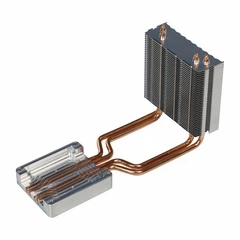
In the realm of thermal management, efficient heat dissipation is crucial for the optimal performance and longevity of various electronic and mechanical systems. One of the most effective solutions in this field is the Aluminum Finned Heat Sink. As a supplier of these high - quality heat sinks, I am well - versed in their design, functionality, and the significant role they play in enhancing heat dissipation.
Understanding Heat Dissipation Basics
Before delving into how aluminum finned heat sinks improve heat dissipation, it's essential to understand the basic principles of heat transfer. There are three primary modes of heat transfer: conduction, convection, and radiation.
Conduction is the transfer of heat through a solid material. When a heat source, such as a microprocessor in a computer, generates heat, it first conducts through the base of the heat sink that is in direct contact with it. The heat then spreads across the base material.
Convection is the transfer of heat by the movement of a fluid (either liquid or gas). In most common applications, air is the fluid used for heat dissipation. As the heat is transferred from the heat source to the heat sink, the air around the heat sink gets heated up. The heated air rises, and cooler air takes its place, creating a continuous flow of air that carries the heat away.
Radiation is the transfer of heat in the form of electromagnetic waves. While radiation does play a role in heat dissipation, it is often less significant compared to conduction and convection in typical heat sink applications.
Why Aluminum for Heat Sinks?
Aluminum is the material of choice for many heat sink applications, and there are several reasons for this. First, aluminum has a relatively high thermal conductivity. Thermal conductivity is a measure of a material's ability to conduct heat. A high thermal conductivity means that heat can transfer quickly through the material. Aluminum has a thermal conductivity of around 200 W/(m·K), which is sufficient for most heat dissipation requirements.
Second, aluminum is lightweight. In applications where weight is a concern, such as in aerospace or portable electronics, the low density of aluminum makes it an ideal choice. It allows for the design of heat sinks that can effectively dissipate heat without adding excessive weight to the overall system.
Third, aluminum is corrosion - resistant. It forms a thin oxide layer on its surface when exposed to air, which protects it from further corrosion. This property ensures the long - term durability of the heat sink, even in harsh environments.
The Role of Fins in Heat Dissipation
The fins on an aluminum heat sink are the key to its enhanced heat dissipation capabilities. Fins increase the surface area of the heat sink. The greater the surface area, the more heat can be transferred from the heat sink to the surrounding air through convection.
Let's consider a simple example. Suppose we have a flat piece of aluminum with a certain surface area. If we add fins to this flat piece, the total surface area available for heat transfer increases significantly. For instance, a heat sink with a series of thin, closely - spaced fins can have a surface area that is several times larger than the original flat piece.
The shape and design of the fins also play an important role. Different fin geometries, such as straight fins, pin fins, or staggered fins, can be used depending on the specific application requirements. Straight fins are the most common type and are relatively easy to manufacture. They provide a large surface area for heat transfer and are suitable for applications where the air flow is relatively uniform.
Pin fins, on the other hand, are cylindrical in shape and can provide a more three - dimensional surface area for heat transfer. They are often used in applications where the air flow is more complex or where a higher degree of heat dissipation is required. Staggered fins are arranged in a non - linear pattern, which can enhance the turbulence of the air flow around the fins. Increased turbulence helps to break up the boundary layer of air adjacent to the fin surface, allowing for more efficient heat transfer.
How Aluminum Finned Heat Sinks Improve Heat Dissipation in Different Applications
Electronics
In the electronics industry, heat dissipation is critical for the proper functioning of electronic components. Microprocessors, graphics cards, and power amplifiers generate a significant amount of heat during operation. If this heat is not dissipated effectively, it can lead to overheating, which can cause the components to malfunction or even fail prematurely.
Aluminum finned heat sinks are widely used in these applications. They are often attached directly to the electronic components using thermal interface materials, such as thermal paste or pads. These materials help to fill in any microscopic gaps between the heat source and the heat sink, ensuring good thermal contact and efficient heat transfer.

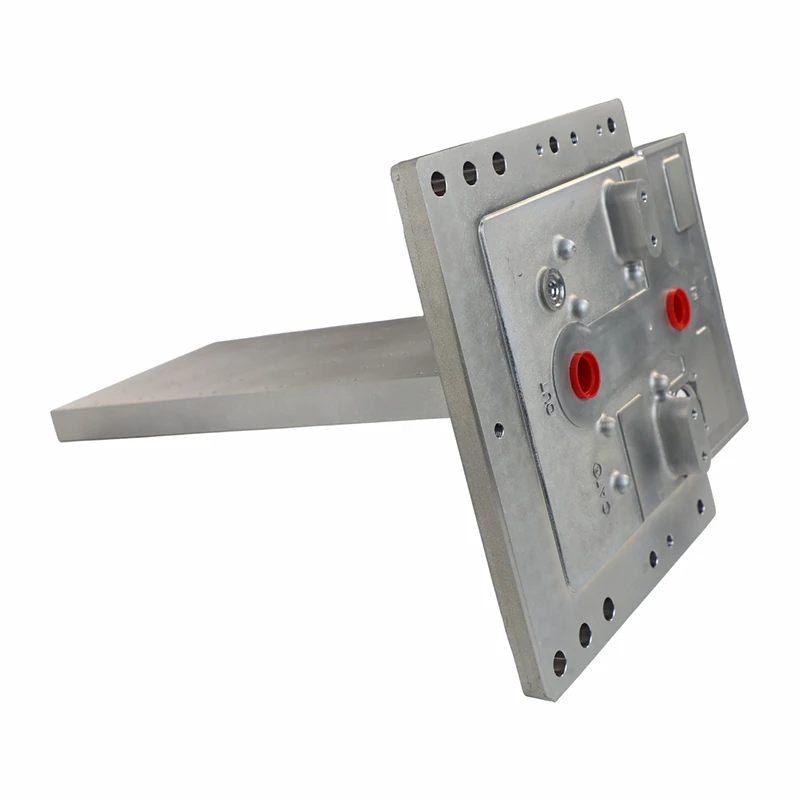
The fins on the heat sink increase the surface area available for air to flow over, allowing the heat to be transferred from the heat sink to the air more quickly. In many cases, fans are also used in conjunction with the heat sinks to enhance the air flow and improve the overall heat dissipation efficiency.
Automotive
In the automotive industry, aluminum finned heat sinks are used in various applications, such as in engine cooling systems and power electronics. For example, in electric vehicles, the battery management system and power inverters generate a significant amount of heat. Aluminum finned heat sinks are used to dissipate this heat and maintain the optimal operating temperature of these components.
In engine cooling systems, combination heat sinks, such as the Combination Aluminum Water Cooling Radiator, are often used. These radiators use a combination of water cooling and air cooling to dissipate the heat generated by the engine. The aluminum fins on the radiator increase the surface area for air to flow over, while the water circulation system helps to transfer the heat from the engine to the radiator.
Industrial Equipment
Industrial equipment, such as power supplies, motors, and transformers, also generate a large amount of heat during operation. Aluminum finned heat sinks are used to ensure that these components operate within their safe temperature ranges. In some industrial applications, all - aluminum stacked radiators, like the All Aluminum Stacked Radiator, are used. These radiators consist of multiple layers of aluminum fins, which provide a large surface area for heat dissipation.
Conclusion
In conclusion, aluminum finned heat sinks are a highly effective solution for improving heat dissipation in a wide range of applications. The combination of aluminum's high thermal conductivity, lightweight, and corrosion - resistance, along with the increased surface area provided by the fins, allows for efficient heat transfer from the heat source to the surrounding air.
Whether it's in electronics, automotive, or industrial applications, these heat sinks play a crucial role in maintaining the optimal performance and longevity of various systems. As a supplier of Aluminum Finned Heat Sink, I am committed to providing high - quality products that meet the diverse needs of our customers.
If you are in need of heat dissipation solutions for your specific application, I encourage you to reach out to us for a detailed discussion. We can work together to design and manufacture the most suitable heat sink for your requirements.
References
- Incropera, F. P., & DeWitt, D. P. (2002). Fundamentals of Heat and Mass Transfer. Wiley.
- Holman, J. P. (2002). Heat Transfer. McGraw - Hill.
- Cengel, Y. A. (2003). Heat Transfer: A Practical Approach. McGraw - Hill.