


As a supplier of Circular Base LED Heat Sinks, I've witnessed firsthand the dynamic nature of the lighting industry, especially the LED stage lighting segment. The frequent on - off operation of LED stage lights is a common practice in the entertainment and event sectors. But how does this seemingly simple action impact the circular base LED heat sink? Let's delve into the scientific aspects and practical implications.
Understanding the Basics of LED Stage Lights and Heat Sinks
LED stage lights are known for their energy - efficiency, high brightness, and color - changing capabilities. However, like all electronic devices, they generate heat during operation. This is where the circular base LED heat sink comes into play. The heat sink's primary function is to dissipate the heat produced by the LED chips, ensuring that the LEDs operate within their optimal temperature range.


A well - designed Circular Base LED Heat Sink has a circular base that provides a large contact area with the LED module. This allows for efficient heat transfer from the LEDs to the heat sink. The heat is then transferred to the fins of the heat sink, where it can be dissipated into the surrounding air through convection.
The Impact of Frequent On - Off Operation on Heat Sink Performance
Thermal Stress
Frequent on - off operation of LED stage lights subjects the circular base LED heat sink to thermal stress. When the lights are turned on, the temperature of the LEDs and the heat sink rises rapidly. Conversely, when the lights are turned off, the temperature drops quickly. This rapid temperature cycling causes the materials in the heat sink to expand and contract repeatedly.
Over time, this thermal stress can lead to mechanical fatigue. For example, the solder joints that connect the heat sink to the LED module may weaken, leading to poor thermal contact. Additionally, the fins of the heat sink may develop micro - cracks, which can reduce the surface area available for heat dissipation. According to a study by the Institute of Electrical and Electronics Engineers (IEEE), materials under thermal stress can experience up to a 30% reduction in their mechanical properties over a long period of time.
Corrosion
The on - off cycle can also accelerate corrosion in the circular base LED heat sink. When the temperature rises during the "on" phase, moisture in the air can condense on the surface of the heat sink. During the "off" phase, when the temperature drops, this condensed moisture can remain on the heat sink for a certain period. If the heat sink is not made of corrosion - resistant materials or is not properly coated, the moisture can react with the metal of the heat sink, leading to rust and corrosion.
Corrosion can significantly degrade the performance of the heat sink. Rust and corrosion products can form a layer on the surface of the heat sink, which acts as an insulator and reduces the efficiency of heat transfer. A research paper from the Journal of Electronic Packaging found that a 10% corrosion layer on a heat sink can result in a 15% increase in the thermal resistance of the heat sink.
Dust Accumulation
Frequent on - off operation can also affect the dust accumulation on the circular base LED heat sink. When the lights are turned on, the air around the heat sink is heated and rises, creating a convection current. This convection current can draw in dust and other particulate matter from the surrounding environment. When the lights are turned off, the convection current stops, and the dust settles on the heat sink.
Over time, a thick layer of dust can accumulate on the fins of the heat sink. This dust layer acts as an insulator, reducing the surface area available for heat transfer and increasing the thermal resistance of the heat sink. A study by the International Journal of Thermal Sciences showed that a dust layer of 1 mm thickness on a heat sink can increase the thermal resistance by up to 25%.
Mitigating the Impact of Frequent On - Off Operation
Material Selection
Choosing the right materials for the circular base LED heat sink is crucial in mitigating the impact of frequent on - off operation. For example, aluminum alloys are commonly used in heat sinks due to their good thermal conductivity and relatively low cost. However, to improve corrosion resistance, aluminum heat sinks can be anodized. Anodizing creates a protective oxide layer on the surface of the aluminum, which prevents corrosion.
Copper is another excellent material for heat sinks. It has a higher thermal conductivity than aluminum, which means it can transfer heat more efficiently. Our Pure Copper CPU/GPU Multi - Purpose Heat Sink is a great example of a high - performance heat sink made from copper. Copper heat sinks are also more resistant to thermal stress and corrosion compared to some aluminum heat sinks.
Design Optimization
The design of the circular base LED heat sink can also be optimized to reduce the impact of frequent on - off operation. For example, increasing the thickness of the base and the fins can improve the mechanical strength of the heat sink, making it more resistant to thermal stress. Additionally, designing the fins with a larger pitch can reduce the accumulation of dust.
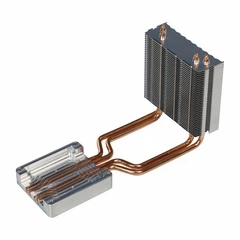
Another design consideration is the use of heat pipes. Heat pipes are highly efficient heat transfer devices that can enhance the performance of the heat sink. Our CPU Aluminum Heat Pipe Heatsink utilizes heat pipes to improve heat transfer from the base to the fins. Heat pipes can significantly reduce the thermal resistance of the heat sink, making it more effective in dissipating heat even under frequent on - off operation.
Maintenance
Regular maintenance is essential in ensuring the long - term performance of the circular base LED heat sink. This includes cleaning the heat sink to remove dust and debris, checking for signs of corrosion and mechanical damage, and tightening any loose connections. A well - maintained heat sink can operate efficiently for a longer period of time, even under frequent on - off operation.
Conclusion
The frequent on - off operation of LED stage lights has a significant impact on the circular base LED heat sink. Thermal stress, corrosion, and dust accumulation are the main factors that can degrade the performance of the heat sink over time. However, by carefully selecting materials, optimizing the design, and performing regular maintenance, these impacts can be mitigated.
As a supplier of Circular Base LED Heat Sinks, we understand the importance of providing high - quality heat sinks that can withstand the challenges of frequent on - off operation. Our products are designed and manufactured using the latest technologies and materials to ensure optimal performance and reliability.
If you are in the market for high - performance circular base LED heat sinks or other types of heat sinks, such as our CPU Aluminum Heat Pipe Heatsink and Pure Copper CPU/GPU Multi - Purpose Heat Sink, we invite you to contact us for a detailed discussion on your specific requirements. We are committed to providing you with the best heat sink solutions for your LED stage lighting needs.
References
- Institute of Electrical and Electronics Engineers (IEEE). "Thermal Stress and Its Impact on Electronic Components." IEEE Transactions on Components, Packaging, and Manufacturing Technology.
- Journal of Electronic Packaging. "Corrosion Effects on the Performance of Electronic Heat Sinks."
- International Journal of Thermal Sciences. "The Influence of Dust Accumulation on Heat Sink Performance."