


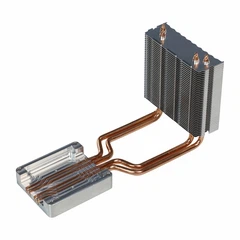
In the realm of thermal management, the Versatile Water Cooling Plate stands as a cornerstone technology, offering efficient heat dissipation solutions across a wide array of applications. As a leading supplier of Versatile Water Cooling Plate, we are constantly exploring new frontiers and adapting our products to meet the evolving demands of various environments. One such challenging environment is the vacuum, where the unique physical conditions pose significant hurdles to the traditional operation of water cooling systems. In this blog, we will delve into the modifications required for a Versatile Water Cooling Plate to function effectively in a vacuum environment.
Understanding the Vacuum Environment
A vacuum is characterized by an extremely low pressure, where the number of gas molecules is significantly reduced compared to normal atmospheric conditions. This has several implications for heat transfer mechanisms. In a normal environment, heat can be transferred through conduction, convection, and radiation. However, in a vacuum, convection is virtually non - existent because there are not enough gas molecules to carry heat through bulk fluid motion. This leaves conduction and radiation as the primary heat transfer modes.
Modifications to the Cooling Plate Design
1. Material Selection
The choice of materials for the Versatile Water Cooling Plate becomes crucial in a vacuum environment. Metals with high thermal conductivity, such as copper and aluminum, are commonly used in standard cooling plates. However, in a vacuum, we need to consider additional factors. For example, the material should have low outgassing properties. Outgassing is the release of gas from a solid material, which can contaminate the vacuum environment and affect the performance of other components. Specialized alloys or surface treatments can be applied to reduce outgassing.
2. Heat Transfer Enhancement
Since convection is not available in a vacuum, we need to enhance the conduction and radiation heat transfer capabilities of the cooling plate. For conduction, we can increase the contact area between the heat source and the cooling plate. This can be achieved by using a more complex fin structure or by applying a high - thermal - conductivity interface material between the heat source and the cooling plate.

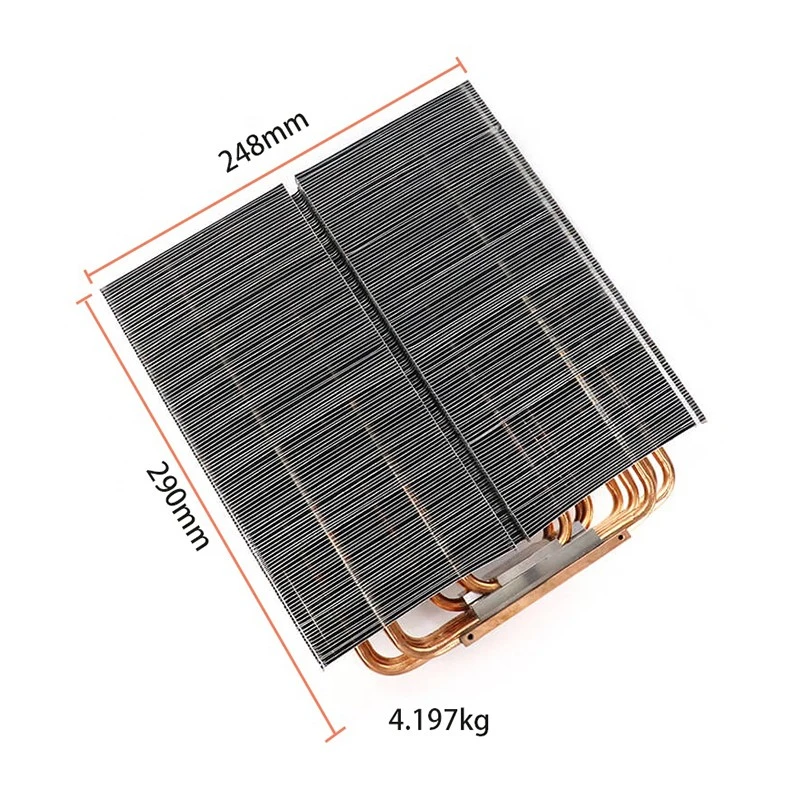
In terms of radiation, the surface of the cooling plate can be treated to increase its emissivity. A high - emissivity surface will radiate heat more effectively. For example, black anodizing can be applied to the surface of the cooling plate, which not only increases the emissivity but also provides some protection against corrosion.
3. Sealing and Leakage Prevention
In a vacuum environment, any leakage of the cooling fluid can be a serious problem. The cooling plate needs to be hermetically sealed to prevent the escape of water or other cooling fluids. Special gaskets and sealing materials that are compatible with the vacuum environment need to be used. Additionally, the joints and connections in the cooling plate should be designed to withstand the pressure differential between the inside of the cooling plate and the vacuum environment.
4. Pressure Regulation
In a vacuum, the boiling point of water decreases significantly. To prevent the water in the cooling plate from boiling, a pressure regulation system may be required. This can involve using a closed - loop system with a pressure - control valve to maintain the pressure inside the cooling plate at a level where the water remains in a liquid state.
Impact on Cooling Performance
These modifications have a direct impact on the cooling performance of the Versatile Water Cooling Plate in a vacuum environment. By enhancing conduction and radiation heat transfer, the cooling plate can effectively dissipate heat even without the aid of convection. The improved sealing and pressure regulation ensure the reliability and longevity of the cooling system.
Applications in Vacuum - Related Industries
The modified Versatile Water Cooling Plate has a wide range of applications in industries that operate in vacuum environments. For example, in the semiconductor industry, Semiconductor Cooling Module Heatsink is often used in vacuum chambers during the manufacturing process. The cooling plate can help maintain the optimal temperature of semiconductor components, ensuring their proper operation and high - quality production.
In the aerospace industry, high - power electronic devices on satellites and spacecraft need to be cooled in a vacuum environment. The Versatile Water Cooling Plate can be customized to meet the specific requirements of these applications, providing reliable thermal management solutions.
Another application is in the high - power LED industry. High - Power Combined LED Heat Sink is used to dissipate the heat generated by high - power LEDs. In some cases, these LEDs may be used in vacuum - sealed enclosures, and the modified cooling plate can ensure their long - term performance and stability.
Conclusion
Adapting a Versatile Water Cooling Plate to work in a vacuum environment requires a series of modifications in terms of material selection, heat transfer enhancement, sealing, and pressure regulation. These modifications not only enable the cooling plate to function effectively in a vacuum but also open up new opportunities for its application in various industries.
If you are interested in our Versatile Water Cooling Plate or have specific requirements for cooling solutions in a vacuum environment, we invite you to contact us for further discussion and procurement. Our team of experts is ready to provide you with professional advice and customized solutions.
References
- Incropera, F. P., & DeWitt, D. P. (2002). Fundamentals of Heat and Mass Transfer. John Wiley & Sons.
- Bar-Cohen, A., & Kraus, A. D. (2006). Thermal Management Handbook. Taylor & Francis.