


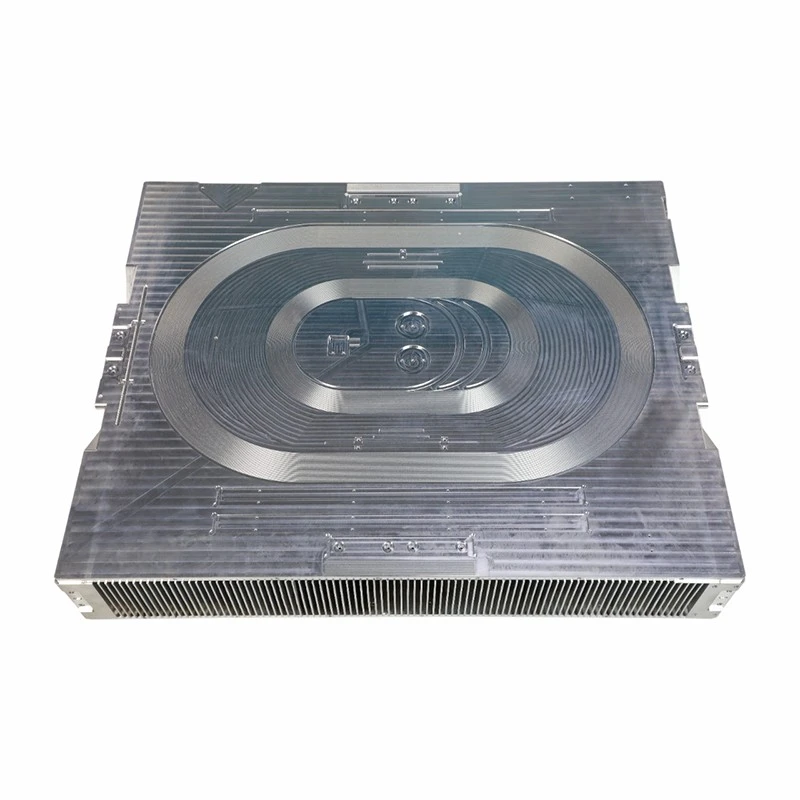
As a supplier of Versatile Water Cooling Plates, remotely monitoring the temperature data of these plates is a crucial aspect in various applications, especially in industries where precise temperature control is essential. In this blog, I will explore several methods that can be employed to achieve remote temperature monitoring of Versatile Water Cooling Plates.
1. Wireless Sensor Networks
Wireless sensor networks (WSNs) are an effective solution for remotely monitoring the temperature of Versatile Water Cooling Plates. These networks consist of multiple sensor nodes, each equipped with a temperature sensor that can be attached to the cooling plate. The sensors collect temperature data at regular intervals and transmit it wirelessly to a central base station.
The advantage of using WSNs is their flexibility and scalability. They can be easily deployed in different environments, and additional sensor nodes can be added as needed. For example, in a large - scale data center where multiple Versatile Water Cooling Plates are used to cool servers, a WSN can be set up to monitor the temperature of each plate. The central base station can then be connected to a network, allowing authorized personnel to access the temperature data remotely via a web - based interface.
However, there are also some challenges associated with WSNs. One of the main issues is power consumption. Since the sensor nodes are usually battery - powered, they need to operate for long periods without frequent battery replacement. To address this, low - power wireless communication protocols such as ZigBee or Bluetooth Low Energy (BLE) can be used. These protocols consume less power while still providing reliable data transmission.
2. Internet of Things (IoT) - Enabled Sensors
The Internet of Things (IoT) has revolutionized the way we monitor and control various devices. IoT - enabled temperature sensors can be integrated with Versatile Water Cooling Plates to provide real - time temperature data over the internet. These sensors are typically connected to the network using Wi - Fi, Ethernet, or cellular communication.
Once the IoT - enabled sensors are installed on the cooling plates, they can send temperature data to a cloud - based platform. The cloud platform stores the data and provides analytics tools to help users analyze the temperature trends. For instance, users can set up alerts on the cloud platform so that they are notified immediately if the temperature of a cooling plate exceeds a certain threshold.
IoT - enabled sensors offer several benefits. They provide seamless integration with existing IT infrastructure, allowing for easy management and monitoring. Additionally, the cloud - based platform enables remote access from anywhere in the world, as long as there is an internet connection. However, security is a major concern when using IoT devices. It is essential to implement proper security measures, such as encryption and authentication, to protect the temperature data from unauthorized access.
3. Radio Frequency Identification (RFID) - Based Monitoring
Radio Frequency Identification (RFID) technology can also be used for remote temperature monitoring of Versatile Water Cooling Plates. RFID tags with temperature sensors can be attached to the cooling plates. These tags can store temperature data and transmit it wirelessly to an RFID reader.
The RFID reader can be connected to a local network or a central server, which then processes the temperature data. RFID - based monitoring is particularly useful in applications where a large number of cooling plates need to be monitored simultaneously. For example, in a manufacturing plant where multiple cooling plates are used in different production lines, RFID technology can provide a cost - effective solution for temperature monitoring.
One of the advantages of RFID - based monitoring is its non - contact nature. The RFID reader can read the temperature data from the tags without the need for direct physical contact, which is beneficial in environments where access to the cooling plates is limited. However, the range of RFID communication is relatively limited compared to other wireless technologies, and the accuracy of the temperature measurement may be affected by factors such as interference and the orientation of the tags.
4. Satellite - Based Monitoring
In some cases, especially in remote or large - scale applications, satellite - based monitoring can be considered for remotely monitoring the temperature data of Versatile Water Cooling Plates. Satellite - based systems use satellites to collect and transmit data from sensors installed on the cooling plates.
This method is suitable for applications such as oil and gas platforms in the ocean or large - scale solar power plants in remote areas. The sensors on the cooling plates send the temperature data to a local transceiver, which then relays the data to a satellite. The satellite transmits the data back to a ground station, where it can be processed and analyzed.
Satellite - based monitoring offers global coverage and can provide data from areas where traditional communication methods are not available. However, it is a relatively expensive solution, and the data transmission latency can be an issue, especially for applications that require real - time temperature monitoring.
Applications and Related Products
The ability to remotely monitor the temperature of Versatile Water Cooling Plates is valuable in many applications. In the electronics industry, for example, cooling plates are used to dissipate heat from high - power components such as CPUs, lasers, and semiconductors. By remotely monitoring the temperature, manufacturers can ensure the optimal performance and reliability of these components.
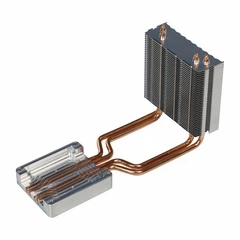
We also offer a range of related products that complement our Versatile Water Cooling Plates. For instance, our CPU Aluminum Heat Pipe Heatsink is designed to provide efficient heat dissipation for CPUs. It works in conjunction with the water cooling plates to maintain the CPU temperature within a safe range.
Our High - power Aluminum Laser Heatsink is another product that can be used in laser systems. The combination of the water cooling plate and the laser heatsink helps to prevent overheating of the laser, ensuring its stable operation.
In addition, our Semiconductor Aluminum Cooling Module Heatsink is suitable for semiconductor devices. Remote temperature monitoring of the water cooling plates used in these modules can help semiconductor manufacturers to optimize the performance and lifespan of their products.
Conclusion
Remote temperature monitoring of Versatile Water Cooling Plates is essential for ensuring the efficient operation and reliability of various systems. Wireless sensor networks, IoT - enabled sensors, RFID - based monitoring, and satellite - based monitoring are all viable methods, each with its own advantages and challenges.
If you are interested in our Versatile Water Cooling Plates or any of our related products, and would like to discuss your specific requirements for temperature monitoring, please feel free to contact us for procurement and further technical discussions. We are committed to providing high - quality products and solutions to meet your needs.

References
- Akyildiz, I. F., Su, W., Sankarasubramaniam, Y., & Cayirci, E. (2002). Wireless sensor networks: a survey. Computer networks, 38(4), 393 - 422.
- Atzori, L., Iera, A., & Morabito, G. (2010). The Internet of Things: a survey. Computer networks, 54(15), 2787 - 2805.
- Finkenzeller, K. (2010). RFID handbook: fundamentals and applications in contactless smart cards, radio frequency identification and near - field communication. John Wiley & Sons.