


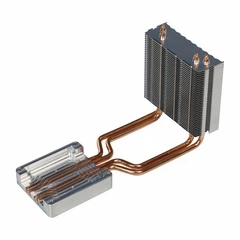
In the realm of automotive engineering, car controllers are the nerve centers that manage and regulate various functions of a vehicle. These controllers generate a significant amount of heat during operation, and if not properly dissipated, this heat can lead to performance degradation, component failure, and even safety risks. This is where the car controller heatsink comes into play, and fins play a crucial role in its functionality. As a leading supplier of car controller heatsinks, I'd like to delve into the role of fins in these essential components.
The Basics of Heat Dissipation in Car Controllers
Before we discuss the role of fins, it's important to understand the basics of heat dissipation in car controllers. Heat is generated when electrical energy is converted into mechanical or other forms of energy within the controller. This heat needs to be transferred away from the controller to maintain its optimal operating temperature. The process of heat transfer involves three main mechanisms: conduction, convection, and radiation.
Conduction is the transfer of heat through a solid material, such as the metal housing of the car controller. Convection is the transfer of heat through the movement of a fluid, such as air or coolant. Radiation is the transfer of heat through electromagnetic waves. In a car controller heatsink, all three mechanisms work together to dissipate heat effectively.
The Role of Fins in Heat Dissipation
Fins are an integral part of a car controller heatsink, and their primary role is to increase the surface area available for heat transfer. By increasing the surface area, fins enhance both conduction and convection, which are the two main heat transfer mechanisms in a heatsink.
Increasing Surface Area for Conduction
Conduction is the first step in the heat transfer process. The heat generated by the car controller is conducted through the base of the heatsink and into the fins. The fins, being made of a highly conductive material such as aluminum, provide a large surface area for the heat to spread out. This allows the heat to be conducted more efficiently from the base of the heatsink to the outer surface of the fins.
The greater the surface area of the fins, the more heat can be conducted away from the controller. This is because a larger surface area provides more pathways for the heat to flow. As a result, the temperature of the controller is kept within a safe operating range.
Enhancing Convection
Convection is the second step in the heat transfer process. Once the heat has been conducted to the outer surface of the fins, it needs to be transferred to the surrounding fluid (usually air). Fins play a crucial role in enhancing convection by increasing the surface area available for heat transfer between the heatsink and the air.
When air flows over the fins, it absorbs the heat from the fins and carries it away. The shape and design of the fins can have a significant impact on the convection process. For example, fins with a larger surface area and a more streamlined shape can promote better air flow and, therefore, more efficient heat transfer.
There are two types of convection: natural convection and forced convection. In natural convection, the air moves due to the difference in temperature between the fins and the surrounding air. The warm air near the fins rises, creating a natural airflow that carries the heat away. In forced convection, a fan or other device is used to force air over the fins, increasing the rate of heat transfer.
Types of Fins in Car Controller Heatsinks
There are several types of fins used in car controller heatsinks, each with its own advantages and disadvantages. The choice of fin type depends on various factors, such as the size and shape of the heatsink, the operating conditions of the car controller, and the required heat dissipation capacity.
Straight Fins
Straight fins are the simplest and most common type of fins used in car controller heatsinks. They are typically made of aluminum and are arranged in a parallel pattern on the base of the heatsink. Straight fins provide a large surface area for heat transfer and are relatively easy to manufacture. However, they may not be the most efficient type of fins in terms of convection, especially in applications where the air flow is limited.
Pin Fins
Pin fins are another type of fins used in car controller heatsinks. They are small, cylindrical pins that are arranged in a grid pattern on the base of the heatsink. Pin fins provide a high surface area-to-volume ratio, which makes them very effective in dissipating heat. They also promote better air flow around the fins, which enhances convection. However, pin fins can be more difficult and expensive to manufacture than straight fins.
Micro Fins
Micro fins are a relatively new type of fins used in car controller heatsinks. They are very small fins with a height of less than 1 mm. Micro fins provide an extremely large surface area for heat transfer, which makes them very efficient in dissipating heat. They are also very lightweight and can be easily integrated into small and compact heatsinks. However, micro fins can be very difficult to manufacture and may require specialized equipment and processes.
Our Product Offerings
As a supplier of car controller heatsinks, we offer a wide range of products with different types of fins to meet the diverse needs of our customers. Our products include Aluminum Heat Pipe Communication Module Heatsink, Lightweight Automotive Controller Water Cooling Plate, and Automobile Car Drainage Raditor.


Our Aluminum Heat Pipe Communication Module Heatsink uses heat pipes to enhance heat transfer and is equipped with high-performance fins to ensure efficient heat dissipation. The Lightweight Automotive Controller Water Cooling Plate is designed for applications where water cooling is required and features a unique fin design to maximize heat transfer. The Automobile Car Drainage Raditor is a specialized heatsink for car drainage systems and uses advanced fin technology to prevent overheating.
Conclusion
In conclusion, fins play a crucial role in the functionality of a car controller heatsink. They increase the surface area available for heat transfer, enhance both conduction and convection, and help to maintain the optimal operating temperature of the car controller. As a supplier of car controller heatsinks, we understand the importance of fins and are committed to providing our customers with high-quality products that use the latest fin technology.
If you are in the market for a car controller heatsink or have any questions about our products, please feel free to contact us for a procurement discussion. We look forward to working with you to meet your heat dissipation needs.
References
- Incropera, F. P., & DeWitt, D. P. (2002). Fundamentals of Heat and Mass Transfer. John Wiley & Sons.
- Kreith, F., & Bohn, M. S. (2001). Principles of Heat Transfer. Cengage Learning.
- Nellis, G. F., & Klein, S. A. (2009). Heat Transfer. Cambridge University Press.