


How to optimize the performance of a Versatile Water Cooling Plate?
As a supplier of Versatile Water Cooling Plates, I've witnessed firsthand the critical role these components play in various cooling applications. Whether it's in high - end electronics, industrial machinery, or renewable energy systems, the efficient operation of a water cooling plate can significantly impact the overall performance and lifespan of the equipment it serves. In this blog, I'll share some key strategies on how to optimize the performance of a Versatile Water Cooling Plate.
1. Material Selection
The choice of material is fundamental to the performance of a water cooling plate. Common materials include copper and aluminum, each with its own set of advantages. Copper has excellent thermal conductivity, which allows for rapid heat transfer from the heat source to the coolant. This high - conductivity characteristic ensures that heat is quickly removed from critical components, preventing overheating. For instance, our Pure Copper CPU/GPU Multi - Purpose Heat Sink utilizes the high thermal conductivity of copper to provide efficient cooling for CPU and GPU applications, where heat dissipation requirements are extremely high.
On the other hand, aluminum is lightweight and cost - effective. It may have a lower thermal conductivity compared to copper, but it is still a viable option for many applications, especially those where weight and cost are major concerns. Aluminum cooling plates are often used in automotive and aerospace applications, where reducing weight is crucial for fuel efficiency and performance. Our High - power Aluminum Laser Heatsink is designed to take advantage of aluminum's properties while still providing effective cooling for high - power laser systems.
2. Design Optimization
The design of the water cooling plate has a significant impact on its performance. One of the key design considerations is the flow path of the coolant within the plate. A well - designed flow path ensures uniform cooling across the entire surface of the plate, minimizing hot spots. This can be achieved through the use of channels or microchannels within the plate. Microchannels, in particular, can increase the surface area in contact with the coolant, enhancing heat transfer efficiency.
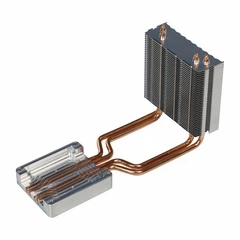
Another important design aspect is the geometry of the cooling plate. For example, fins can be added to the cooling plate to increase its surface area and improve heat dissipation. The shape and arrangement of these fins can be optimized to enhance the flow of air or coolant around them. Our CPU Aluminum Heat Pipe Heatsink features a carefully designed fin structure that maximizes the surface area for heat transfer, ensuring efficient cooling of the CPU.
3. Coolant Selection
The choice of coolant can also affect the performance of the water cooling plate. Water is the most common coolant due to its high specific heat capacity, which allows it to absorb a large amount of heat. However, water has some drawbacks, such as the potential for corrosion and freezing. To overcome these issues, additives can be used. For example, glycol can be added to water to lower its freezing point and prevent damage in cold environments.
In some applications, non - aqueous coolants may be preferred. These coolants offer advantages such as better chemical stability and lower corrosion rates. However, they also tend to have lower thermal conductivity compared to water, so careful consideration is needed when selecting a non - aqueous coolant.
4. System Integration
Proper integration of the water cooling plate into the overall cooling system is essential for optimal performance. This includes ensuring a good thermal interface between the cooling plate and the heat source. A thermal interface material (TIM) can be used to fill any gaps between the two surfaces, reducing thermal resistance and improving heat transfer.
The pump and the piping system in the cooling system also need to be properly sized and configured. The pump should be able to provide sufficient flow rate and pressure to ensure that the coolant circulates effectively through the cooling plate. The piping should be designed to minimize pressure drop and ensure uniform distribution of the coolant.
5. Maintenance
Regular maintenance is crucial for the long - term performance of the water cooling plate. This includes cleaning the cooling plate to remove any debris or contaminants that may accumulate on its surface, which can impede heat transfer. The coolant also needs to be monitored and replaced periodically to prevent issues such as corrosion and the growth of microorganisms.


In addition, the system should be checked for leaks regularly. A leak in the cooling system can not only lead to a loss of coolant but also cause damage to other components due to the leaked coolant.
Conclusion
Optimizing the performance of a Versatile Water Cooling Plate requires a comprehensive approach that considers material selection, design optimization, coolant selection, system integration, and maintenance. By paying attention to these key factors, we can ensure that the cooling plate operates efficiently, providing reliable cooling for a wide range of applications.
If you're interested in our Versatile Water Cooling Plates or any of our other cooling solutions, we welcome you to reach out for a detailed discussion about your specific needs. Let's work together to find the best cooling solutions for your equipment.
References
- Incropera, F. P., DeWitt, D. P., Bergman, T. L., & Lavine, A. S. (2007). Fundamentals of Heat and Mass Transfer. John Wiley & Sons.
- Kandlikar, S. G., Grande, D. A., & Ponnappan, R. (2006). Heat Transfer and Fluid Flow in Minichannels and Microchannels. Elsevier.
- Kakac, S., & Pramuanjaroenkij, A. (2009). Heat Exchangers: Selection, Rating, and Thermal Design. CRC Press.