


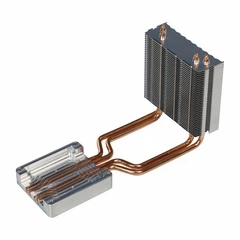
In the realm of high - frequency equipment, efficient cooling is of paramount importance. High - frequency devices generate a significant amount of heat during operation, and if not properly managed, this heat can lead to reduced performance, shortened lifespan, and even system failures. One potential solution that has gained attention is the use of cavity water cooling plates. As a cavity water cooling plate supplier, I am excited to explore whether these plates can be effectively used in high - frequency equipment cooling systems.
Understanding High - Frequency Equipment Heat Generation
High - frequency equipment, such as radio frequency (RF) transmitters, microwave generators, and high - speed data processing units, operate at extremely high frequencies. The rapid electrical oscillations and signal processing in these devices result in a substantial amount of power dissipation in the form of heat. For example, in a high - power RF amplifier, the active components like transistors can generate a large amount of heat due to the high - current and high - voltage operation.
The heat generated in high - frequency equipment is not only a function of the power consumption but also the efficiency of the components. Inefficient components convert a larger proportion of the input power into heat rather than the desired output signal. Moreover, the high - frequency nature of the operation can cause skin effect and proximity effect in conductors, which further increase the resistance and heat generation.
How Cavity Water Cooling Plates Work
Cavity water cooling plates are designed to transfer heat away from the heat - generating components. They typically consist of a metal plate with internal cavities or channels through which water flows. The metal, usually aluminum or copper due to their high thermal conductivity, acts as a heat exchanger. The heat from the high - frequency components is conducted into the metal plate and then transferred to the water flowing through the cavities.
The water absorbs the heat and carries it away from the cooling plate. The heated water can then be circulated to a heat exchanger, such as a radiator, where the heat is dissipated into the surrounding environment. This continuous cycle of heat transfer ensures that the temperature of the high - frequency components remains within an acceptable range.
Advantages of Cavity Water Cooling Plates for High - Frequency Equipment
High Thermal Conductivity
As mentioned earlier, the use of materials like aluminum and copper in cavity water cooling plates provides high thermal conductivity. This allows for efficient heat transfer from the heat - generating components to the water. In high - frequency equipment, where heat needs to be removed quickly to prevent overheating, this high thermal conductivity is crucial.
Uniform Cooling
The internal cavities in the water cooling plates are designed to ensure uniform water flow across the entire surface of the plate. This results in uniform cooling of the high - frequency components. Uneven cooling can lead to thermal stress, which can cause mechanical failures and affect the performance of the components. With cavity water cooling plates, the risk of thermal stress is significantly reduced.
Compact Design
Cavity water cooling plates can be designed to be relatively compact. This is an important advantage in high - frequency equipment, where space is often limited. The compact design allows for easy integration into the existing equipment without taking up too much space.
Challenges and Considerations
Water Leakage
One of the main challenges in using cavity water cooling plates in high - frequency equipment is the risk of water leakage. Any water leakage can cause short - circuits in the electrical components, leading to equipment failure. Therefore, proper sealing and testing of the cooling plates are essential to ensure that there are no leaks.
Corrosion
The water used in the cooling system can cause corrosion in the metal plates over time. This can reduce the thermal conductivity of the plates and eventually lead to their failure. To prevent corrosion, anti - corrosion additives can be added to the water, and the plates can be coated with a protective layer.
Maintenance
Cavity water cooling plates require regular maintenance. The water needs to be changed periodically to prevent the build - up of contaminants, and the cooling system needs to be checked for any blockages in the channels. This maintenance can add to the overall cost and complexity of using water cooling plates in high - frequency equipment.
Real - World Applications and Case Studies
There are several real - world applications where cavity water cooling plates have been successfully used in high - frequency equipment. For example, in some high - end data centers, where high - speed servers generate a large amount of heat, cavity water cooling plates are used to cool the server processors. These cooling plates have been able to maintain the processors at optimal temperatures, ensuring reliable operation.
In the field of telecommunications, high - frequency RF amplifiers in base stations are also cooled using cavity water cooling plates. The uniform cooling provided by these plates has improved the performance and lifespan of the amplifiers.
Our Product Offerings
As a cavity water cooling plate supplier, we offer a wide range of products suitable for high - frequency equipment cooling. Our Cavity - type Energy Storage Battery Water Cooling Plate is designed to provide efficient cooling for energy storage batteries in high - frequency power systems. It has a high - performance design that ensures uniform cooling and long - term reliability.


Our Automotive Controller Water Cooling Plate is another product that can be used in high - frequency automotive control systems. It is compact and can be easily integrated into the automotive electronics.
We also offer the Aluminum Heat Pipe Communication Module Heatsink, which combines the benefits of heat pipes and cavity water cooling technology. This heatsink is ideal for high - frequency communication modules where efficient heat dissipation is required.
Conclusion
In conclusion, cavity water cooling plates can be effectively used in high - frequency equipment cooling systems. They offer several advantages, such as high thermal conductivity, uniform cooling, and compact design. However, there are also challenges such as water leakage, corrosion, and maintenance that need to be addressed.
If you are looking for a reliable solution for cooling your high - frequency equipment, we invite you to contact us for a detailed discussion about our cavity water cooling plates. Our team of experts can help you select the most suitable product for your specific requirements and provide you with all the necessary technical support.
References
- Incropera, F. P., & DeWitt, D. P. (2002). Fundamentals of Heat and Mass Transfer. John Wiley & Sons.
- Kreith, F., & Bohn, M. S. (2001). Principles of Heat Transfer. Cengage Learning.