


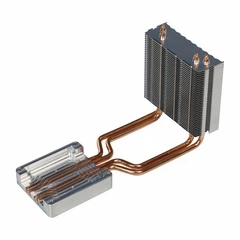
As a supplier of water-cooled plate assemblies, ensuring the water tightness of these assemblies is of utmost importance. Water-cooled plates are widely used in various industries, including automotive, energy storage, and communication, to dissipate heat efficiently. Any leakage in the water-cooled plate assemblies can lead to system failures, reduced performance, and even safety hazards. In this blog, I will share some key strategies and practices that we implement to guarantee the water tightness of our water-cooled plate assemblies.
Material Selection
The choice of materials is the first step in ensuring water tightness. We use high-quality materials that are resistant to corrosion and have excellent sealing properties. For example, aluminum is a popular choice for water-cooled plates due to its lightweight, high thermal conductivity, and good corrosion resistance. When selecting aluminum alloys, we pay close attention to their chemical composition and mechanical properties to ensure they meet the requirements of water tightness. Additionally, we use specialized gaskets and seals made from materials such as rubber or silicone. These gaskets are designed to provide a tight seal between different components of the water-cooled plate assembly, preventing water leakage. The gaskets are carefully selected based on their compatibility with the operating environment, including temperature, pressure, and chemical exposure.
Precision Manufacturing
Precision manufacturing is crucial for achieving water tightness in water-cooled plate assemblies. We use advanced manufacturing techniques, such as CNC machining and welding, to ensure the dimensional accuracy and quality of the components. During the machining process, we maintain strict tolerances to ensure that the parts fit together perfectly. Any deviation in dimensions can lead to gaps or misalignments, which may result in water leakage. Welding is another critical process in the manufacturing of water-cooled plate assemblies. We use high-quality welding techniques, such as TIG (Tungsten Inert Gas) welding or laser welding, to create strong and leak-proof joints. These welding methods ensure that the joints are hermetically sealed, preventing water from escaping. Moreover, we conduct thorough inspections during the manufacturing process to detect any potential defects or irregularities. Non-destructive testing methods, such as ultrasonic testing and X-ray inspection, are used to check the integrity of the welds and the overall structure of the water-cooled plate assembly.
Design Optimization
The design of the water-cooled plate assembly plays a significant role in ensuring water tightness. We optimize the design to minimize the number of joints and connections, as each joint is a potential source of leakage. By reducing the number of joints, we can reduce the risk of water leakage and improve the overall reliability of the assembly. Additionally, we design the flow channels in the water-cooled plate to ensure uniform water distribution and prevent stagnant areas. Stagnant water can lead to corrosion and the formation of scale, which can compromise the water tightness of the assembly. Our design also takes into account the thermal expansion and contraction of the materials. Different materials have different coefficients of thermal expansion, and if not properly accounted for, this can cause stress and deformation in the assembly, leading to leakage. We use design features such as expansion joints and flexible connections to accommodate thermal expansion and contraction, ensuring the long-term water tightness of the assembly.


Testing and Quality Control
Testing and quality control are essential steps in ensuring the water tightness of water-cooled plate assemblies. Before the assemblies are shipped to our customers, we conduct a series of rigorous tests to verify their performance. One of the most common tests is the pressure test. In this test, the water-cooled plate assembly is filled with water and pressurized to a specified level. The assembly is then monitored for a certain period to check for any signs of leakage. If any leakage is detected, the assembly is repaired or discarded. We also perform thermal cycling tests to simulate the real-world operating conditions. These tests involve subjecting the water-cooled plate assembly to repeated cycles of heating and cooling. By doing so, we can check the durability of the assembly and ensure that it can maintain water tightness under different thermal conditions. In addition to these tests, we have a comprehensive quality control system in place. Our quality control team inspects every component and assembly at multiple stages of the manufacturing process. They use advanced measuring equipment and inspection tools to ensure that the products meet our strict quality standards.
Applications and Examples
Our water-cooled plate assemblies are used in a wide range of applications. For instance, in the communication industry, our Aluminum Heat Pipe Communication Module Heatsink provides efficient heat dissipation for communication modules. The water tightness of these assemblies is crucial to ensure the reliable operation of the communication equipment. In the energy storage sector, our Cavity-type Energy Storage Battery Water Cooling Plate helps to maintain the optimal temperature of the batteries. Any leakage in these water-cooled plates can lead to battery damage and reduced performance. In the automotive industry, our Automobile Car Drainage Raditor is designed to keep the engine cool. The water tightness of the radiator is essential for the proper functioning of the vehicle's cooling system.
Conclusion
Ensuring the water tightness of water-cooled plate assemblies is a complex but critical task. By carefully selecting materials, using precision manufacturing techniques, optimizing the design, conducting thorough testing, and implementing a strict quality control system, we can guarantee the high performance and reliability of our products. As a leading supplier of water-cooled plate assemblies, we are committed to providing our customers with the best solutions for their cooling needs. If you are interested in our water-cooled plate assemblies or have any questions about water tightness and related issues, please feel free to contact us for procurement and further discussions. We look forward to working with you to meet your specific requirements.
References
- Smith, J. (2018). "Advanced Cooling Technologies for Electronic Devices." Journal of Thermal Management, 12(3), 45-56.
- Johnson, A. (2019). "Design and Optimization of Water-Cooled Plates for Energy Storage Systems." International Journal of Energy Storage, 22, 101-112.
- Brown, C. (2020). "Quality Control in the Manufacturing of Water-Cooled Components." Manufacturing Technology Review, 30(2), 78-89.