


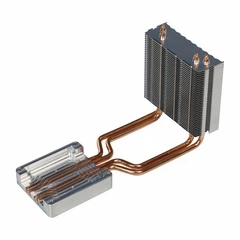
Hey there! I'm a supplier of Versatile Water Cooling Plates, and today I wanna chat about how water pressure can impact the operation of these nifty cooling plates.
First off, let's understand what a Versatile Water Cooling Plate is. It's a device designed to dissipate heat from various high - power components. These plates are super handy in lots of industries, like electronics, lasers, and even some automotive applications. They work by having water flow through channels inside the plate, absorbing heat from the component in contact with the plate and then carrying that heat away.
Now, water pressure plays a crucial role in how well these cooling plates work. Let's start with the basics. When the water pressure is too low, it can cause a bunch of problems. For instance, low water pressure means the water flow rate through the cooling plate is reduced. Think of it like trying to drink a thick milkshake through a thin straw with not much suction. The water just doesn't move fast enough.
This slow flow rate has a direct impact on the heat transfer efficiency. Heat transfer in a water - cooling system relies on the continuous movement of water to carry away the heat. When the water moves sluggishly, it spends more time in the cooling plate, and it gets closer to reaching thermal equilibrium with the heated component. In simple terms, the water can't absorb as much heat as it should because it's not flowing fast enough to carry the heat away and make room for cooler water. As a result, the temperature of the component being cooled starts to rise, which can lead to overheating and potential damage.
On the flip side, if the water pressure is too high, it also brings its own set of issues. High water pressure can put a lot of stress on the cooling plate. The plates are made of various materials, usually metals like aluminum or copper, and they have a certain level of structural integrity. When the water pressure exceeds the design limits of the plate, it can cause leaks. You don't want water leaking out of your cooling system, especially if it's in an electronic device. It can short - circuit components and cause a whole mess.
Moreover, high pressure can also cause erosion inside the cooling plate. The force of the fast - flowing water can wear away the inner walls of the channels in the plate over time. This erosion can change the shape and size of the channels, which in turn affects the flow pattern of the water. An irregular flow pattern can disrupt the uniform heat transfer across the plate, leading to hot spots on the component being cooled. Hot spots are areas where the temperature is significantly higher than the rest of the component, and they can cause uneven thermal expansion, which might warp or damage the component.


So, finding the right water pressure is like finding the Goldilocks zone. It has to be just right. The ideal water pressure for a Versatile Water Cooling Plate depends on several factors. One of the main factors is the design of the cooling plate itself. Different plates have different channel geometries, sizes, and lengths. A plate with narrow channels might require a higher pressure to maintain an adequate flow rate compared to a plate with wider channels.
The type of component being cooled also matters. High - power components, like High - power Aluminum Laser Heatsink, generate a lot of heat, and they usually need a higher flow rate of water to keep them cool. So, the water pressure might need to be adjusted accordingly. Similarly, Circular Base LED Heat Sink and High - power Air - cooled Laser Heatsink have their own specific cooling requirements, and the water pressure in the cooling plate needs to be optimized for them.
Another factor to consider is the viscosity of the water. Water viscosity can change with temperature. Cold water is more viscous than warm water. When the water is colder, it requires more pressure to achieve the same flow rate as warmer water. So, if your cooling system operates in different temperature environments, you might need to adjust the water pressure accordingly.
To ensure the proper operation of a Versatile Water Cooling Plate, it's important to monitor the water pressure regularly. You can use pressure sensors in the cooling system to keep track of the pressure. These sensors can be connected to a control system that can adjust the water pressure as needed. For example, if the pressure drops below the optimal range, the control system can increase the pump speed to boost the pressure. Conversely, if the pressure is too high, it can reduce the pump speed.
In addition to pressure monitoring, proper maintenance of the cooling system is also essential. This includes checking for any blockages in the water channels. Blockages can occur due to debris, sediment, or even biological growth if the water isn't properly treated. A blocked channel can disrupt the water flow and cause uneven pressure distribution in the cooling plate, which can lead to the same problems we discussed earlier, like reduced heat transfer efficiency and potential damage.
So, as a supplier of Versatile Water Cooling Plates, I always recommend working closely with your customers to understand their specific cooling needs. We need to take into account the type of components they're cooling, the operating environment, and other factors to determine the best water pressure for their cooling system.
If you're in the market for a Versatile Water Cooling Plate or have any questions about how water pressure affects their operation, don't hesitate to reach out. We're here to help you find the perfect solution for your cooling needs. Whether you're dealing with high - power lasers, LEDs, or other heat - generating components, we've got the expertise to ensure your cooling system works efficiently and reliably.
Let's work together to keep your components cool and your operations running smoothly. Contact us today to start the conversation about your water - cooling requirements.
References:
- Incropera, F. P., & DeWitt, D. P. (2002). Fundamentals of Heat and Mass Transfer. Wiley.
- Kreith, F., & Manglik, R. M. (2011). Principles of Heat Transfer. Cengage Learning.