


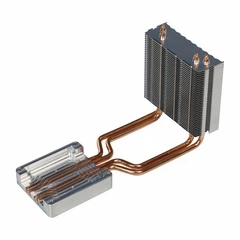
As a supplier of heat pipe aluminum heat sinks, I've often been asked about the applicability of our products in military equipment. Military applications demand high - performance, reliability, and durability, and it's crucial to assess whether heat pipe aluminum heat sinks can meet these stringent requirements.

The Basics of Heat Pipe Aluminum Heat Sinks
Before delving into their military use, let's understand what heat pipe aluminum heat sinks are. A heat pipe is a heat - transfer device that combines the principles of both thermal conductivity and phase transition to efficiently transfer heat from one point to another. Aluminum, on the other hand, is a popular material for heat sinks due to its high thermal conductivity, light weight, and relatively low cost.
Heat pipe aluminum heat sinks work by having the heat pipe absorb heat from a heat source (such as a high - power electronic component). The working fluid inside the heat pipe evaporates at the hot end, and the vapor then travels to the cooler end of the heat pipe, where it condenses and releases the heat. The condensed fluid then returns to the hot end through capillary action or gravity, and the cycle repeats. The aluminum fins on the heat sink increase the surface area for better heat dissipation into the surrounding environment.
Advantages for Military Equipment
High - Efficiency Heat Dissipation
Military equipment often contains high - power electronic components such as radar systems, communication modules, and high - performance processors. These components generate a significant amount of heat during operation. Heat pipe aluminum heat sinks can efficiently transfer and dissipate this heat, preventing overheating and ensuring the stable operation of the equipment. For example, in a military radar system, the high - frequency components need to be kept at an optimal temperature to maintain accurate detection and tracking capabilities. A heat pipe aluminum heat sink can quickly remove the heat generated by these components, allowing the radar to function properly even under heavy - load conditions.
Lightweight Design
Weight is a critical factor in military equipment, especially for portable or airborne devices. Aluminum is a lightweight material, and heat pipe aluminum heat sinks are generally lighter compared to traditional heat - dissipation solutions such as copper - based heat sinks. This lightweight design is beneficial for military applications where every gram counts, such as in unmanned aerial vehicles (UAVs). UAVs need to carry various sensors and communication equipment, and a lighter heat sink can reduce the overall weight of the UAV, increasing its flight time and maneuverability.
Reliability and Durability
Military equipment is often exposed to harsh environments, including extreme temperatures, vibrations, shocks, and dust. Heat pipe aluminum heat sinks are designed to be reliable and durable. Aluminum has good corrosion resistance, which means the heat sink can withstand the corrosive effects of moisture and chemicals in the environment. The heat pipes are also sealed units, which protect the working fluid from contamination and ensure long - term stable operation. For example, in military vehicles operating in desert environments, the heat sink needs to be able to resist sand and dust while still effectively dissipating heat.
Challenges and Considerations
Environmental Adaptability
Although heat pipe aluminum heat sinks have good general durability, they may face challenges in some extreme military environments. For example, in very low - temperature environments, the working fluid in the heat pipe may freeze, which can disrupt the heat - transfer process. Specialized heat pipes with low - freezing - point working fluids may be required in such cases. In high - altitude environments, the low air pressure can affect the heat - dissipation efficiency of the heat sink, as the convective heat transfer is reduced. Additional design modifications, such as forced - air cooling or heat - pipe insulation, may be necessary to overcome these issues.
Electromagnetic Compatibility (EMC)
Military equipment often operates in an electromagnetic - rich environment. Heat pipe aluminum heat sinks, especially those with large metal surfaces, may act as antennas and interfere with the electromagnetic signals of the equipment. To ensure EMC, proper shielding and grounding techniques need to be applied to the heat sink. This may involve coating the heat sink with a conductive material or using special shielding enclosures.
Cost
High - performance heat pipe aluminum heat sinks designed for military applications can be relatively expensive. The cost includes not only the materials and manufacturing but also the testing and certification required to meet military standards. Military procurement often has strict budget constraints, so the cost - effectiveness of using heat pipe aluminum heat sinks needs to be carefully evaluated.
Related Products and Their Potential in Military Applications
In addition to heat pipe aluminum heat sinks, our company also offers other related products that may have potential in military applications. For example, the Lightweight Automotive Controller Water Cooling Plate has features that could be adapted for military use. Its lightweight design and efficient water - cooling capabilities could be useful in cooling high - power military electronics, especially in applications where space is limited.
The Cavity - type Energy Storage Battery Water Cooling Plate is another product that could be relevant. Military equipment often relies on energy - storage batteries, and efficient cooling of these batteries is essential for their performance and lifespan. This water - cooling plate can effectively remove the heat generated by the batteries, ensuring their stable operation.
Our Aluminum Heat Pipe Communication Module Heatsink is specifically designed for communication modules. In military communication systems, where reliable and high - speed data transmission is crucial, this heatsink can help maintain the proper temperature of the communication components, reducing the risk of signal interference and equipment failure.
Conclusion
In conclusion, heat pipe aluminum heat sinks have significant potential for use in military equipment. Their high - efficiency heat dissipation, lightweight design, and reliability make them suitable for a wide range of military applications. However, challenges such as environmental adaptability, EMC, and cost need to be carefully addressed.

If you are in the military procurement field and are interested in our heat pipe aluminum heat sinks or other related products, we welcome you to contact us for further discussions and procurement negotiations. Our team of experts can provide you with detailed technical information and customized solutions to meet your specific requirements.
References
- Incropera, F. P., & DeWitt, D. P. (2002). Fundamentals of Heat and Mass Transfer. Wiley.
- Kakaç, S., & Pramuanjaroenkij, A. (2005). Heat Pipes: Theory, Design, and Applications. Butterworth - Heinemann.