


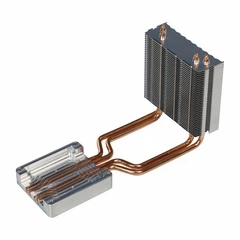
Hey there! As a supplier of stainless steel cool coils, I often get asked about the coil density of these nifty products. So, let's dive right in and break down what coil density is all about.
First off, what exactly is coil density? In simple terms, coil density refers to how closely the turns of a coil are packed together. It's a crucial factor that can significantly impact the performance of a stainless steel cool coil. You see, the density affects things like heat transfer efficiency, fluid flow, and even the overall durability of the coil.
Let's talk about heat transfer. A higher coil density generally means more surface area for heat exchange. When the turns of the coil are closer together, there's more contact between the fluid flowing through the coil and the surrounding environment (or another fluid in a heat exchanger setup). This increased contact allows for more efficient heat transfer. For example, in a cooling system, a coil with a higher density can remove heat from the fluid more quickly, making the cooling process more effective.
On the flip side, fluid flow can be a bit of a challenge with high coil density. If the turns are too close, it can restrict the flow of the fluid through the coil. This can lead to increased pressure drop, which means the pump or other fluid - moving device has to work harder to push the fluid through. So, there's a balance to be struck between maximizing heat transfer and maintaining proper fluid flow.
Now, let's get into the types of stainless steel cool coils we offer and how coil density plays a role in each.
We've got the Water Heater Stainless Steel 318 Coil. This coil is great for water heating applications. The coil density of our Water Heater Stainless Steel 318 Coil is carefully engineered to ensure optimal heat transfer while still allowing for smooth water flow. The stainless steel 318 material is corrosion - resistant, which is essential for long - term use in water - based systems. The right coil density helps to evenly distribute the heat from the heating source to the water, ensuring efficient and consistent heating.

Another popular option is the Stainless Steel 316 Coil. Stainless steel 316 is known for its excellent corrosion resistance, making it suitable for a wide range of applications, including those in harsh environments. The coil density of our Stainless Steel 316 Coil is designed to meet the specific requirements of different industries. For example, in a chemical processing plant, a higher coil density might be used to maximize heat transfer in a small space, while still maintaining the integrity of the coil in the presence of corrosive chemicals.
Then there's the Spring - type Stainless Steel 316 Coil. This unique coil design offers some distinct advantages. The spring - type configuration allows for a certain degree of flexibility, which can be useful in applications where there might be some movement or vibration. The coil density of the Spring - type Stainless Steel 316 Coil is optimized to balance the flexibility with the heat transfer and fluid flow requirements. It's often used in applications like coffee machine coolers, where a compact and efficient cooling solution is needed.
So, how do we determine the right coil density for a particular application? Well, it depends on several factors. The type of fluid being used is a big one. Different fluids have different viscosities and heat transfer properties. For example, a thick, viscous fluid might require a lower coil density to ensure proper flow, while a thinner fluid can handle a higher density for better heat transfer.
The operating temperature and pressure are also important. Higher temperatures and pressures can affect the material properties of the stainless steel and the performance of the coil. We need to make sure that the coil density is chosen in a way that the coil can withstand these conditions without any issues.
The size and shape of the system also play a role. In a small, compact system, a higher coil density might be necessary to fit the coil into the available space while still achieving the desired heat transfer. In a larger system, there might be more room for a lower density coil, which could offer better fluid flow characteristics.
As a supplier, we have a team of experts who can help you determine the best coil density for your specific needs. We understand that every application is unique, and we're committed to providing you with the highest quality stainless steel cool coils that are tailored to your requirements.

If you're in the market for a stainless steel cool coil, whether it's for a water heater, a chemical processing plant, or a coffee machine cooler, we'd love to talk to you. We can discuss your project in detail, understand your specific needs, and recommend the right coil with the appropriate coil density.
Don't hesitate to reach out to us for more information or to start a procurement discussion. We're here to help you find the perfect stainless steel cool coil solution for your business.
References
- Heat Transfer Principles and Applications by Frank P. Incropera, David P. DeWitt, Theodore L. Bergman, and Adrienne S. Lavine
- Fluid Mechanics by Frank M. White
- Stainless Steel: A Guide to Properties, Processing, and Applications by ASM International