


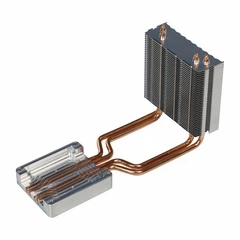
Hey there! As a supplier of Aluminum Finned Heat Sinks, I often get asked if there are different types of these heat sinks. Well, the answer is a big yes! In this blog, I'm gonna break down the various types of aluminum finned heat sinks and give you the lowdown on their features, uses, and more.
Extruded Aluminum Finned Heat Sinks
Let's start with extruded aluminum finned heat sinks. These are super common and widely used in a bunch of industries. The process of making them is pretty straightforward. Aluminum is pushed through a die, which gives the heat sink its shape. The fins are formed during this extrusion process, and they can be customized in terms of height, thickness, and spacing.
One of the great things about extruded heat sinks is their cost - effectiveness. They're relatively inexpensive to produce, which makes them a popular choice for applications where budget is a concern. They're also pretty lightweight, which is a plus for many electronic devices.
Extruded heat sinks are used in a variety of applications, like computer CPUs, LED lighting, and power supplies. For example, in a computer, an extruded heat sink can help keep the CPU cool by dissipating the heat generated during operation. If you're looking for a reliable and affordable heat - sink solution, extruded aluminum finned heat sinks are definitely worth considering.
Skived Aluminum Finned Heat Sinks
Skived aluminum finned heat sinks are another type that's worth mentioning. The skiving process involves using a sharp blade to cut thin fins from a solid block of aluminum. This results in very thin and closely spaced fins, which can provide a large surface area for heat dissipation.
The advantage of skived heat sinks is their high thermal performance. The thin fins allow for better heat transfer, which means they can cool components more efficiently. They're often used in high - power applications where a lot of heat needs to be removed quickly.
For instance, in high - end servers or power electronics, skived heat sinks can be a great choice. They can handle the heat generated by these powerful components and keep them operating at optimal temperatures. If you need a heat sink with excellent thermal performance, you might want to check out Black Skived Toothed Heat Sink. It's a great example of a skived heat sink that offers high - quality cooling.
Bonded Aluminum Finned Heat Sinks
Bonded aluminum finned heat sinks are made by attaching pre - formed fins to a base plate. The fins can be attached using various methods, such as epoxy bonding or mechanical fastening.
One of the benefits of bonded heat sinks is their flexibility in design. You can choose different types of fins and base plates to meet the specific requirements of your application. For example, you can use thicker fins for more heat dissipation or a larger base plate for better contact with the heat source.
Bonded heat sinks are used in a wide range of applications, including automotive electronics, aerospace, and industrial equipment. They can be customized to fit different shapes and sizes, which makes them suitable for a variety of complex designs.
Stamped Aluminum Finned Heat Sinks
Stamped aluminum finned heat sinks are made by stamping or pressing aluminum sheets into the desired shape. This process is relatively simple and can be used to produce heat sinks in large quantities quickly.
Stamped heat sinks are cost - effective and can be used in applications where high - precision cooling is not required. They're commonly used in consumer electronics, like small appliances and mobile devices. For example, a stamped heat sink can be used in a mobile phone to dissipate the heat generated by the battery or the processor.
Stacked Aluminum Finned Heat Sinks
Stacked aluminum finned heat sinks are made by stacking multiple layers of finned aluminum together. This creates a large surface area for heat dissipation and can provide excellent thermal performance.

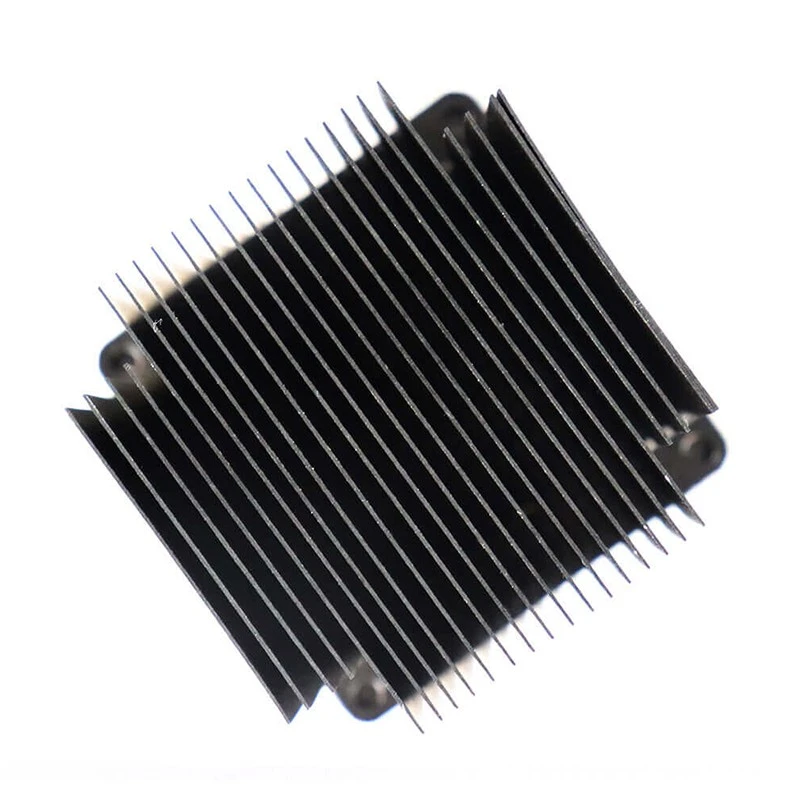
There are different types of stacked heat sinks. For example, the DCC Power Control Stacked Dual - Sided Heatsink is designed for power control applications. It has a unique dual - sided design that allows for better heat transfer from both sides.
Another example is the High - Power Efficient Stacked Heat Sink. As the name suggests, it's suitable for high - power applications. The stacked design provides a large amount of surface area for heat to escape, making it very effective at cooling powerful components.
Stacked heat sinks are often used in applications where a large amount of heat needs to be dissipated in a relatively small space. They're commonly found in power amplifiers, inverters, and other high - power electronic devices.
Die - Cast Aluminum Finned Heat Sinks
Die - cast aluminum finned heat sinks are made by injecting molten aluminum into a mold. This process allows for the creation of complex shapes and designs.
Die - cast heat sinks can have features like integrated mounting points or complex fin geometries. They're often used in applications where a custom - designed heat sink is required. For example, in some specialized electronic devices, a die - cast heat sink can be designed to fit the specific shape and size of the component it needs to cool.
Factors to Consider When Choosing an Aluminum Finned Heat Sink
When you're choosing an aluminum finned heat sink for your application, there are several factors you need to consider.
First, think about the thermal requirements. How much heat do you need to dissipate? If you have a high - power component, you'll need a heat sink with good thermal performance, like a skived or stacked heat sink.
Second, consider the space available. Some heat sinks, like extruded or stamped ones, are more compact and can be a better fit for small devices. On the other hand, if you have more space, you can choose a heat sink with a larger surface area for better heat dissipation.
Budget is also an important factor. As I mentioned earlier, some types of heat sinks, like extruded and stamped ones, are more cost - effective, while others, like skived or die - cast ones, can be more expensive.
Finally, think about the environment in which the heat sink will be used. If the device will be exposed to dust or moisture, you'll need a heat sink that can withstand these conditions.
Conclusion
So, as you can see, there are definitely different types of aluminum finned heat sinks, each with its own unique features and applications. Whether you're looking for a cost - effective solution for a budget - conscious project or a high - performance heat sink for a high - power application, there's an aluminum finned heat sink out there for you.
If you're in the market for an aluminum finned heat sink, I'd love to talk to you. As a supplier, I have a wide range of heat sinks available, and I can help you find the perfect one for your needs. Just reach out to me, and we can start the discussion about your project and how I can assist you with the right heat - sink solution.
References
- "Thermal Management Handbook for Electronic Systems" by John D. Rambo
- "Heat Sink Design and Applications" by Mark T. Johnson
- Various industry whitepapers on aluminum heat - sink technology.