


Laser friction welding is an innovative joining process that combines the advantages of laser welding and friction welding, offering high - quality joints with excellent mechanical properties. As a leading supplier of laser friction welding services, I am excited to delve into the principle of this remarkable technology.
1. Basic Concept of Laser Friction Welding
At its core, laser friction welding aims to create a strong bond between two materials by using the heat generated from both laser energy and frictional forces. Unlike traditional welding methods that rely solely on one heat source, this hybrid approach takes advantage of the unique characteristics of each mechanism.
Laser Energy
The laser in laser friction welding serves as a pre - heating source. A high - intensity laser beam is focused on the joint area of the materials to be welded. The laser energy is absorbed by the surface of the materials, rapidly increasing their temperature. This pre - heating step is crucial as it reduces the yield strength of the materials, making them more malleable and easier to deform during the subsequent frictional process.
Frictional Forces
After the laser pre - heating, a frictional force is applied between the two materials. One of the workpieces is typically rotated or oscillated against the other under pressure. The relative motion between the two surfaces generates frictional heat, which further increases the temperature at the joint interface. This frictional heat softens the materials even more, allowing the atoms at the interface to diffuse across the boundary and form a solid - state bond.
2. The Process Stages of Laser Friction Welding
The laser friction welding process can be divided into several distinct stages, each playing a vital role in achieving a successful weld.


Stage 1: Initial Contact and Laser Pre - heating
When the two workpieces are brought into contact, the laser is activated. The laser beam is precisely directed at the joint area, and the materials start to absorb the laser energy. The temperature at the interface rises rapidly, and the surface layers of the materials begin to change their physical state. This pre - heating not only reduces the mechanical resistance but also helps to clean the surface by evaporating any contaminants or oxides present on the material surfaces.
Stage 2: Frictional Heating
Once the materials are pre - heated to an appropriate temperature, the relative motion between the two workpieces is initiated. The frictional force generated by the movement converts mechanical energy into heat energy. The heat generated at the interface is proportional to the frictional force and the relative velocity between the workpieces. As the temperature continues to rise, the materials reach a plastic state, where they can be easily deformed.
Stage 3: Forging and Bond Formation
After sufficient frictional heating, the relative motion is stopped, and a forging pressure is applied. This pressure forces the softened materials at the interface to flow and intermix, promoting atomic diffusion. The atoms from one material cross over to the other, forming a continuous and strong bond. The forging pressure also helps to eliminate any voids or porosity at the joint, ensuring a high - quality weld.
Stage 4: Cooling and Solidification
Once the forging process is complete, the joint is allowed to cool down. During the cooling process, the materials solidify, and the bond between the two workpieces becomes permanent. The cooling rate is carefully controlled to avoid the formation of residual stresses and cracks in the weld area.
3. Advantages of Laser Friction Welding
Laser friction welding offers several significant advantages over traditional welding methods, making it an attractive option for a wide range of applications.
High - Quality Welds
The combination of laser pre - heating and frictional heating results in a more uniform temperature distribution at the joint interface. This leads to a better - quality weld with fewer defects such as porosity, cracks, and inclusions. The solid - state nature of the bond also provides excellent mechanical properties, including high strength, good fatigue resistance, and superior corrosion resistance.
Wide Range of Materials
Laser friction welding can be used to join a variety of materials, including dissimilar metals. This is particularly useful in industries where different materials need to be combined to achieve specific performance requirements. For example, it can be used to join aluminum to steel, which is a challenging combination for traditional welding methods.
Reduced Heat - Affected Zone
Compared to conventional welding processes, laser friction welding produces a relatively small heat - affected zone (HAZ). The precise control of the laser energy and frictional heat allows for minimal thermal damage to the surrounding materials. This is beneficial for applications where the properties of the base materials need to be preserved.
4. Applications of Laser Friction Welding
The unique advantages of laser friction welding make it suitable for a diverse range of industries and applications.
Automotive Industry
In the automotive industry, laser friction welding can be used to manufacture various components, such as Automotive Controller Water Cooling Plate. These cooling plates are used to dissipate heat from the automotive controllers, ensuring their proper functioning. The high - quality welds produced by laser friction welding can withstand the harsh operating conditions in vehicles, such as high temperatures and vibrations.
Energy Storage
For the energy storage sector, Cavity - type Energy Storage Battery Water Cooling Plate can be fabricated using laser friction welding. The cooling plates play a crucial role in maintaining the optimal temperature of the battery cells, which is essential for the performance and lifespan of the energy storage systems.
Communication Industry
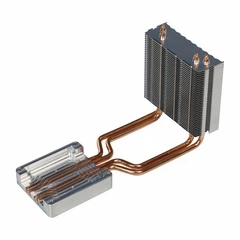
In the communication industry, Aluminum Heat Pipe Communication Module Heatsink can be produced by laser friction welding. These heatsinks are used to cool down the communication modules, ensuring stable operation in high - power and high - frequency environments.
5. Our Role as a Laser Friction Welding Supplier
As a supplier of laser friction welding services, we are committed to providing our customers with high - quality welding solutions. We have state - of - the - art equipment and a team of experienced engineers who are well - versed in the principle and operation of laser friction welding.
We work closely with our customers to understand their specific requirements and develop customized welding processes. Whether it is a small - scale prototype or a large - scale production, we can ensure consistent and reliable welding quality. Our quality control system ensures that every weld meets the highest standards, and we provide comprehensive testing and inspection services to guarantee the integrity of the welds.
6. Contact Us for Procurement and洽谈
If you are interested in our laser friction welding services or have any specific requirements for your projects, we encourage you to contact us. We are always ready to discuss your needs and provide you with detailed information and quotations. Our expertise in laser friction welding can help you achieve high - quality welds and improve the performance of your products.
References
- [1] Xiong, D., & Shen, Y. (2019). Research progress on laser - assisted friction stir welding. International Journal of Advanced Manufacturing Technology, 104(5 - 8), 1779 - 1792.
- [2] Wang, Y., Li, X., & Huang, J. (2020). A review of friction stir welding/processing of aluminum alloys: Microstructure evolution and mechanical properties. Journal of Manufacturing Processes, 52, 493 - 524.
- [3] Cao, J., Feng, J., & Zhang, X. (2018). Advances in dissimilar metal joining technologies. Journal of Materials Science & Technology, 34(10), 1865 - 1876.