


Vibration is a common phenomenon in industrial processes, and it can have various effects on different welding methods. As a supplier of laser friction welding services, I've been diving deep into how vibration impacts this specific welding technique. In this blog, I'll share what I've learned about the influence of vibration on laser friction welding.
Understanding Laser Friction Welding
Before we get into the impact of vibration, let's quickly go over what laser friction welding is. Laser friction welding combines the high - energy density of a laser beam with the frictional heat generated between two workpieces. This process produces a strong, high - quality weld. It's widely used in many industries, like automotive, aerospace, and electronics, because it can join different types of materials, including metals and polymers.


How Vibration Affects Laser Friction Welding
1. Weld Quality
Vibration can significantly affect the quality of the weld. When there's vibration during the welding process, it can cause uneven distribution of heat. The laser beam is supposed to heat the workpieces evenly, but vibration can make the beam move around more than it should. This leads to inconsistent melting and solidification of the materials. As a result, the weld may have defects such as porosity, cracks, or incomplete fusion.
For example, in the production of Lightweight Automotive Controller Water Cooling Plate, a high - quality weld is crucial for the proper functioning of the cooling plate. If vibration causes weld defects, it can reduce the cooling efficiency and even lead to system failures.
2. Weld Strength
The strength of the weld is another area that's affected by vibration. A well - made laser friction weld has high strength because the materials are properly bonded at the molecular level. However, vibration can disrupt this bonding process. It can introduce micro - fractures and weak points in the weld. These weak points can reduce the overall strength of the joint, making it more likely to fail under stress.
In the case of Automotive Controller Water Cooling Plate, which needs to withstand certain pressure and temperature changes, a weak weld due to vibration can lead to leaks and malfunctions.
3. Process Stability
Vibration can also disrupt the stability of the laser friction welding process. During welding, the relative position between the laser beam, the workpieces, and the welding equipment needs to be precise. Vibration can cause the workpieces to move or shift, which makes it difficult to maintain the correct welding parameters. This instability can lead to variations in the weld bead size, shape, and penetration depth.
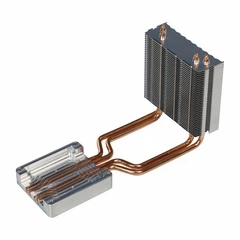
For instance, in the manufacturing of Aluminum Heat Pipe Communication Module Heatsink, where the heat transfer performance depends on the quality of the weld, process instability due to vibration can result in inconsistent product performance.
Factors that Determine the Impact of Vibration
1. Vibration Frequency
The frequency of the vibration plays a big role. Low - frequency vibrations may cause the workpieces to move slowly but with larger amplitudes. This can lead to significant misalignment during welding. On the other hand, high - frequency vibrations can cause rapid fluctuations in the heat input and the position of the laser beam. These fluctuations can be difficult to compensate for and may result in more severe weld defects.
2. Vibration Amplitude
The amplitude of the vibration, which is the maximum displacement of the vibrating object, also matters. A large amplitude vibration can cause more obvious movement of the workpieces and the laser beam. This makes it harder to control the welding process and can lead to more serious weld quality issues.
3. Welding Speed
The speed at which the welding is done interacts with vibration. If the welding speed is too high and there's vibration, the laser beam may not have enough time to properly heat and bond the materials. This can increase the likelihood of weld defects. Conversely, a very slow welding speed may allow the effects of vibration to be more pronounced, as the workpieces are exposed to the vibration for a longer time.
Mitigating the Impact of Vibration
As a laser friction welding supplier, we've come up with several strategies to reduce the impact of vibration.
1. Vibration Isolation
We use vibration - isolation equipment to separate the welding setup from the sources of vibration. This can include using rubber mounts, shock absorbers, and isolation tables. These devices can absorb and dampen the vibrations, preventing them from reaching the workpieces and the laser equipment.
2. Process Monitoring and Control
We closely monitor the welding process using sensors. These sensors can detect any changes in the position of the workpieces, the laser beam, and the heat input. If vibration is detected, the control system can adjust the welding parameters in real - time to compensate for the effects of vibration.
3. Fixturing Design
Proper fixturing is essential. We design fixtures that can hold the workpieces firmly in place. This reduces the movement of the workpieces caused by vibration. A well - designed fixture also helps to maintain the correct alignment of the workpieces during the welding process.
Conclusion
Vibration can have a significant influence on laser friction welding, affecting weld quality, strength, and process stability. However, with the right strategies, we can mitigate these effects. As a laser friction welding supplier, we're committed to providing high - quality welding services by controlling the impact of vibration.
If you're in need of laser friction welding services for products like Lightweight Automotive Controller Water Cooling Plate, Automotive Controller Water Cooling Plate, or Aluminum Heat Pipe Communication Module Heatsink, don't hesitate to reach out for a procurement discussion. We're here to help you get the best welding solutions for your needs.
References
- Smith, J. (2020). Laser Welding Technology: Principles and Applications. New York: Wiley.
- Johnson, A. (2019). Vibration Effects in Manufacturing Processes. London: Elsevier.