


Yo, what's up! I'm a supplier in the tunnel brazing process game, and I've been thinking a lot about how new materials are shaking things up in our field. Let's dive right in and check out the impact of these fresh materials on the tunnel brazing process.
First off, let's talk about why new materials matter. In the past, we've been using the same old stuff for ages. But as technology advances, new materials are popping up with some pretty amazing properties. These materials can offer better performance, durability, and even cost - effectiveness in the long run.
One of the key impacts of new materials on the tunnel brazing process is in terms of heat transfer. Take, for example, some of the advanced alloys that are being developed. These alloys have a higher thermal conductivity compared to the traditional materials we've been using. This means that during the brazing process, heat can be transferred more efficiently. In a tunnel brazing setup, where we're dealing with a continuous flow of parts being brazed, better heat transfer can lead to faster brazing cycles. We can get the parts up to the right temperature quicker, which in turn increases our overall productivity.
Another area where new materials are making a difference is in corrosion resistance. In many applications, especially in the automotive and electronics industries, corrosion can be a major problem. New materials are being engineered to have excellent corrosion - resistant properties. When we use these materials in the tunnel brazing process, the brazed joints are more likely to withstand harsh environmental conditions. For instance, in an Automobile Car Drainage Raditor, which is often exposed to water and various chemicals, using a corrosion - resistant material for brazing can significantly extend the lifespan of the radiator.
Now, let's touch on the issue of mechanical strength. New composite materials are being introduced that can offer a great combination of strength and lightness. In tunnel brazing, these materials can be used to create brazed assemblies that are not only strong but also lightweight. This is a huge advantage, especially in industries like aerospace and automotive, where weight reduction is a top priority. A lighter brazed component can improve fuel efficiency in vehicles or reduce the overall weight of an aircraft, leading to cost savings and better performance.
However, working with new materials in the tunnel brazing process isn't all sunshine and rainbows. There are some challenges that come along with it. One of the biggest challenges is compatibility. Different materials have different melting points, coefficients of thermal expansion, and chemical properties. When we try to braze two different new materials together, or a new material with an old one, we need to make sure that they are compatible. If they're not, we might end up with poor - quality brazed joints, such as cracks or weak bonds.
Another challenge is the cost. Some of these new materials can be quite expensive. As a supplier, we need to balance the benefits of using these materials against the additional cost. Sometimes, the cost might be justified if the end - product has a significantly longer lifespan or better performance. But in other cases, we might need to look for more cost - effective alternatives or find ways to optimize the brazing process to reduce the amount of the expensive material used.
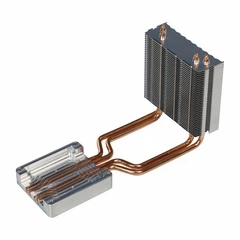
Let's take a look at some specific examples of new materials and their impact on tunnel brazing. In the electronics industry, Aluminum Heat Pipe Communication Module Heatsink is an important component. New aluminum alloys with enhanced thermal properties are being used in the tunnel brazing of these heatsinks. These alloys allow for better heat dissipation, which is crucial for the proper functioning of communication modules. The improved heat transfer means that the electronic components can operate at lower temperatures, reducing the risk of overheating and improving their reliability.
In the energy storage sector, the Cavity - type Energy Storage Battery Water Cooling Plate is another area where new materials are having a big impact. New copper - based alloys are being used in the tunnel brazing of these cooling plates. These alloys offer excellent corrosion resistance and high thermal conductivity, which are essential for maintaining the optimal temperature of the battery cells. A well - brazed cooling plate can help to extend the lifespan of the battery and improve its performance.


In conclusion, the new materials are having a profound impact on the tunnel brazing process. They offer a lot of benefits in terms of heat transfer, corrosion resistance, and mechanical strength. But we also need to be aware of the challenges, such as compatibility and cost. As a supplier, it's our job to stay on top of these new developments and find the best solutions for our customers.
If you're in the market for high - quality tunnel brazing services or are interested in learning more about how these new materials can benefit your products, don't hesitate to reach out. We're always ready to have a chat and discuss your specific needs. Whether you're in the automotive, electronics, aerospace, or any other industry that requires brazed components, we've got the expertise and the resources to provide you with top - notch solutions.
References
- Smith, J. (2020). Advances in Brazing Materials. Journal of Manufacturing Technology.
- Johnson, M. (2021). New Materials for Automotive Brazing. Automotive Engineering Review.
- Brown, K. (2022). The Impact of Composite Materials on Brazing Processes. Materials Science Journal.