


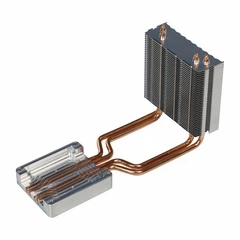
The performance of an aluminum finned heat sink is crucial in various applications, from electronics to industrial machinery. One of the key environmental factors that can significantly affect its performance is the ambient air temperature. As a supplier of high - quality Aluminum Finned Heat Sink, I have witnessed firsthand how ambient air temperature can either enhance or hinder the effectiveness of our products. In this blog, we will explore the impact of ambient air temperature on the performance of an aluminum finned heat sink in detail.
Basic Principles of Aluminum Finned Heat Sinks
Before delving into the impact of ambient air temperature, it's essential to understand how an aluminum finned heat sink works. Heat sinks are designed to dissipate heat from a hot component, such as a microprocessor or a power transistor, to the surrounding environment. Aluminum is a popular material for heat sinks due to its high thermal conductivity, relatively low cost, and ease of manufacturing.
The fins on the heat sink serve to increase the surface area available for heat transfer. When the hot component is in contact with the base of the heat sink, heat is conducted through the aluminum to the fins. The air flowing over the fins then carries away the heat through convection. The efficiency of this process depends on several factors, including the thermal conductivity of the aluminum, the design of the fins, and the temperature difference between the fins and the ambient air.
Impact of Ambient Air Temperature on Heat Transfer
The fundamental driving force for heat transfer in a heat sink is the temperature difference between the heat source (the component being cooled) and the ambient air. According to Newton's law of cooling, the rate of heat transfer (Q) is proportional to the temperature difference (ΔT) between the surface of the heat sink and the ambient air, as well as the surface area (A) and the heat transfer coefficient (h):
Q = hAΔT
As the ambient air temperature increases, the temperature difference between the heat sink and the air decreases. This reduction in ΔT leads to a decrease in the rate of heat transfer. For example, if a heat sink is designed to cool a component to a certain temperature under normal ambient conditions (say, 25°C), and the ambient temperature rises to 40°C, the temperature difference available for heat transfer is reduced. As a result, the heat sink will be less effective at removing heat from the component, and the temperature of the component will increase.
Effect on Component Temperature
The increase in component temperature due to higher ambient air temperatures can have several negative consequences. Electronic components are sensitive to temperature, and operating at elevated temperatures can lead to reduced performance, increased power consumption, and even premature failure.
For instance, in a computer processor, high temperatures can cause the processor to throttle its performance to prevent overheating. This throttling can result in slower processing speeds and a less responsive system. In power electronics, such as power supplies or motor drives, elevated temperatures can increase the resistance of the components, leading to higher power losses and reduced efficiency.
Impact on Heat Sink Design
The ambient air temperature also influences the design of aluminum finned heat sinks. In applications where the ambient air temperature is expected to be high, heat sink designers may need to increase the surface area of the fins or improve the airflow over the fins to compensate for the reduced temperature difference.
One approach is to use larger or more numerous fins to increase the surface area available for heat transfer. However, this can also increase the size and weight of the heat sink, which may not be desirable in some applications. Another option is to use forced convection, such as fans or blowers, to increase the airflow over the fins. This can significantly enhance the heat transfer coefficient (h) and improve the performance of the heat sink, even at high ambient temperatures.
Case Studies
Let's consider a few real - world examples to illustrate the impact of ambient air temperature on heat sink performance.
Example 1: Air - Cooled Laser Module
In a Air - Cooled Laser Module Heatsink, the laser module generates a significant amount of heat during operation. Under normal ambient conditions, the heat sink is able to maintain the laser module at an optimal operating temperature. However, in a hot industrial environment where the ambient temperature can reach 50°C, the performance of the heat sink is compromised. The reduced temperature difference between the heat sink and the air leads to a slower rate of heat transfer, causing the laser module to overheat. This can result in a decrease in laser output power, reduced beam quality, and a shorter lifespan of the laser module.
Example 2: DCC Power Control Stacked Dual - Sided Heatsink
In a DCC Power Control Stacked Dual - Sided Heatsink, used in railway applications, the ambient temperature can vary widely depending on the location and the season. In hot climates, the high ambient air temperature can make it challenging for the heat sink to dissipate the heat generated by the power control components. To ensure reliable operation, the heat sink may need to be designed with larger fins or more efficient airflow paths. Additionally, in some cases, auxiliary cooling systems may be required to maintain the temperature of the components within the acceptable range.
Strategies for Mitigating the Impact
As a supplier of aluminum finned heat sinks, we offer several solutions to mitigate the impact of high ambient air temperatures.
Enhanced Fin Design: We can design heat sinks with more efficient fin geometries, such as micro - fins or pin fins, to increase the surface area for heat transfer without significantly increasing the size of the heat sink.
Improved Airflow: We can recommend the use of fans or blowers to increase the airflow over the fins. In some cases, we can also design heat sinks with integrated fans or ducts to optimize the airflow pattern.
Thermal Management Materials: We offer the use of thermal interface materials (TIMs) between the heat source and the heat sink to improve the thermal contact and reduce the thermal resistance.
Conclusion and Call to Action
In conclusion, the ambient air temperature has a significant impact on the performance of aluminum finned heat sinks. Higher ambient temperatures reduce the temperature difference available for heat transfer, leading to decreased heat transfer rates and increased component temperatures. This can have negative consequences for the performance and reliability of the components being cooled.


As a leading supplier of Aluminum Finned Heat Sink, we understand the challenges posed by high ambient air temperatures. Our team of experts can work with you to design and manufacture heat sinks that are optimized for your specific application and environmental conditions. Whether you need a heat sink for a high - temperature industrial application or a compact electronic device, we have the experience and expertise to provide a solution that meets your needs.
If you are interested in learning more about our aluminum finned heat sinks or would like to discuss your specific requirements, please do not hesitate to contact us. We look forward to the opportunity to work with you and help you solve your thermal management challenges.
References
- Incropera, F. P., & DeWitt, D. P. (2002). Fundamentals of Heat and Mass Transfer. John Wiley & Sons.
- Kakac, S., & Pramuanjaroenkij, A. (2005). Handbook of Thermal Design. CRC Press.
- ASHRAE Handbook - Fundamentals. American Society of Heating, Refrigerating and Air - Conditioning Engineers.