


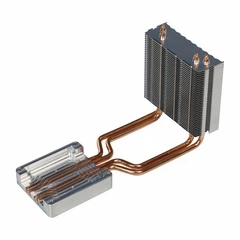
Hey there! As a supplier of cavity water cooling plates, I've seen firsthand how these nifty devices play a crucial role in various industries. In this blog, I'm gonna talk about the efficiency of cavity water cooling plates in different sectors.
Let's start with the energy storage industry. In energy storage systems, especially for large - scale battery banks, heat management is super important. Batteries generate a lot of heat during charging and discharging cycles. If this heat isn't properly dissipated, it can reduce the battery's lifespan and even pose safety risks. That's where our Cavity-type Energy Storage Battery Water Cooling Plate comes in.
The cavity design of these cooling plates allows for a more efficient flow of water. Water is a great coolant because it has a high specific heat capacity, which means it can absorb a large amount of heat without a significant increase in temperature. The cavity structure creates a larger surface area for heat transfer between the battery and the coolant. This results in better heat dissipation, keeping the batteries at an optimal operating temperature. In fact, studies have shown that using cavity water cooling plates can improve the efficiency of energy storage systems by up to 20%. This not only extends the battery life but also enhances the overall performance of the energy storage setup.
Now, let's shift gears and talk about the automotive industry. The automotive world is full of components that generate heat, and efficient cooling is essential for their proper functioning.
First up, the Automobile Car Drainage Raditor. In a car's engine, the combustion process produces a tremendous amount of heat. The radiator is responsible for getting rid of this heat to prevent the engine from overheating. Cavity water cooling plates in radiators work by circulating water through the engine block and then back to the radiator. The cavity design helps in evenly distributing the coolant flow, ensuring that all parts of the engine are cooled effectively. This leads to a more stable engine temperature, which in turn improves fuel efficiency and reduces emissions.
Another important application in the automotive industry is the Automotive Controller Water Cooling Plate. Modern cars are equipped with various electronic controllers that manage everything from the engine's performance to the vehicle's safety systems. These controllers generate heat during operation, and overheating can cause malfunctions. Cavity water cooling plates for automotive controllers provide a reliable way to keep these sensitive components cool. The efficient heat transfer capabilities of the cavity design ensure that the controllers operate within their optimal temperature range, enhancing their reliability and longevity.
In the electronics industry, things are no different. With the continuous miniaturization of electronic devices, the power density of components is increasing rapidly. This means that more heat is being generated in a smaller space. Cavity water cooling plates are becoming increasingly popular for cooling high - performance electronics such as servers, graphics processing units (GPUs), and power amplifiers.


For servers in data centers, heat management is a major concern. A single data center can house thousands of servers, all generating heat simultaneously. Cavity water cooling plates can be integrated into the server racks to cool the individual components. The efficient water flow through the cavities helps in quickly removing the heat generated by the processors and other electronic parts. This not only improves the performance of the servers but also reduces the energy consumption of the data center's cooling systems.
GPUs used in gaming and professional applications also benefit greatly from cavity water cooling plates. These powerful graphics cards can get extremely hot during intense gaming sessions or complex rendering tasks. By using cavity water cooling plates, the heat can be dissipated more effectively, allowing the GPUs to run at higher clock speeds for longer periods without throttling. This results in a smoother gaming experience and faster rendering times.
When it comes to the industrial machinery sector, heavy - duty equipment like CNC machines, welding machines, and hydraulic systems generate a significant amount of heat. Cavity water cooling plates are used to maintain the optimal temperature of these machines.
In CNC machines, for example, the cutting tools and motors can heat up during operation. Overheating can lead to tool wear, reduced machining accuracy, and even machine breakdowns. Cavity water cooling plates help in keeping the temperature in check, ensuring that the CNC machine operates at its best. This improves the quality of the machined parts and increases the productivity of the manufacturing process.
Welding machines also require efficient cooling. The high - intensity electrical arcs used in welding generate a large amount of heat. Cavity water cooling plates can be used to cool the welding electrodes and other components, preventing overheating and ensuring a stable welding process.
Hydraulic systems in industrial machinery rely on fluid pressure to operate. The hydraulic fluid can heat up due to friction and the work it performs. Cavity water cooling plates can be used to cool the hydraulic fluid, maintaining its viscosity and ensuring the proper functioning of the hydraulic system.
So, as you can see, cavity water cooling plates are incredibly versatile and efficient in a wide range of industries. Whether it's energy storage, automotive, electronics, or industrial machinery, these cooling plates offer a reliable solution for heat management.
If you're in any of these industries and are looking for high - quality cavity water cooling plates, we're here to help. Our products are designed with the latest technology to ensure maximum efficiency and reliability. We can customize the cooling plates according to your specific requirements. Don't hesitate to reach out for a discussion on how our cavity water cooling plates can improve the performance of your systems. Let's work together to find the best cooling solution for your needs.
References:
- "Heat Transfer in Energy Storage Systems" - Journal of Energy Management
- "Automotive Cooling System Design and Optimization" - SAE International Journal
- "Cooling Solutions for High - Performance Electronics" - IEEE Transactions on Thermal Management