


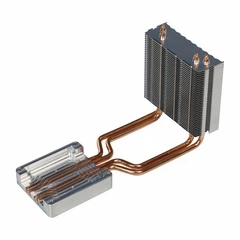
The tunnel brazing process is a crucial manufacturing technique in various industries, especially in the production of heat exchangers, automotive components, and electronic cooling devices. As a leading supplier of tunnel brazing process solutions, I have witnessed firsthand the transformative impact of induction heating on this process. In this blog post, I will delve into the effects of induction heating on the tunnel brazing process, exploring its advantages, challenges, and potential applications.
The Basics of Tunnel Brazing and Induction Heating
Before we dive into the effects of induction heating on the tunnel brazing process, let's briefly review the fundamentals of both techniques. Tunnel brazing is a continuous process that involves passing components through a heated tunnel, where a brazing filler metal is melted and flows into the joints between the components. This process is widely used for joining metals with high precision and strength, making it ideal for applications that require reliable and durable connections.
Induction heating, on the other hand, is a non-contact heating method that uses electromagnetic fields to generate heat within a conductive material. When an alternating current is passed through a coil, it creates a magnetic field that induces eddy currents in the material being heated. These eddy currents generate heat due to the electrical resistance of the material, allowing for rapid and efficient heating.
Advantages of Induction Heating in Tunnel Brazing
One of the primary advantages of using induction heating in the tunnel brazing process is its ability to provide precise and localized heating. Unlike traditional heating methods, such as gas furnaces or electric ovens, induction heating can be targeted directly at the brazing joints, minimizing heat transfer to the surrounding areas. This not only reduces the risk of thermal distortion and damage to the components but also allows for more accurate control of the brazing process.
Another significant advantage of induction heating is its high heating efficiency. Induction heating systems can convert up to 90% of the electrical energy into heat, compared to only 40-60% for traditional heating methods. This means that induction heating can achieve the same level of heating with less energy consumption, resulting in lower operating costs and reduced environmental impact.


In addition to its precision and efficiency, induction heating also offers rapid heating and cooling rates. Induction heating systems can heat up a component from room temperature to the brazing temperature in a matter of seconds, allowing for faster production cycles and increased throughput. Moreover, the rapid cooling rates provided by induction heating can help to improve the mechanical properties of the brazed joints, such as strength and hardness.
Challenges and Considerations
While induction heating offers numerous advantages in the tunnel brazing process, it also presents some challenges and considerations that need to be addressed. One of the main challenges is the design and optimization of the induction heating coils. The shape, size, and placement of the coils can have a significant impact on the heating pattern and efficiency of the induction heating system. Therefore, it is essential to work with experienced engineers and designers to ensure that the coils are properly designed and optimized for the specific application.
Another challenge is the control and monitoring of the induction heating process. Induction heating systems require precise control of the power, frequency, and time to ensure consistent and reliable brazing results. Therefore, it is necessary to use advanced control systems and sensors to monitor and adjust the heating parameters in real-time.
Finally, the cost of induction heating equipment can be relatively high compared to traditional heating methods. However, the long-term benefits of induction heating, such as energy savings, increased productivity, and improved product quality, often outweigh the initial investment costs.
Applications of Induction Heating in Tunnel Brazing
The combination of induction heating and tunnel brazing has opened up new possibilities for a wide range of applications. Some of the most common applications include:
- Automotive Industry: Induction heating is widely used in the automotive industry for brazing various components, such as Cavity-type Energy Storage Battery Water Cooling Plate, Lightweight Automotive Controller Water Cooling Plate, and heat exchangers. The precise and efficient heating provided by induction heating helps to ensure high-quality brazed joints, which are essential for the performance and reliability of automotive components.
- Electronics Industry: In the electronics industry, induction heating is used for brazing electronic components, such as Aluminum Heat Pipe Communication Module Heatsink and printed circuit boards. The rapid heating and cooling rates provided by induction heating help to minimize the thermal stress on the components, reducing the risk of damage and improving the overall reliability of the electronic devices.
- Aerospace Industry: The aerospace industry also benefits from the use of induction heating in tunnel brazing. Induction heating is used for brazing critical components, such as turbine blades and fuel nozzles, where high precision and reliability are essential. The ability of induction heating to provide localized heating and rapid cooling rates helps to ensure the integrity and performance of these components in extreme operating conditions.
Conclusion
In conclusion, induction heating has a significant impact on the tunnel brazing process, offering numerous advantages in terms of precision, efficiency, and productivity. While there are some challenges and considerations that need to be addressed, the benefits of induction heating often outweigh the costs, making it a viable option for a wide range of applications.
As a supplier of tunnel brazing process solutions, I am committed to providing our customers with the latest technologies and expertise in induction heating. If you are interested in learning more about how induction heating can improve your tunnel brazing process or if you have any specific requirements, please feel free to contact us for a consultation. We look forward to working with you to achieve your manufacturing goals.
References
- ASM Handbook, Volume 6: Welding, Brazing, and Soldering. ASM International, 1993.
- Induction Heating Handbook: Theory and Practice. Inductoheat Inc., 2008.
- Tunnel Brazing Technology: Principles and Applications. Brazing Solutions Inc., 2015.