


In the realm of thermal management, the choice between cavity water cooling plates and air - cooling systems is a crucial decision for many industries. As a supplier of cavity water cooling plates, I've witnessed firsthand the significant differences in energy consumption between these two cooling methods. This blog post aims to provide a comprehensive comparison of the energy consumption of cavity water cooling plates and air - cooling systems, offering valuable insights for those considering which option is best for their needs.
Understanding the Basics of Cavity Water Cooling Plates and Air - Cooling
Before delving into the energy consumption comparison, it's essential to understand how each cooling method works.


Cavity water cooling plates are designed with internal cavities that allow water to flow through. The water absorbs heat from the heat - generating components in contact with the plate and then transfers this heat away as it circulates through the system. The cooled water can then be recirculated, making it a closed - loop system. These plates are commonly used in high - power applications such as Automotive Controller Water Cooling Plate, Aluminum Heat Pipe Communication Module Heatsink, and Cavity - type Energy Storage Battery Water Cooling Plate.
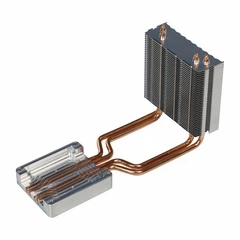
On the other hand, air - cooling systems rely on the movement of air over heat - generating components to dissipate heat. Fans are typically used to blow air across heat sinks attached to the components. The heat is then transferred from the heat sink to the surrounding air. Air - cooling is a simple and widely used method, often found in consumer electronics, small appliances, and some industrial applications.
Energy Consumption Factors in Cavity Water Cooling Plates
The energy consumption of a cavity water cooling plate system depends on several factors:
- Pump Power: The pump is responsible for circulating the water through the cooling plate. The power consumption of the pump depends on its size, flow rate, and pressure requirements. In general, larger pumps with higher flow rates and pressures will consume more energy. However, modern pumps are becoming more energy - efficient, with advanced control systems that can adjust the pump speed based on the cooling demand.
- Cooling Tower or Chiller: In some water - cooling systems, a cooling tower or chiller is used to remove the heat from the water. These components can consume a significant amount of energy, especially in large - scale industrial applications. However, for smaller systems, the energy consumption of the cooling tower or chiller may be relatively low.
- Thermal Load: The amount of heat that needs to be removed from the system also affects the energy consumption. Higher thermal loads require more water flow and a greater cooling capacity, which in turn increases the energy consumption of the pump and other components.
Energy Consumption Factors in Air - Cooling Systems
Air - cooling systems also have their own set of energy - consuming components:
- Fan Power: Fans are the primary energy - consuming component in an air - cooling system. The power consumption of a fan depends on its size, speed, and airflow rate. Larger fans with higher speeds and airflow rates will consume more energy. Additionally, the efficiency of the fan motor also plays a role in determining the overall energy consumption.
- Thermal Resistance: The thermal resistance between the heat - generating component and the air affects the cooling efficiency of the system. Higher thermal resistance means that more air needs to be moved over the component to achieve the same level of cooling, which increases the energy consumption of the fan.
- Thermal Load: Similar to water - cooling systems, the thermal load of the system impacts the energy consumption. Higher thermal loads require more airflow, which in turn requires more energy to power the fan.
Comparison of Energy Consumption
In general, cavity water cooling plates tend to be more energy - efficient than air - cooling systems in high - power applications. This is because water has a much higher specific heat capacity than air, which means it can absorb more heat per unit mass. As a result, a water - cooling system can remove heat from the components more effectively with less energy consumption compared to an air - cooling system.
For example, in a data center where high - power servers generate a large amount of heat, a water - cooling system using cavity water cooling plates can significantly reduce the energy consumption compared to an air - cooling system. The water - cooling system can maintain a more stable temperature, which is beneficial for the performance and lifespan of the servers.
However, in low - power applications, air - cooling systems may be more energy - efficient. The simplicity of air - cooling systems means that they have fewer components and lower initial costs. For small consumer electronics such as laptops or smartphones, air - cooling is often sufficient to dissipate the heat generated by the components, and the energy consumption of the small fans used in these devices is relatively low.
Advantages of Cavity Water Cooling Plates in Terms of Energy Efficiency
There are several reasons why cavity water cooling plates offer energy - efficiency advantages:
- Higher Heat Transfer Efficiency: As mentioned earlier, water has a higher specific heat capacity than air, which allows it to transfer heat more effectively. This means that a water - cooling system can remove the same amount of heat with less energy consumption compared to an air - cooling system.
- Precise Temperature Control: Water - cooling systems can provide more precise temperature control compared to air - cooling systems. This is important in applications where maintaining a specific temperature range is critical for the performance and reliability of the components. By maintaining a stable temperature, the system can operate more efficiently, reducing the overall energy consumption.
- Reduced Fan Noise: Air - cooling systems often generate a significant amount of noise due to the operation of the fans. In contrast, water - cooling systems are generally quieter, as the pump and other components produce less noise. This can be an important consideration in environments where noise is a concern.
Considerations for Choosing the Right Cooling Method
When choosing between a cavity water cooling plate and an air - cooling system, several factors should be considered:
- Thermal Load: The amount of heat that needs to be removed from the system is the most important factor. High - power applications with large thermal loads are generally better suited for water - cooling systems, while low - power applications may be adequately cooled by air - cooling systems.
- Space Constraints: Water - cooling systems typically require more space than air - cooling systems, as they need to accommodate the water - circulation components such as pumps and pipes. If space is limited, an air - cooling system may be a more practical choice.
- Initial and Operating Costs: The initial cost of a water - cooling system is usually higher than that of an air - cooling system due to the additional components such as pumps, cooling towers, and pipes. However, the operating costs of a water - cooling system may be lower in the long run, especially in high - power applications where the energy savings can offset the initial investment.
Conclusion
In conclusion, the choice between a cavity water cooling plate and an air - cooling system depends on the specific requirements of the application. In terms of energy consumption, cavity water cooling plates are generally more energy - efficient in high - power applications, while air - cooling systems may be more suitable for low - power applications. As a supplier of cavity water cooling plates, I understand the importance of providing energy - efficient solutions to our customers. Our products are designed to meet the highest standards of performance and energy efficiency, helping our customers reduce their energy consumption and operating costs.
If you are considering a cooling solution for your application and want to learn more about our cavity water cooling plates, please feel free to contact us for a detailed consultation. We are committed to providing you with the best - in - class products and services to meet your thermal management needs.
References
- Incropera, F. P., DeWitt, D. P., Bergman, T. L., & Lavine, A. S. (2007). Fundamentals of Heat and Mass Transfer. John Wiley & Sons.
- Kakaç, S., & Pramuanjaroenkij, A. (2009). Heat Exchangers: Selection, Rating, and Thermal Design. CRC Press.