


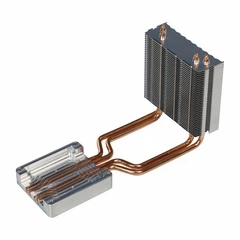
When it comes to using a fan in conjunction with a circular base LED heat sink, understanding the power consumption requirements is crucial for both efficiency and cost - effectiveness. As a supplier of Circular Base LED Heat Sinks, I've encountered numerous inquiries regarding this topic. In this blog, I'll delve into the factors that influence power consumption and provide insights to help you make informed decisions.
Factors Influencing Power Consumption
1. Fan Size and Speed
The size and speed of the fan play a significant role in determining power consumption. Larger fans typically require more power to operate compared to smaller ones. This is because they have a greater surface area of blades that need to be rotated. Additionally, the speed at which the fan operates, measured in revolutions per minute (RPM), directly affects power usage. A fan running at a higher RPM will consume more power than one running at a lower RPM.
For instance, a small - sized fan with a diameter of 40mm running at 1000 RPM might consume around 1 - 2 watts of power. On the other hand, a larger 120mm fan running at 2000 RPM could consume 5 - 10 watts or more. When using a circular base LED heat sink, you need to choose a fan size and speed that can effectively cool the LED components without over - consuming power.
2. Heat Load of the LED
The heat load generated by the LED is another key factor. LEDs convert electrical energy into light, but a significant portion of the energy is also converted into heat. The more powerful the LED, the higher the heat load. A high - power LED will require a more efficient cooling solution, which often means a more powerful fan.
Let's say you have a high - brightness LED that generates 50 watts of heat. A less powerful fan may not be able to dissipate this heat effectively, and you'll need a fan with a higher airflow rate. This higher - performance fan will consume more power to move the necessary amount of air over the circular base LED heat sink.
3. Design and Efficiency of the Heat Sink
The design and efficiency of the circular base LED heat sink itself can impact power consumption. A well - designed heat sink with a large surface area and good thermal conductivity can transfer heat more effectively to the air. This means that the fan doesn't have to work as hard to remove the heat, resulting in lower power consumption.
For example, a heat sink with a finned design that maximizes the surface area available for heat transfer will allow the fan to operate at a lower speed to achieve the same cooling effect. In contrast, a poorly designed heat sink may require the fan to run at a higher speed, increasing power consumption.
Calculating Power Consumption
To calculate the power consumption when using a fan with a circular base LED heat sink, you need to consider the power rating of the fan. The power rating is usually provided by the fan manufacturer and is measured in watts (W).
The formula for calculating power consumption over a period of time is:
[P = VI]
where (P) is power in watts, (V) is voltage in volts, and (I) is current in amperes.
Most fans are designed to operate at a specific voltage, such as 5V, 12V, or 24V. You can measure the current drawn by the fan using an ammeter. Once you have the voltage and current values, you can calculate the power consumption.
For example, if a fan operates at 12V and draws a current of 0.5A, the power consumption is (P=12V\times0.5A = 6W).
Impact of Power Consumption on Operating Costs
High power consumption can significantly increase the operating costs of your LED lighting system. Over time, the cost of electricity can add up, especially if you have multiple LED fixtures with fans. Therefore, it's important to optimize power consumption.
One way to reduce power consumption is to use a variable - speed fan. A variable - speed fan can adjust its speed based on the temperature of the LED. When the LED is running at a lower temperature, the fan can operate at a lower speed, consuming less power. As the temperature rises, the fan can increase its speed to provide adequate cooling.
Another approach is to choose a more energy - efficient fan. Some fans are designed with advanced motor technologies that consume less power while still providing high - performance cooling.
Our Circular Base LED Heat Sinks
As a supplier of Circular Base LED Heat Sink, we offer a wide range of products designed to meet different power consumption requirements. Our heat sinks are made from high - quality materials with excellent thermal conductivity, such as aluminum and copper.


We also provide customized solutions. If you have specific power consumption constraints or heat load requirements, our team of experts can work with you to design a circular base LED heat sink that meets your needs.
In addition to circular base LED heat sinks, we also offer other types of heat sinks, such as High - power Aluminum Laser Heatsink and Pure Copper CPU/GPU Multi - Purpose Heat Sink. These products are suitable for various applications, from laser systems to computer components.
Contact Us for Procurement
If you're interested in our circular base LED heat sinks or other heat sink products, we encourage you to contact us for procurement. Our sales team is ready to assist you in selecting the right heat sink for your application, taking into account your power consumption requirements and budget. We can also provide detailed product information, technical specifications, and pricing.
By choosing our heat sinks, you can ensure efficient cooling for your LED components while optimizing power consumption and reducing operating costs. Don't hesitate to reach out and start a conversation with us about your heat sink needs.
References
- Thermal Management Handbook for LEDs, published by Lighting Research Center.
- Fan and Blower Handbook, various editions for fan power and performance data.