


Laser friction welding is an advanced joining process that combines the advantages of laser welding and friction welding, offering high-quality joints with excellent mechanical properties. As a leading supplier of laser friction welding solutions, I understand the importance of key parameters in achieving optimal welding results. In this blog post, I will discuss the key parameters in laser friction welding and their impact on the welding process and joint quality.
Laser Power
Laser power is one of the most critical parameters in laser friction welding. It determines the amount of energy input into the welding zone, which directly affects the melting and bonding of the materials. A higher laser power can increase the welding speed and penetration depth, but it may also lead to excessive heat input, causing thermal distortion, cracking, and other defects. On the other hand, a lower laser power may result in insufficient melting and poor bonding strength.
The optimal laser power depends on several factors, including the material type, thickness, and welding speed. For example, when welding thin sheets of aluminum alloy, a relatively low laser power may be sufficient to achieve good results. However, when welding thick steel plates, a higher laser power may be required to ensure complete melting and bonding. As a supplier, we can provide customized laser power settings based on the specific requirements of our customers' applications.
Welding Speed
Welding speed is another important parameter that affects the quality and efficiency of laser friction welding. A higher welding speed can increase the productivity of the welding process, but it may also reduce the heat input and the time available for melting and bonding. This can result in incomplete fusion, porosity, and other defects. Conversely, a lower welding speed can provide more time for melting and bonding, but it may also increase the heat input and the risk of thermal distortion.
The optimal welding speed depends on the laser power, material properties, and joint design. In general, a balance needs to be struck between welding speed and joint quality. Our company has extensive experience in optimizing welding speed for different applications, and we can help our customers achieve the best possible results by adjusting the welding speed according to their specific needs.
Rotational Speed (in Friction Welding Component)
In laser friction welding, rotational speed plays a crucial role in generating frictional heat and promoting material flow. The rotational speed determines the amount of frictional force and heat generated at the interface between the two workpieces. A higher rotational speed can increase the frictional heat and the material flow rate, which can improve the bonding strength and the quality of the joint. However, a very high rotational speed may also cause excessive wear of the tool and the workpieces, as well as vibration and instability during the welding process.
The optimal rotational speed depends on the material properties, the size and shape of the workpieces, and the welding parameters. For example, when welding small-diameter shafts, a relatively high rotational speed may be used to ensure sufficient frictional heat generation. In contrast, when welding large-diameter pipes, a lower rotational speed may be more appropriate to avoid excessive wear and vibration. Our technical team can provide expert advice on selecting the optimal rotational speed for different applications.
Axial Force
Axial force is applied during the welding process to bring the two workpieces into intimate contact and to promote material flow and bonding. The axial force affects the contact pressure at the interface between the workpieces, which in turn influences the frictional heat generation and the quality of the joint. A higher axial force can increase the contact pressure and the frictional heat, but it may also cause deformation of the workpieces and damage to the tool. A lower axial force may result in insufficient contact pressure and poor bonding.
The optimal axial force depends on the material properties, joint design, and welding parameters. Our company has developed advanced control systems that can precisely adjust the axial force during the welding process to ensure consistent and high-quality joints. We can also provide on-site support to help our customers optimize the axial force settings for their specific applications.
Focal Position
The focal position of the laser beam is critical for achieving good weld quality. The focal position determines the size and intensity of the laser spot on the workpiece surface, which affects the heat input and the melting behavior of the material. If the focal position is too high, the laser beam may be too spread out, resulting in insufficient heat input and poor melting. If the focal position is too low, the laser beam may be too concentrated, causing excessive heat input and the formation of a deep keyhole, which can lead to porosity and other defects.
The optimal focal position depends on the laser power, welding speed, and material properties. Our laser friction welding systems are equipped with advanced focusing mechanisms that can accurately adjust the focal position. We can also provide training and support to our customers on how to set the focal position correctly for different applications.
Shielding Gas
Shielding gas is used in laser friction welding to protect the welding zone from oxidation and contamination. The type and flow rate of the shielding gas can have a significant impact on the quality of the weld. Common shielding gases used in laser welding include argon, helium, and nitrogen. Argon is often used for welding non-ferrous metals such as aluminum and copper, as it provides good protection against oxidation. Helium is a more expensive but highly effective shielding gas that can improve the penetration and the quality of the weld, especially for high-power laser welding. Nitrogen is sometimes used for welding stainless steel and other ferrous metals, as it can prevent the formation of nitrides and improve the corrosion resistance of the weld.
The optimal shielding gas type and flow rate depend on the material being welded, the laser power, and the welding speed. Our company can recommend the most suitable shielding gas and flow rate for our customers' applications based on our extensive experience and testing.


Joint Design
Joint design is an important consideration in laser friction welding. The design of the joint can affect the heat distribution, material flow, and the quality of the bond. Different joint designs, such as butt joints, lap joints, and T-joints, have different requirements for laser power, welding speed, and other parameters. For example, a butt joint may require a more precise alignment and a higher laser power to ensure complete melting and bonding. A lap joint may be more forgiving in terms of alignment but may require a different approach to control the heat input and the material flow.
We work closely with our customers to optimize the joint design for their specific applications. Our engineering team can provide detailed design recommendations and support to ensure that the joint design is compatible with the laser friction welding process and meets the required quality standards.
Applications of Laser Friction Welding
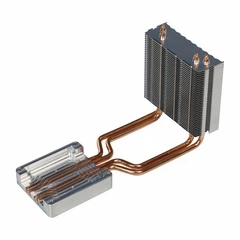
Laser friction welding has a wide range of applications in various industries, including automotive, aerospace, and electronics. In the automotive industry, it can be used for manufacturing components such as Lightweight Automotive Controller Water Cooling Plate, Automobile Car Drainage Raditor, and Automotive Controller Water Cooling Plate. These components require high-quality joints with excellent thermal conductivity and mechanical strength, which can be achieved through laser friction welding.
In the aerospace industry, laser friction welding is used for joining lightweight materials such as titanium alloys and composites, which are critical for reducing the weight of aircraft and improving fuel efficiency. In the electronics industry, it can be used for assembling small and delicate components with high precision and reliability.
Conclusion
In conclusion, the key parameters in laser friction welding, including laser power, welding speed, rotational speed, axial force, focal position, shielding gas, and joint design, all play important roles in determining the quality and efficiency of the welding process. As a supplier of laser friction welding solutions, we have the expertise and experience to help our customers optimize these parameters for their specific applications. By providing customized solutions and technical support, we can ensure that our customers achieve the best possible results in terms of joint quality, productivity, and cost-effectiveness.
If you are interested in our laser friction welding services or have any questions about the key parameters in laser friction welding, please feel free to contact us. We are committed to providing high-quality products and services to meet the diverse needs of our customers. Let's work together to achieve your welding goals!
References
- DebRoy, T., & David, S. A. (2011). Welding metallurgy and weldability of stainless steels. Wiley.
- Kou, S. (2003). Welding metallurgy. Wiley.
- Schmidt, M. A., & Overmeyer, L. (Eds.). (2005). Handbook of laser materials processing. Springer.